
How To
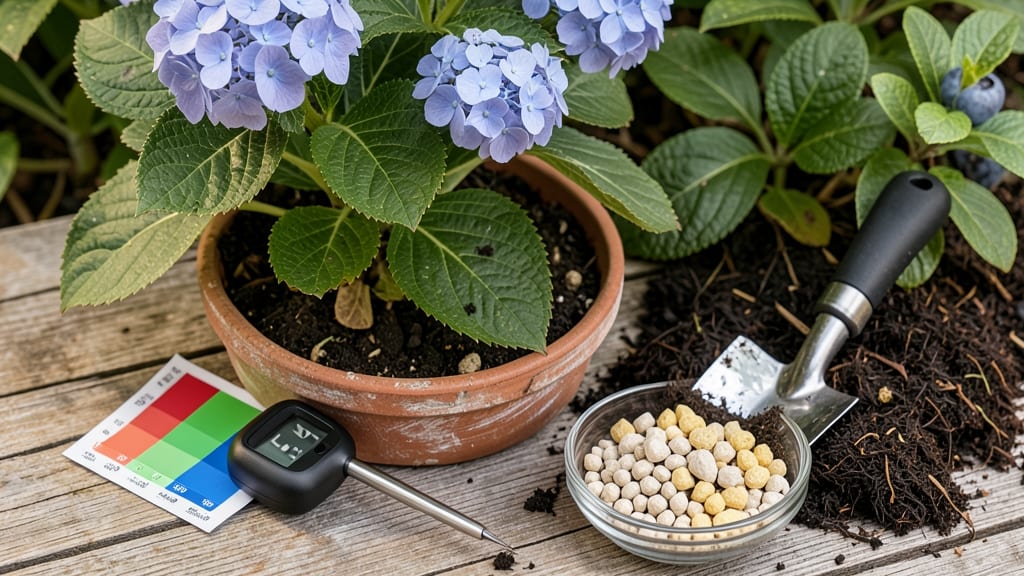
The recommended soil pH for most garden plants ranges between 6.0 and 7.0, though acid-loving varieties like blueberries thrive at 4.5–5.5, while alkaline-tolerant crops such as asparagus prefer 7.0–8.0. Regular testing and adjustments with lime or sulfur help maintain optimal growing conditions.
The soil pH you target directly impacts which nutrients your plants can absorb—think of it as the soil's chemistry lab. 🌱 For example, phosphorus becomes available at a neutral pH (6.0–7.0), which is why most vegetables perform best in this range, while iron locks up in alkaline soils (above 7.0), causing yellow leaves even when you're watering properly.
I’ve seen gardeners waste fertilizer money because their soil pH was off by just 0.5 points—testing before planting saves headaches later.
Adjusting your soil’s acidity or alkalinity isn’t guesswork. Lime raises pH (for acidic soils), while sulfur lowers it (for alkaline soils), but the amounts depend on your soil type—sandy soils need more frequent adjustments than clay.
Pro tip: spread amendments in early spring or fall when microbes are active, then wait 2–3 months before re-testing. Patience here prevents overcorrecting, which can harm root systems.
💡 In This Article
- How Soil pH Affects Plant Nutrient Uptake
- Step-by-Step Soil pH Adjustment Guide for Gardeners
How soil pH affects plant nutrient uptake
Soil pH isn’t just a number—it’s the master control for what nutrients your plants can access. At a pH of 6.0–7.0, phosphorus becomes highly available, which is why most vegetables (tomatoes, peppers, lettuce) thrive here.
But drop the pH to 5.5 or below, and aluminum and manganese become toxic, causing brown root tips or stunted growth. Conversely, push pH above 7.5, and iron—critical for chlorophyll production—locks up as insoluble compounds, leading to yellow leaves even with plenty of water. 🌱
This nutrient availability isn’t random—it’s chemistry. For example, calcium and magnesium (essential for cell walls) dissolve best in slightly alkaline soils (7.0–8.0), which is why asparagus and rhubarb prefer this range.
Meanwhile, acid-loving plants like blueberries and azaleas need pH 4.5–5.5 to access the iron and zinc they crave. The soil’s pH also dictates microbial activity: fungi dominate in acidic soils, while bacteria thrive in neutral to alkaline conditions, each breaking down nutrients differently.
Extreme pH levels don’t just limit nutrients—they disrupt plant physiology. A pH below 5.0 can make boron and copper toxic, while a pH above 8.0 reduces nitrogen uptake, causing pale, weak stems.
I’ve seen gardeners struggle with "healthy-looking" plants that fail to produce fruit because their soil pH was off by just 0.5 points. The fix? Test before planting—DIY kits work for rough estimates, but lab tests give precise data to avoid overcorrecting.
Here’s the kicker: even if you fertilize correctly, wrong pH means wasted money. For instance, adding iron supplements won’t help if your soil is alkaline—you’d need to lower the pH first.
Think of pH as the gatekeeper: it determines whether nutrients are in their soluble, plant-available form or locked away in the soil matrix. 🔬
Microbes play a hidden role too. Acidic soils (pH 5.0–6.0) favor fungi that break down organic matter slowly, releasing nutrients gradually. Alkaline soils (pH 7.5–8.0) encourage bacteria that decompose faster but may deplete nitrogen.
This microbial balance affects not just nutrient release but also disease resistance—healthy soil microbes outcompete pathogens, reducing root rot and fungal infections.
Visual clues can hint at pH issues. Yellowing leaves between veins often signal iron deficiency (common in alkaline soils), while purple stems or slow growth point to phosphorus starvation (common in acidic soils). The solution?
Adjust pH gradually—lime raises it by 0.5–1.5 points per application, while sulfur lowers it by 0.5–1.0 points, depending on soil type. Sandy soils respond faster than clay, so always calculate amendments based on your soil’s buffering capacity.