
How To
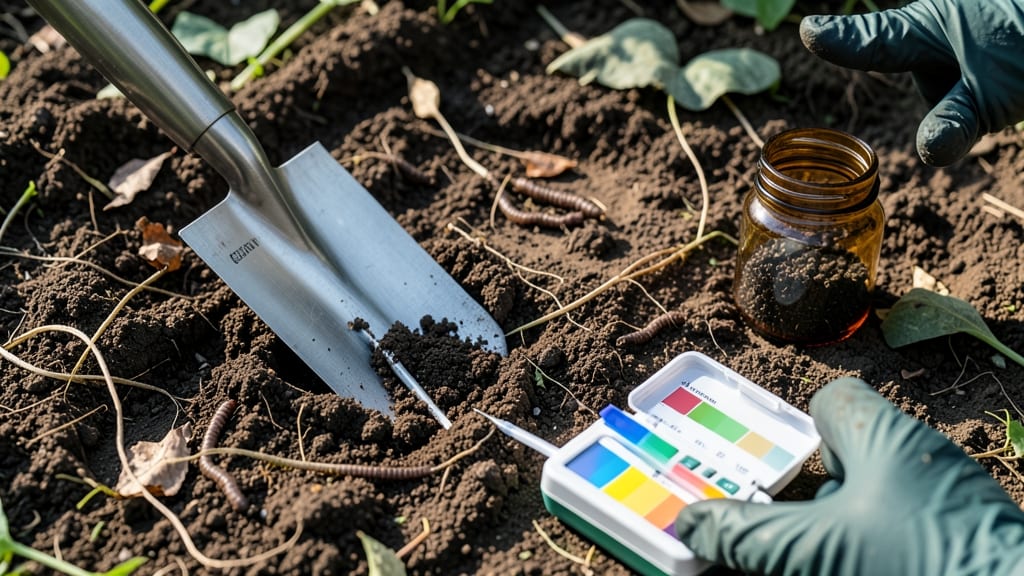
In-ground soil for potting mix needs organic amendments like compost or coconut coir to prevent compaction and improve root health, since native dirt lacks the air pockets and water retention ideal for container plants. Start with a 50-50 ratio of amended soil to perlite or coarse sand.
Native garden soil is too dense for containers—it packs down when watered, cutting off oxygen to roots and trapping moisture that causes rot. 🌱 The key is breaking up clay particles with organic matter (think shredded leaves or worm castings) while adding gritty materials like vermiculite to prevent clumping.
I always test my mix by squeezing a handful: if it crumbles easily, it’s ready for planting.
For heavy clay soils, try the "lasagna method"—layer 2 inches of coarse sand or gravel at the bottom of the pot, then alternate between native soil and compost. This mimics natural forest floors where decomposed leaves create airy, fertile layers.
Just avoid garden soil from areas treated with pesticides or herbicides, as these chemicals can linger and harm sensitive container plants.
💡 In This Article
- Why Native Soil Fails in Containers Without Amendments
- Step-by-Step Guide to Mixing In-Ground Soil for Potted Plants
Why native soil fails in containers without amendments
Native garden soil is designed for outdoor plant roots that spread widely and encounter diverse soil layers. In containers, this same soil becomes a suffocating environment because it lacks the air pockets and water retention balance that potting mixes provide.
When you water container plants, the soil compacts even further, reducing porosity to just 10-15% air space—down from the ideal 25-30% needed for healthy roots. This compacted state also creates anaerobic pockets where beneficial microbes can't thrive, leading to foul odors and root rot.
The issue stems from soil's natural composition: clay particles (which make up 20-40% of many garden soils) bind tightly when wet, forming dense clumps that block water and oxygen movement. Even loamy soils—often considered "good" for gardens—contain too much silt and fine sand to work well in containers.
For comparison, premium potting mixes contain 30-50% organic matter (like peat or coconut coir) that holds moisture while allowing air circulation, plus 20-30% perlite or vermiculite for structural support. Without these amendments, roots struggle to access both water and oxygen simultaneously.
Nutrient availability also suffers because native soil's organic matter breaks down slowly over years, while container plants need rapid nutrient turnover. The microbial communities in garden soil are adapted to slow-release processes, but potted plants deplete nutrients 3-5 times faster due to limited root space.
This is why amended mixes include fast-acting fertilizers or compost that releases nutrients in sync with plant growth cycles. The texture difference is dramatic: unamended soil feels gritty when dry and rock-hard when wet, while a proper potting mix stays loose and crumbly throughout watering cycles. 🌱
Another critical factor is the water retention capacity. Garden soil can hold 40-60% of its weight in water when saturated, but this water becomes trapped between tightly packed particles. In containers, excess moisture has nowhere to drain, leading to root suffocation within 24-48 hours after watering.
The solution lies in the 3-part structure of good potting mixes: organic matter for moisture retention, mineral components for drainage, and air pockets for oxygen flow. Without this balance, even drought-tolerant plants like succulents will struggle in unamended native soil.
Consider the case of tomato plants in containers: their roots need constant access to both water and oxygen to support fruit production. In unamended soil, the roots may absorb water but suffocate from lack of oxygen, leading to blossom end rot despite adequate watering.
The same principle applies to leafy greens like basil, where compacted soil prevents root expansion, stunting plant growth by 30-50% compared to properly amended mixes.
The visual difference is striking—plants in amended soil develop vibrant green leaves and robust stems, while those in native soil often show yellowing and weak stems within weeks.
For gardeners working with heavy clay soils (common in many regions), the problem compounds because clay particles expand when wet and shrink when dry, creating cracks that trap water during dry periods.
This creates a moisture seesaw effect: plants either drown or dry out rapidly, both of which stress roots.
The solution is to break up these clay particles with 2-3 parts organic matter per 1 part clay soil, creating a more stable structure that mimics the natural layering found in forest floors.
This approach transforms problematic soil into a productive growing medium while maintaining the sustainability benefits of using local resources. ✨