
Light Requirements
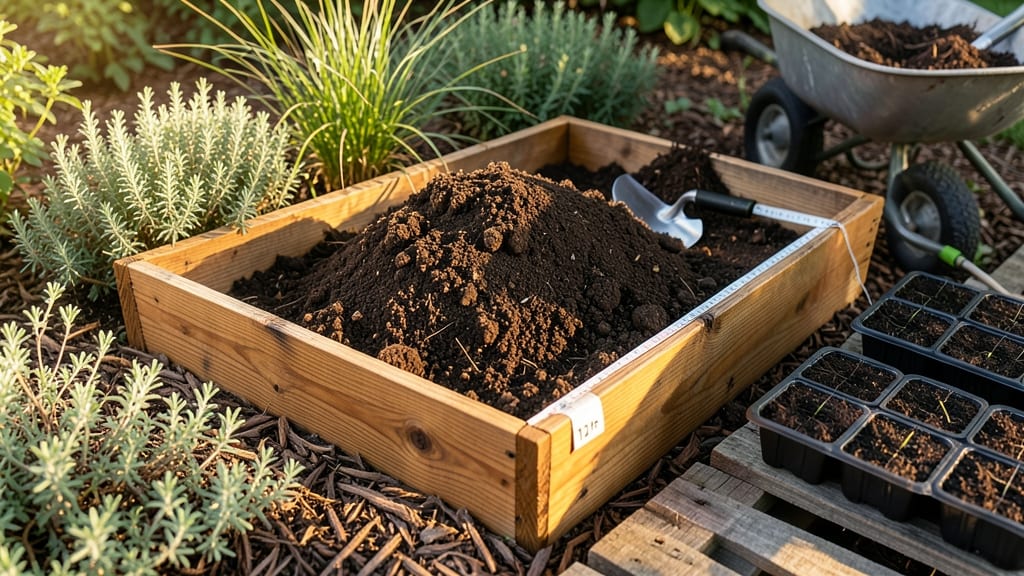
Calculating soil for a 4x8 raised bed requires 1.33 cubic feet per inch of depth—meaning a 6-inch-deep bed needs 8 cubic feet, while a 12-inch-deep bed needs 16 cubic feet. Always buy 10-20% extra to account for settling.
Understanding this calculation starts with simple geometry: multiply your bed's length, width, and depth in feet.
For example, a 4x8x6-inch bed (converted to 4x8x0.5 feet) gives you 16 cubic feet of space, but soil naturally compacts over time. 🌱 I recommend testing your soil mix first—amending with compost or coconut coir can reduce settling while improving drainage.
Most gardeners aim for 10-12 inches of depth to accommodate root systems of vegetables and perennials.
Pro tip: Break your soil order into smaller batches if you're building gradually. This prevents waste and lets you adjust the mix based on what you're planting.
For instance, leafy greens like lettuce need less depth than root crops like carrots, so you might allocate soil differently in sections of the same bed.
💡 In This Article
- Calculating Soil Volume for Different Raised Bed Heights
- Best Soil Types and Mixes for 4x8 Raised Beds
Calculating soil volume for different raised bed heights
The core principle behind determining soil volume is straightforward geometry: multiply length × width × depth. For a 4x8 raised bed, the surface area is always 32 square feet (4' × 8').
The magic happens when you convert your desired depth from inches to feet—because soil volume calculations require consistent units. For example, a 6-inch depth converts to 0.5 feet, while 12 inches becomes 1 foot. This conversion directly impacts your cubic footage calculation.
Here's where it gets practical: each inch of depth adds 1.33 cubic feet of soil to your 4x8 bed. That means a 6-inch bed needs 8 cubic feet (32 sq ft × 0.5 ft), while a 12-inch bed doubles to 16 cubic feet.
The reason standard heights like 6-12 inches are recommended isn't just about volume—it's about root space. Most vegetables need at least 6-12 inches of soil to establish strong root systems, while deeper-rooted plants like tomatoes or carrots benefit from 12-18 inches of depth. 🌱
What most gardeners overlook is soil compaction. Fresh soil settles 10-20% after watering and root establishment, which is why experts recommend buying extra. For that 16 cubic feet calculation, order 18-20 cubic feet to account for settling.
I've seen firsthand how a perfectly calculated bed can end up with 2-3 inches less usable depth after just one growing season if you don't factor this in. The solution? Amend your soil mix with 30-50% compost or coconut coir to improve structure and reduce compaction.
Let's talk about real-world applications. A 6-inch bed works perfectly for shallow-rooted plants like lettuce, herbs, or strawberries, while a 12-inch bed accommodates everything from bush beans to small potatoes. The key is understanding your plants' needs before calculating.
For instance, if you're growing carrots that need 10-12 inches of soil, a 6-inch bed would leave them root-bound. This is why many gardeners divide their beds into sections with varying depths—creating zones for different plant types.
For those working with limited space, consider this: every additional inch of depth adds 1.33 cubic feet of soil and 1.33 cubic feet of growing space. That's a significant investment in terms of both material and labor.
I recommend starting with 8-10 inches of depth for most vegetable gardens—it gives you flexibility for different crops while keeping the soil volume manageable. The trade-off? You'll need to rotate crops annually to prevent depletion of nutrients in the upper soil layers.
One common mistake is assuming all soil types behave the same. Sandy soils compact less but drain too quickly, while clay-heavy mixes can become waterlogged.
The ideal raised bed soil is a blend that holds moisture without becoming soggy—typically 60% topsoil, 30% compost, and 10% perlite or vermiculite for aeration. This mix not only reduces settling but also provides the perfect environment for microbial activity that plants rely on for nutrient uptake. 💫
Pro tip: If you're building multiple beds, calculate each one separately. A 4x4 bed at 12 inches depth needs 16 cubic feet (same as 4x8x6), while a 3x6 bed at the same depth requires only 10.8 cubic feet.
Always measure twice and order once—soil bags are heavy, and you don't want to be stuck with leftover material that won't keep for next season.