
How To
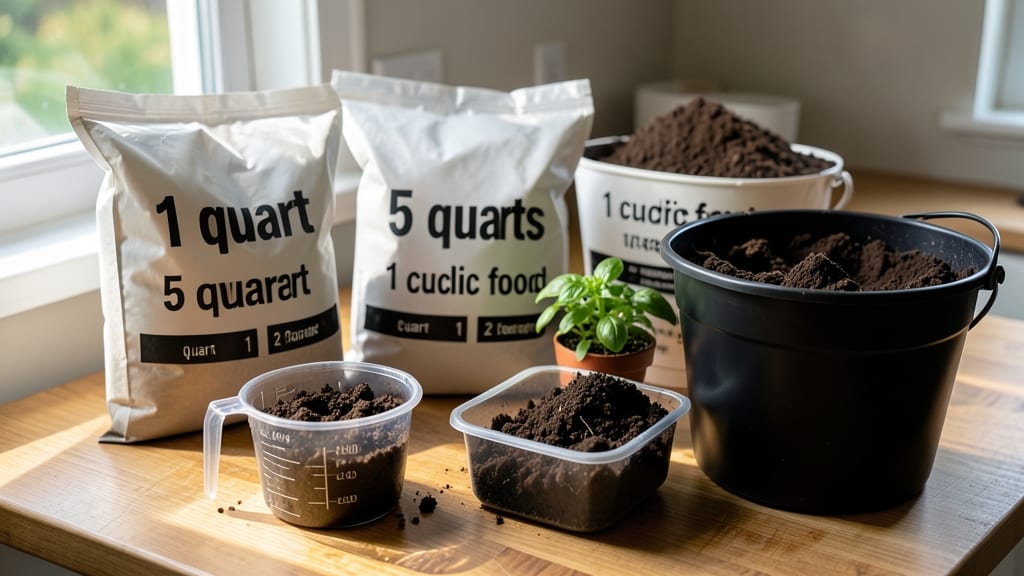
Converting potting soil from quarts to cubic feet requires knowing that 1 quart equals approximately 0.0334 cubic feet, so 10 quarts equal about 0.334 cubic feet. Multiply quarts by 0.0334 for accurate volume calculations when repotting or mixing soil blends.
Understanding this conversion is key for gardeners who work with bulk soil purchases or need precise measurements for large containers. 🌱 For example, a 5-gallon pot holds roughly 0.667 cubic feet of soil, which translates to about 20 quarts—a handy reference when buying pre-mixed blends.
The conversion also helps avoid over- or under-filling raised beds, where volume matters more than weight.
When mixing custom soil blends, this math prevents waste. A 4x8-foot raised bed (12 cubic feet) would need roughly 360 quarts of soil—so knowing the conversion helps you buy the right amount without guessing. Always account for compaction too: freshly mixed soil settles about 10-15% after watering.
💡 In This Article
- How to Convert Potting Soil Quarts to Cubic Feet Accurately
- Plant-Specific Soil Volume Needs by Quart and Cubic Feet
How to convert potting soil quarts to cubic feet accurately
The conversion from quarts to cubic feet relies on understanding that 1 quart equals exactly 0.0334 cubic feet—a ratio derived from the U.S. standard measurement system.
This means every quart of potting soil occupies a precise volume in three-dimensional space, which is critical when calculating how much soil fits in large containers like 5-gallon pots or raised garden beds.
For example, a 5-gallon pot holds about 0.667 cubic feet of soil, which translates to roughly 20 quarts when using this conversion factor.
Here's how the math works: Multiply your quart measurement by 0.0334 to get cubic feet. For instance, 10 quarts of soil equals 0.334 cubic feet, while 50 quarts converts to 1.67 cubic feet.
This precision helps avoid purchasing too much or too little soil, especially when dealing with bulk orders. Gardeners often use this conversion when mixing custom soil blends or calculating how much soil is needed to fill large planters or raised beds.
The key factor in these calculations is accounting for soil compaction. Fresh potting soil typically settles 10-15% after watering, meaning the actual usable volume decreases.
For example, a 4x8-foot raised bed (which holds 12 cubic feet or 360 quarts of loose soil) might only retain 10.8 cubic feet (324 quarts) after settling. Always factor in this shrinkage to ensure your plants have enough root space without overcrowding.
For large-scale projects, like filling a 10-cubic-foot planter, you'd need approximately 300 quarts of soil. This conversion becomes even more useful when working with commercial soil bags, which are often sold in 2-cubic-foot or 4-cubic-foot increments.
Knowing the quart equivalent helps you visualize how many bags to purchase without overestimating. For instance, 2 cubic feet equals about 60 quarts, so a 4-cubic-foot bag would contain roughly 120 quarts of soil.
Consider these practical applications when converting:
- 5-gallon pots: ~20 quarts (0.667 cubic feet) per pot
- Raised beds (4x8 feet): ~360 quarts (12 cubic feet) before settling
- Large containers (10 cubic feet): ~300 quarts after accounting for compaction
This conversion isn't just about numbers—it's about efficiency. Whether you're repotting a large shrub or filling a community garden bed, accurate measurements prevent waste and ensure your plants thrive in the right conditions. Always double-check your calculations, especially for projects where precision matters most!