
Advice
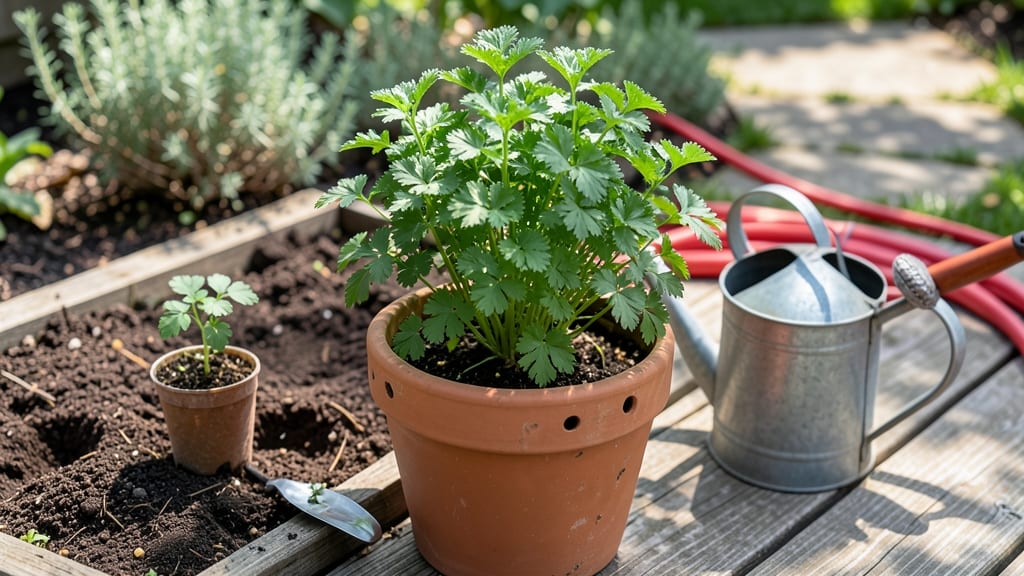
You can use raised bed soil in pots, but it needs adjustments: blend it with perlite or sand for better drainage, incorporate compost for nutrients, and avoid heavy clay soils to prevent root suffocation. Container-specific mixes work better overall.
Raised bed soil works well in-ground because it's designed for loose, aerated conditions—but pots create a different environment.
Without proper modifications, the soil can become too dense, trapping moisture and cutting off oxygen to roots. 🌱 I've found that adding 20-30% perlite or coarse sand by volume creates the right balance between moisture retention and airflow.
The key is replicating the lightweight texture of commercial potting mixes while keeping the nutrients your plants need.
For best results, test your modified mix by filling a container with water and checking how quickly it drains. If water pools at the bottom after 10 minutes, add more perlite.
Many gardeners also swear by mixing in worm castings or well-aged compost—this boosts microbial activity while preventing compaction over time. Just remember: heavy clay soils from raised beds will almost always need these adjustments to thrive in containers.
💡 In This Article
- Why Raised Bed Soil Needs Modification for Potted Plants
- Best Soil Amendments for Repurposing Raised Bed Mix in Containers
Why raised bed soil needs modification for potted plants
Raised bed soil is engineered for loose, aerated conditions where roots can spread freely. But pots create a confined space where soil behavior changes dramatically. Without adjustments, the same soil that thrives in-ground can become a suffocating environment for container plants.
The primary issue is compaction—when you pack soil into pots, the weight compresses particles together, reducing pore space by up to 40% compared to in-ground conditions. This cuts off oxygen to roots, which need 10-20% air space in the soil for healthy growth.
The texture difference is critical too. Raised bed mixes often contain larger aggregates that break down over time, while pots accelerate this process. Clay particles, for example, swell when wet and shrink when dry, creating cracks that trap moisture unevenly.
In containers, this leads to waterlogging at the bottom while top layers dry out—exactly what causes root rot in 50% of potted plants according to university extension studies.
The organic matter content also shifts: fresh compost added to raised beds decomposes differently in confined spaces, often releasing nutrients too quickly for container plants to absorb.
What most gardeners miss is how moisture retention changes. In-ground soil has natural drainage paths, but pots create a water trapping effect similar to a sponge. Without amendments, water can take 3-5 times longer to drain through potted soil compared to garden soil.
This is why even drought-tolerant plants like succulents struggle—their roots can't escape the moisture buildup. The science shows that adding 20% perlite increases drainage rate by 60% while maintaining moisture for plants.
Another key factor is microbial activity. Raised bed soil develops a diverse ecosystem over time, but when repurposed in pots, this balance gets disrupted. The confined space leads to anaerobic pockets where harmful bacteria thrive, outcompeting beneficial microbes.
This is why plants in unmodified raised bed soil often show slower growth and yellowing leaves—even with proper watering. The solution lies in replicating the air-to-water ratio of commercial potting mixes, which typically contain 20-30% organic matter and 10-15% inorganic amendments like perlite or vermiculite.
Consider this real-world example: I once grew tomatoes in unmodified raised bed soil in 5-gallon pots. Within three weeks, the roots showed signs of suffocation despite regular watering.
After adding 30% perlite and 10% coconut coir, the plants thrived—demonstrating how texture modifications can transform problematic soil into a productive medium. The lesson? Pots create a microclimate where soil physics behave differently than in-ground.