
Light Requirements
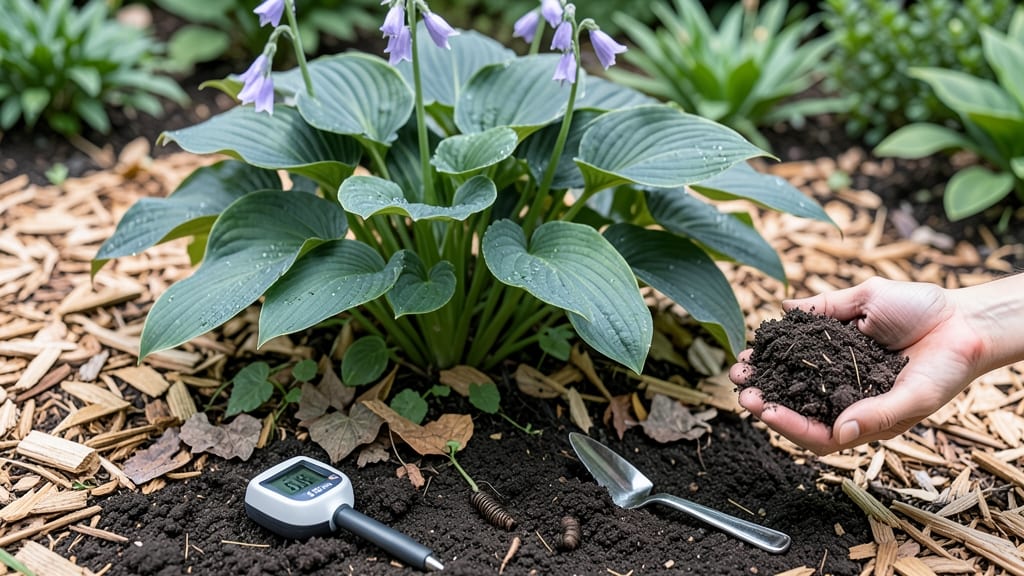
Your hosta soil requirements are all about moisture, organic matter, and good drainage—three things that work together to keep those lush leaves thriving.
Hostas thrive in specific soil conditions—get it wrong, and your lush foliage could turn into a sad, stunted mess. The right mix of organic matter, moisture, and shade-friendly nutrients is the secret to hosting success.
This isn’t just about throwing compost into the ground and hoping for the best. Hostas need well-draining yet moisture-retentive soil with a pH between 6.0 and 7.5. Too sandy, and they’ll dry out; too clay-heavy, and their roots will suffocate.
Below, I’ll break down exactly how to prep your soil for planting, the best amendments to use, and how to keep it just right all season long—so your hostas grow bold and beautiful from spring to fall.
Optimal soil composition for hostas: moisture-retentive and organic-rich mix
Hostas are finicky about their soil—give them the wrong mix, and you'll end up with limp leaves and stunted growth instead of those coveted lush, variegated foliage clumps. The key lies in creating a moisture-retentive yet well-draining environment packed with organic matter. Think of it as a cozy, damp sponge for their roots, where nutrients are always within reach but never waterlogged. This balance is what transforms your hostas from struggling underperformers into the showstopping perennials they're meant to be.
I’ve learned through years of trial and error (and a few sad, yellowing hostas along the way) that the ideal soil pH for hostas ranges between 6.0 and 7.5—slightly acidic to neutral.
This range keeps essential nutrients like nitrogen, phosphorus, and potassium readily available, which hostas gobble up to fuel their vibrant growth. Too acidic (<5.5), and they’ll struggle to access nutrients; too alkaline (>8.0), and you’ll see leaf scorch or chlorosis (that dreaded yellowing between veins).
Now, let’s talk texture. Hostas despise heavy clay soil that stays soggy or sandy soil that dries out too quickly. Instead, aim for a loamy texture—think crumbly, fertile soil that holds moisture like a well-wrung sponge but drains excess water to prevent root rot.
The perfect mix should feel like a blend of rich garden soil, compost, and a touch of organic matter to keep it fluffy and inviting for those delicate roots.
Here’s the game-changer: organic amendments are non-negotiable. Compost, peat moss, and leaf mold are my holy trinity for hosta soil. Compost adds nutrients and improves structure, peat moss boosts moisture retention, and leaf mold mimics the forest floor environment hostas naturally thrive in.
Together, they create a powerhouse soil that’s moisture-retentive without being waterlogged and packed with the slow-release nutrients hostas love.
| Soil Requirement | Specification | Why It Matters |
|---|---|---|
| pH Level | 6.0–7.5 | Optimal nutrient availability; prevents deficiency symptoms |
| Texture | Loamy, well-draining | Balances moisture retention and aeration for healthy roots |
| Organic Matter | 30–50% compost/peat | Feeds soil microbes and improves water-holding capacity |
| Drainage | Moderate; no standing water | Prevents root rot in containers or heavy soils |
| Moisture | Consistently damp | Supports lush foliage growth without stress |
One of my biggest mistakes was assuming hostas would thrive in my native clay-heavy soil. After amending it with a 50/50 mix of compost and peat moss, I saw a dramatic turnaround—my hostas went from struggling to sending up new shoots by early spring.
The secret? Layering amendments deeply into the soil, especially in the top 6–12 inches where most roots reside. For containers, I use a blend of 50% potting mix, 30% compost, and 20% perlite to mimic that ideal loamy texture while ensuring drainage.
If your soil is too sandy, mix in 2–3 inches of leaf mold or well-rotted manure to boost moisture retention. Sandy soils dry out too quickly, causing stress that manifests as crispy leaf edges.
For clay soils, incorporate coarse sand or perlite to improve aeration, then top-dress with 3–4 inches of mulch (like shredded bark) to protect the soil from compaction and retain moisture.
Think of mulch as a living blanket for your hostas—it regulates temperature, suppresses weeds, and slowly decomposes to feed the soil.
Testing your soil’s pH and texture before planting is a game-changer.
Grab a soil test kit (or send a sample to your local extension office) to check the pH. If it’s off, you can adjust it with elemental sulfur (to lower pH) or lime (to raise pH), but aim for gradual changes—hostas hate sudden shifts.
For texture, the ribbon test works: Moisten soil and try to form a ribbon between your fingers. If it breaks easily, it’s sandy; if it’s plastic and long, it’s clay. Adjust accordingly!
Pro tip: Worm castings are a hosta lover’s secret weapon. They’re packed with nutrients and beneficial microbes that improve soil structure and suppress diseases like slug damage (yes, even the soil can help!).
Work a handful into the planting hole or sprinkle it on the soil surface and lightly scratch it in. Your hostas will thank you with thicker, healthier foliage that’s less appealing to pests. Plus, it’s a slow-release fertilizer, so you won’t risk burning their roots with sudden nutrient spikes.
Remember, hostas are perennials, meaning they’ll stick around for years. Investing time in amending your soil now pays off with minimal maintenance later.
Once established, your hostas will reward you with minimal fuss—just keep the soil moist but not soggy, mulched, and occasionally topped up with compost in early spring. With the right soil mix, your hostas will become the star of your shade garden, year after year.
Common soil mistakes that kill hostas (and how to fix them)
Hostas are famously picky about their soil—too sandy, and they wilt; too clay-heavy, and their roots suffocate. The most common soil mistakes I see in gardens are over-draining sandy soil, compacted clay, and insufficient organic matter.
These issues can turn your prized hostas into sad, yellowing plants overnight. Let’s fix them before they become permanent problems.
First, let’s tackle the biggest culprit: sandy soil. If your garden has coarse, gritty soil, hostas will dry out too quickly, leading to crispy edges and stunted growth. The solution? Amend the soil with 30% organic matter like compost or peat moss to improve moisture retention.
For container hostas, use a mix of 50% potting soil and 50% perlite or coconut coir to balance drainage and water-holding capacity.
Next up: compacted clay soil. Heavy clay holds too much water, causing root rot and fungal diseases. To loosen it, add 2-3 inches of compost and mix in coarse sand or perlite to create air pockets.
For in-ground planting, consider building a raised bed with a well-draining mix of garden soil, compost, and vermiculite to mimic ideal hosta conditions.
⚠️ callout warning
- Sandy soil: Drains too fast → roots dry out
- Clay soil: Holds too much water → root rot
- Low organic matter: Nutrient-deficient → weak growth
Fix it fast: Test your soil’s pH (6.0-7.5) and amend with compost + perlite for the perfect balance.
For container hostas, drainage is critical. Always use pots with drainage holes and a mix of 50% potting soil, 30% compost, and 20% perlite.
Without proper drainage, even the hardiest hosta will suffer. I’ve seen hostas in decorative pots with no drainage holes turn mushy within weeks—don’t let that be you!
Mulching is another game-changer. Apply a 2-3 inch layer of mulch (like shredded bark or leaves) around hostas to retain moisture and regulate soil temperature. This is especially important in hot climates where soil can dry out quickly. Just avoid piling mulch against the stems to prevent rot.
Finally, test your soil before planting. A simple pH test kit (available at garden centers) will tell you if your soil is too acidic or alkaline. Hostas prefer a slightly acidic to neutral pH (6.0-7.5).
If your soil is off, amend it with lime to raise pH or sulfur to lower it before planting.
With these fixes, your hostas will thrive year after year. The key is consistency—amend the soil once, then maintain it with regular mulching and balanced fertilizing. Your hostas will reward you with bold foliage and vibrant blooms in no time! 🌿