
How To
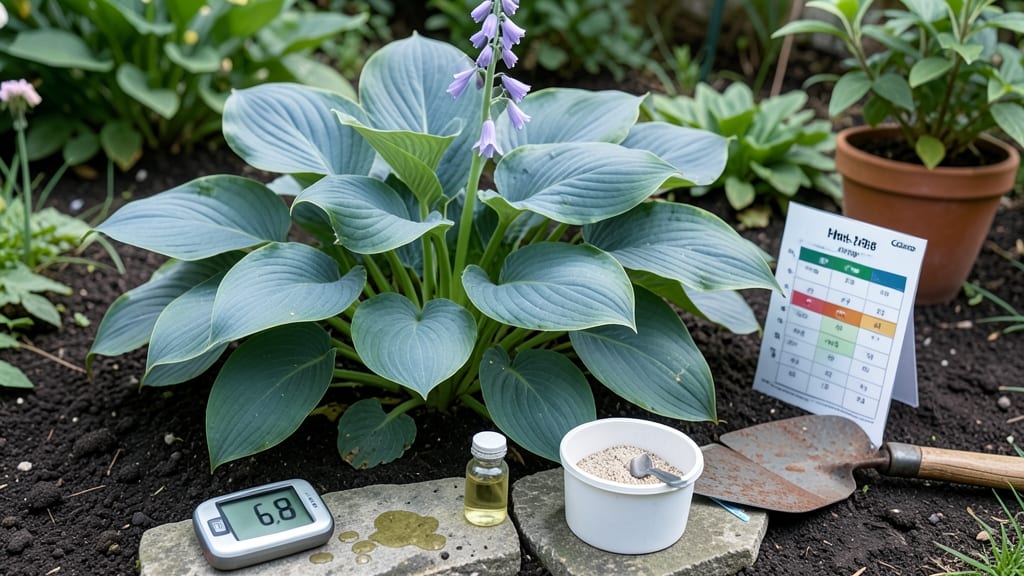
Growing hostas with the right soil pH is the secret to those lush, vibrant leaves you’ve been dreaming of 🌿 — and most gardeners get it wrong without even knowing it.
Picture this: you’ve planted your hostas in rich, composted soil, watered them just right, and yet they’re still struggling with yellowing leaves or stunted growth. The culprit? Your soil’s pH might be too far from their ideal range of 6.0 to 7.5.
Hostas are picky about acidity, and even a slight imbalance can throw off their nutrient uptake, leaving them weak and prone to disease.
Don’t worry—fixing it is easier than you think.
In this guide, I’ll walk you through how to test your soil’s pH, the simple steps to adjust it (whether you need to raise or lower it), and the most common mistakes that keep hostas from thriving—so you can finally grow the showstopping foliage you’ve been hoping for.
By the end, you’ll know exactly how to create the perfect conditions for your hostas to flourish, year after year, with minimal effort and maximum impact.
Ideal soil pH for hostas: what the numbers really mean
Hostas are the divas of the shade garden—stunning foliage, but they demand perfection in their growing conditions. One of the most overlooked factors is soil pH. While many gardeners assume "slightly acidic" means pH 5.5, hostas actually thrive in a broader range that most people get wrong.
The ideal hosta soil pH sits between 6.0 and 7.5, a neutral to slightly acidic spectrum that allows them to access all the nutrients they need for lush, vibrant growth.
Why does this range matter? Because pH directly controls how your hostas absorb essential nutrients like nitrogen, phosphorus, and potassium. A pH that's too low (<5.5) locks out phosphorus and calcium, while a pH that's too high (>8.0) blocks iron and manganese—both critical for that deep green foliage we all love.
Many gardeners overcorrect by making their soil too acidic, thinking hostas prefer it, but this actually stresses the plants and leaves them vulnerable to diseases like root rot.
Here’s the kicker: most gardeners don’t realize their soil is already in the perfect range for hostas. Many native soils fall between 6.0 and 7.0 naturally, but urban soils—especially those amended with compost or manure—often skew higher.
Without testing, you might be over-amending with sulfur or peat moss, thinking you’re helping when you’re actually hurting your hostas. The solution? Test your soil first—it’s the only way to know for sure.
How to test your soil pH at home is simpler than you think. You don’t need a lab; a basic soil pH test kit (available at garden centers for under $10) gives you accurate results in minutes. Dig a 6-inch-deep sample from where you plan to plant, remove debris, and follow the kit’s instructions. For a more precise reading, test in multiple spots—soil pH can vary wildly even in the same yard. If your results fall outside the 6.0–7.5 range, don’t panic—adjusting pH is straightforward once you know what you’re dealing with.
| pH Range | Hosta Response | Nutrient Availability | Quick Fix |
|---|---|---|---|
| Below 5.5 | Stunted growth, yellowing leaves (chlorosis), weak stems | Phosphorus & calcium locked out; iron/manganese toxic | Add pelletized lime (1 lb per 100 sq ft) |
| 5.5–6.0 | Slow growth, pale foliage, increased disease risk | Marginal phosphorus uptake; iron slightly limited | Add compost or bone meal for phosphorus |
| 6.0–7.5 | Optimal growth, deep green leaves, strong roots | All nutrients available; balanced uptake | Maintain with organic matter (compost, leaf mold) |
| 7.6–8.0 | Yellowing between veins, slow growth, weak stems | Iron/manganese/zinc locked out; phosphorus toxic | Add sulfur or peat moss (1/2 lb per 100 sq ft) |
| Above 8.0 | Severe chlorosis, stunted growth, increased pest pressure | Nearly all micronutrients unavailable; toxic buildup | Add elemental sulfur or pine needles (1 lb per 100 sq ft) |
Most gardeners assume hostas love acidic soil, but the truth is, they’re far more adaptable than you’d think. The 6.0–7.5 range is where hostas hit their stride, absorbing nutrients efficiently without stress.
Think of pH as a nutrient dial: too low, and you’re starving them of phosphorus; too high, and they can’t access iron. The goal is balance—like Goldilocks, your hostas want it "just right."
Here’s a pro tip: if your soil tests at 6.5 or higher, you’re likely already in the sweet spot. Hostas planted in garden soil with compost rarely need pH adjustments because organic matter naturally buffers pH fluctuations.
The real work comes in when you’re dealing with clay-heavy or alkaline soils, which often require amendments like sulfur or peat moss to bring the pH down. Always test before amending—you might be surprised by what your soil already offers.
One of the biggest myths about hostas is that they require acidic soil. This misconception stems from their popularity in woodland gardens, where leaf litter naturally acidifies the soil over time. However, hostas in urban gardens or containers often thrive just fine
How to adjust hosta soil pH: step-by-step amendments for perfect growth
Hostas thrive in soil with a pH between 6.0 and 7.5, but many gardeners accidentally throw their pH off balance. The good news? Adjusting it is easier than you think—especially with organic amendments like pelletized lime to raise pH or elemental sulfur to lower it.
I’ll walk you through the exact steps, including how much to use and when to apply it for the best results.
Before diving into amendments, always test your soil pH first. A simple home pH test kit (around $10) or a lab test will tell you whether you need to raise or lower your soil’s acidity.
For hostas, aim for the sweet spot of 6.5—this unlocks the nutrients they need for lush, vibrant foliage.
Raising vs. Lowering Hosta Soil pH
Raising pH (Add Lime)
- Pros: Quick results, organic options available
- Cons: Overuse can lock out iron, causing yellowing
Best for: Clay or acidic soils (pH < 6.0)
Lowering pH (Add Sulfur)
- Pros: Slow-release options prevent over-acidification
- Cons: Takes 2-3 months to take full effect
Best for: Alkaline soils (pH > 7.5)
⚠️ Warning: Never amend soil more than 0.5 pH points per season. Overcorrecting stresses hostas and disrupts microbial life.
To raise your soil’s pH, spread pelletized lime evenly over the bed. For every 100 square feet, use 5-10 pounds of lime if your pH is below 6.0. Work it into the top 6 inches of soil and water thoroughly.
Lime takes 2-3 months to fully adjust pH, so plan ahead—especially if you’re planting new hostas in spring.
Lowering pH requires elemental sulfur, which breaks down into sulfuric acid. Use 1-2 pounds per 100 square feet for soils above pH 7.5. Mix it into the top 6 inches of soil and water well.
Unlike lime, sulfur works slowly—expect changes in 3-6 months. For faster results, try peat moss or pine bark fines, which lower pH slightly when worked into the soil.
Timing matters! Amend your soil in early spring (March-April) or early fall (September-October). Avoid adjusting pH in summer when hostas are actively growing—this can shock their roots. Always re-test pH 2-3 months after amending to avoid overcorrecting.
Pro tip: Mix compost into your amended soil. It buffers extreme pH shifts and adds essential nutrients. Aim for a 20% compost mix by volume when preparing hosta beds. Your hostas will thank you with glossy, disease-resistant leaves all season long! 🌿