
Companion Plants
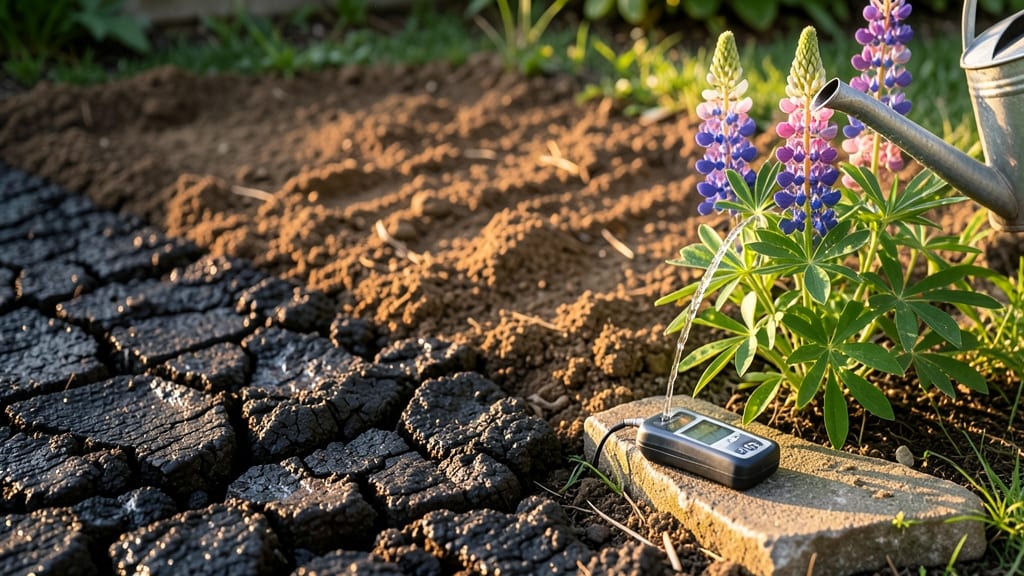
Clayey soil can be good for plants when properly amended, as it retains moisture and nutrients exceptionally well, but its heavy, compacted nature often suffocates roots and slows water drainage, requiring careful adjustments to support most plant species.
Clay soil's dense composition creates a natural water reservoir, which is ideal for drought-resistant plants like willows or hostas that thrive in consistently moist conditions. 🌱 However, the trade-off is poor aeration, which can stunt growth for root-sensitive varieties.
The key lies in blending organic matter—think compost or aged manure—to loosen the structure while preserving its moisture-retaining benefits. Many gardeners swear by a 25-30% sand mix to improve drainage without losing clay's nutrient-holding power.
For plants that struggle in pure clay, like tomatoes or peppers, raised beds or container gardening offer a controlled alternative. The secret weapon? Seasonal amendments: add leaf mold in autumn and gypsum in spring to break up compaction naturally.
Even native species benefit from these tweaks—just match the plant to the soil's improved characteristics rather than forcing a mismatch.
💡 In This Article
- How Clay Soil Affects Plant Growth Mechanically and Chemically
- Best Clay-Tolerant Plants and How to Improve Soil for Others
How clay soil affects plant growth mechanically and chemically
Clay soil's tiny, tightly packed particles (0.002mm in diameter) create a dense matrix that holds 40-60% water by volume—far more than sandy soil's 10-30%. This water retention is a double-edged sword: while it provides a stable moisture supply during droughts, the same compactness restricts oxygen flow to roots.
In pure clay, oxygen levels can drop to 5-10% (compared to ideal 20-25%), triggering anaerobic conditions where roots suffocate and beneficial microbes struggle to thrive.
The chemical side tells a different story. Clay's negative charge attracts and holds onto nutrients like a magnet—especially calcium, magnesium, and potassium—making it a nutrient powerhouse when balanced. However, this same charge can bind phosphorus too tightly, making it less available to plants.
The pH also stabilizes better in clay (typically 6.0-7.5) because its buffering capacity resists rapid fluctuations, unlike sandy soils that swing wildly with rain or fertilizer. 🌱 The trade-off? Nutrients move 10x slower through clay than sand, creating "hot spots" where concentrated minerals can burn delicate roots.
Water movement in clay soil follows physics you can almost see: instead of draining freely like sand, water percolates at a glacial 0.1-0.5 inches per hour (vs. sand's 10+ inches/hour). This slow seepage means surface puddles linger, while deeper roots may still experience drought stress.
The result? Plants with shallow roots (like lettuce) thrive, while deep-rooted species (like oak trees) struggle unless the clay is amended. Even native species like willows have evolved to handle these conditions by developing extensive lateral root systems that spread horizontally to access oxygen.
Compaction worsens these issues by reducing pore space between particles. Walk on clay soil when it's wet, and you'll compress it to 50% of its original volume—a death sentence for most plants. The solution?
Organic matter like compost acts as a "spacer," increasing pore space by 30-50% while adding microbial activity that breaks down nutrients into plant-available forms.
Think of it like adding tiny ball bearings between the clay plates, creating channels for both water and air. 💫 This is why gardeners often mix in 2-3 inches of compost annually to maintain balance.
Not all clay soils behave the same. Heavy clay (high in montmorillonite) swells dramatically when wet and cracks like desert pavement when dry, while light clay (more kaolinite) remains more stable. The swelling clay can exert 100+ lbs of pressure per square foot when dry, uprooting shallow plants.
This is why gypsum (calcium sulfate) works so well—it replaces sodium ions that cause swelling with calcium, which binds clay particles together without shrinking pore space.
Here's the plant adaptation secret: roots in clay soil often grow 2-3x wider than in loose soils to access oxygen. Some species, like hostas or peonies, have evolved thick, fleshy roots that store water and tolerate low oxygen.
Others, like tomatoes, send out fine root hairs that explore the tiny cracks between clay particles. The key difference? Adapted plants prioritize oxygen uptake over rapid nutrient absorption, while non-adapted plants suffocate trying to grow deep.
What most gardeners miss is how clay's seasonal behavior changes. In winter, clay holds heat like a thermal mass, protecting roots from freeze-thaw cycles. But in summer, that same heat retention can bake the soil surface to 120°F+—hot enough to sterilize the top inch.
Mulching with 4-6 inches of organic material creates a cooling buffer while adding slow-release nutrients. This seasonal duality explains why clay soils often produce bumper crops in temperate climates but fail in extreme heat without protection. ⚡