
Lawn
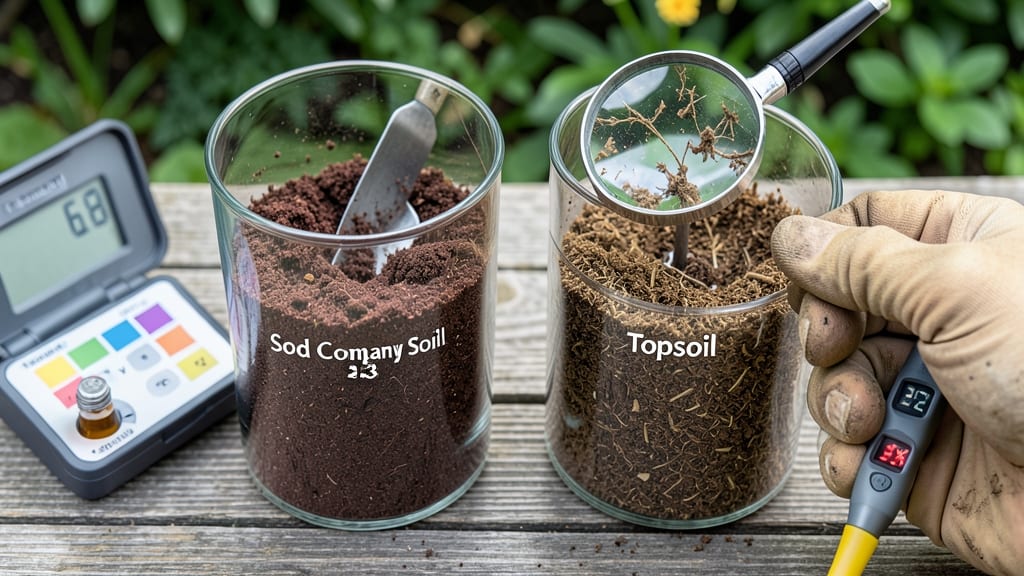
Before planting your lawn, evaluate the Sod Company Soil 3 as topsoil for your yard—this loam might seem promising, but drainage issues, pH problems, or nutrient gaps could stunt grass roots. 🌱 I’ve seen "premium" bags fail because they lacked the right balance of sand, silt, and organic matter for sod establishment.
The first step? Grab a soil test kit (or send a sample to your local extension office) to compare its texture, pH, and nutrient levels against your yard’s needs.
Ideal topsoil for sod should feel like a damp sponge—not too sandy (which drains too fast) or too clay-heavy (which bakes hard).
If Soil 3 tests too dense, mix in 20-30% compost to loosen it up; if it’s too acidic (pH below 6.0), add dolomitic lime at 10 lbs per 100 sq ft. My biggest mistake?
Skipping the test and just amending based on guesswork—my first lawn struggled until I fixed the compacted soil.
You’ll know you’ve got it right when your sod roots down within 2-3 weeks instead of wilting or turning yellow. The grass will pull up easily (no bare spots) and bounce back from foot traffic.
For clay-heavy yards, consider gypsum to break up particles; for sandy soils, peat moss helps retain moisture. Think of this as a soil makeover—not just a top dressing.
Pro tip: Test your existing yard soil first. If it’s already healthy, you might not need Soil 3 at all—just top-dress with ½ inch of compost annually. And if you’re laying sod, water it 1-2 inches deep daily for the first two weeks to help roots penetrate the new soil.
The goal? A lawn that stays green through droughts and recovers from kids’ soccer games.
📚 In This Guide
- What you need
- Instructions
- Tips and common mistakes
- Wrapping up and next steps
What you need
- ● Soil 3 (Loam Mix) from The Sod Company – Quantity depends on yard size (e.g., 1 cubic yard covers ~100 sq. ft. at 3" depth).
- ● Topsoil – High-quality, well-draining (1-2 cubic yards per 100 sq. ft. for blending).
- ○ Soil Testing Kit – pH, nutrient, and composition analysis (optional but recommended).
- ● Wheelbarrow or Garden Cart – For mixing and transporting soil (5-7 cubic feet capacity).
- ● Shovel or Spading Fork – For digging and blending (heavy-duty, 18-24" handle).
- ● Rake (Bow or Leaf Rake) – For leveling and smoothing soil (12-18" teeth).
- ● Garden Gloves – Durable, chemical-resistant (nitrile-coated for extra protection).
- ● Water Hose with Spray Nozzle – For moistening soil before/after mixing.
- ● Measuring Tape – To calculate yard dimensions (25-50 ft. range).
- ● Calcium Lime or Gypsum – If soil pH is 7.5 (10-20 lbs. per 100 sq. ft.).
- ○ Compost or Organic Matter – Optional but beneficial (2-3 inches mixed in for fertility).
- ● Soil Amendments – Like peat moss or perlite (if adjusting drainage/texture).
- ● Soil Thermometer – To check ideal planting temps (60-75°F).
- ● Lawn Roller (100-200 lbs.) – For compacting mixed soil evenly.
- ● Broadcast Spreader – For even distribution of lime/fertilizer.
- ● Plastic Sheeting – To protect soil during rainy weather.
How to assess sod company soil 3 on topsoil for your yard
Here's how I evaluate this topsoil blend to ensure it's the right foundation for your lawn.
🪴 Step 1: Examine the Soil Composition
First, spread a small sample of Soil 3 on a flat surface to inspect its texture. Quality topsoil should have a crumbly yet moist consistency—not powdery or clumpy. Look for a mix of fine particles and small aggregates, which indicate good organic matter content. The ideal blend should resemble dark, rich garden soil rather than sandy or clay-heavy dirt.
Run a handful through your fingers to check for grit. If you feel sharp pebbles or excessive sand, this soil may drain too quickly. Conversely, if it forms tight clods that resist breaking, it could compact easily. The best topsoil for lawns should hold moisture without becoming soggy and should feel soft yet structured.
💧 Step 2: Test Moisture Retention
Take a handful of Soil 3 and squeeze it gently. Quality topsoil should hold together slightly but not drip water when pressed. If it crumbles apart instantly, it lacks organic matter. If it stays damp for more than a minute, it may retain too much water, risking root rot. The ideal moisture balance means the soil stays damp but doesn't feel wet or sticky.
For a more precise test, dig a shallow hole in your yard and fill it with Soil 3. Water it thoroughly, then wait 24 hours. If the soil stays damp at a depth of 2-3 inches, it’s retaining moisture well. If it’s bone dry, you’ll need to amend it with compost or peat moss to improve water-holding capacity.
☀️ Step 3: Assess Nutrient Content
Look for signs of organic matter like decomposed leaves, small twigs, or dark, earthy smells. Healthy topsoil should have a rich, slightly sweet aroma. If the soil smells musty or sterile, it may lack the microbial activity needed for strong grass roots. A quick field test: Add a few drops of vinegar to a sample. If it fizzes, the soil has enough calcium carbonate for good fertility.
Check for visible signs of nutrients like small worms or insects, which indicate a thriving ecosystem. If the soil appears lifeless, it may need amendments like compost or slow-release fertilizer. For a deeper analysis, consider a simple soil test kit to measure pH and nutrient levels before committing to a full yard application.
✂️ Step 4: Compare With Existing Yard Soil
Dig a small test patch in your yard to compare Soil 3 with your current topsoil. Mix equal parts of each and observe the texture. If Soil 3 improves drainage or structure, it’s a good match. For example, if your yard soil feels heavy and compacted, Soil 3’s loam blend should lighten it up. If your soil is already loose and fertile, you may only need to top-dress with a thin layer.
Pay attention to how the two soils interact. If Soil 3 clumps together with your existing soil, it may indicate poor compatibility. The goal is a uniform blend that improves, rather than disrupts, your yard’s natural structure. For best results, apply Soil 3 in a 2-3 inch layer over your existing lawn, then till it in lightly.
🌱 Step 5: Monitor Early Growth
After applying Soil 3, keep an eye on new grass growth or existing lawn health over the first 4-6 weeks. Healthy grass should show steady green growth without yellowing or wilting. If patches of grass turn brown or grow slowly, the soil may need additional amendments like nitrogen or better drainage solutions.
Water deeply 2-3 times per week to help the soil settle and integrate with your yard. Avoid overwatering, which can wash away nutrients. If you notice weeds sprouting aggressively, Soil 3 may need pre-emergent herbicide or a thicker layer of mulch to stabilize.
Tips & tricks for perfect yard soil assessment
Don't guess if Soil 3 is right for your lawn—these practical tips will help you evaluate it like a pro.
Texture Test: For the most accurate assessment in Step 1, compare Soil 3 to a known quality soil sample if possible. I like to rub a pinch between my fingers and imagine it as a foundation for grass roots—it should feel like crumbled dark chocolate cake, not sand or concrete. If it feels gritty, you'll need to mix in more organic matter to improve water retention.
Moisture Timing: That 24-hour moisture test in Step 2 is your best friend. Mark your test hole with a small stake so you don't accidentally dig it up later. I've learned the hard way that bone-dry results after 24 hours mean you'll need to add compost or peat moss—don't skip this step even if the soil looks moist at first.
Nutrient Smell Test: Trust your nose in Step 3! Healthy soil should smell earthy and slightly sweet, like a forest floor after rain. Musty odors indicate poor aeration, while a sterile smell means you're missing microbial activity. Pro tip: If you're unsure, do the vinegar test—it's the quickest way to check calcium carbonate levels without lab equipment.
Layering Strategy: When you apply Soil 3 in Step 4, spread it evenly in that 2-3 inch layer and avoid piling it up. I use a rake to create gentle slopes if my yard has low spots—this prevents water pooling. For existing lawns, work the soil in lightly with a garden fork rather than tilling deeply, which can damage grass roots.
Pro Tips for Evaluate The Sod Company Soil 3 On Topsoil For Yard
- Don't guess if Soil 3 is right for your lawn—these practical tips will help you evaluate it like a pro.
- Texture Test: For the most accurate assessment in Step 1, compare Soil 3 to a known quality soil sample if possible.
- Moisture Timing: That 24-hour moisture test in Step 2 is your best friend.
Frequently asked questions
Got questions about using The Sod Company Soil 3 on topsoil for your yard? You’re not alone! Here are some of the most common concerns—plus clear, actionable answers to help you make the best choice for your lawn.
Is Soil 3 from The Sod Company better than regular topsoil for sod?
Soil 3 is a loam blend designed specifically for sod, offering a balanced mix of sand, silt, and clay for optimal drainage, aeration, and root growth. Regular topsoil can be too heavy or nutrient-poor, leading to poor establishment. Think of it as a premium foundation for your lawn’s long-term health.
How soon after installing sod can I apply Soil 3?
Wait 2–4 weeks after sod installation before adding Soil 3. This gives roots time to establish and reduces the risk of smothering them. Once the sod is firmly rooted (test by gently tugging—if it resists, you’re good!), top-dress with Soil 3 for a 1/4-inch layer over the entire area.
Is Soil 3 worth the extra cost compared to cheaper topsoil?
Yes—if you’re investing in a long-term, lush lawn. Cheaper topsoil often lacks organic matter and nutrients, requiring frequent amendments. Soil 3’s pre-mixed formula saves you time and money on fertilizers, soil conditioners, and potential re-sodding. For most homeowners, the upfront cost pays off in healthier grass and fewer repairs.
Can I mix Soil 3 with existing topsoil, or should I replace it entirely?
You can top-dress (add a thin layer over existing soil) or amend (mix into the top 2–3 inches) if your current topsoil is sandy or clay-heavy. For best results, test your soil first (pH and texture). If it’s already nutrient-rich but compacted, a 1-inch layer of Soil 3 will work wonders without full replacement.
Will Soil 3 help with drainage in heavy clay soil?
Yes! Soil 3’s loam composition improves drainage and moisture retention—critical for clay soils that puddle or bake. Spread a 1/2-inch layer over the area, then lightly rake to blend. For severe drainage issues, consider gypsum or compost alongside Soil 3. Water deeply after application to help it settle.
How often should I reapply Soil 3 to maintain my lawn?
For new sod, reapply Soil 3 once a year (spring or fall) as a top-dressing (1/4-inch layer). For established lawns, every 2–3 years helps replenish nutrients and improve soil structure. Pair it with organic matter (compost) for extra benefits. Think of it like a soil spa day for your yard!
Wrapping up and next steps
Choosing the right topsoil blend—like The Sod Company’s Soil 3—can transform your yard into a vibrant, healthy lawn with minimal effort. This loam-based mix delivers the perfect balance of nutrients, drainage, and texture, making it ideal for seeding or sodding.
Whether you're a DIY enthusiast or a seasoned gardener, your lush lawn starts here!
Ready to take the next step? Test a small patch of your yard with Soil 3, monitor its progress, and adjust as needed. Your dream lawn is just a shovel’s throw away—let’s grow it together! 🌱✨