
Vegetables
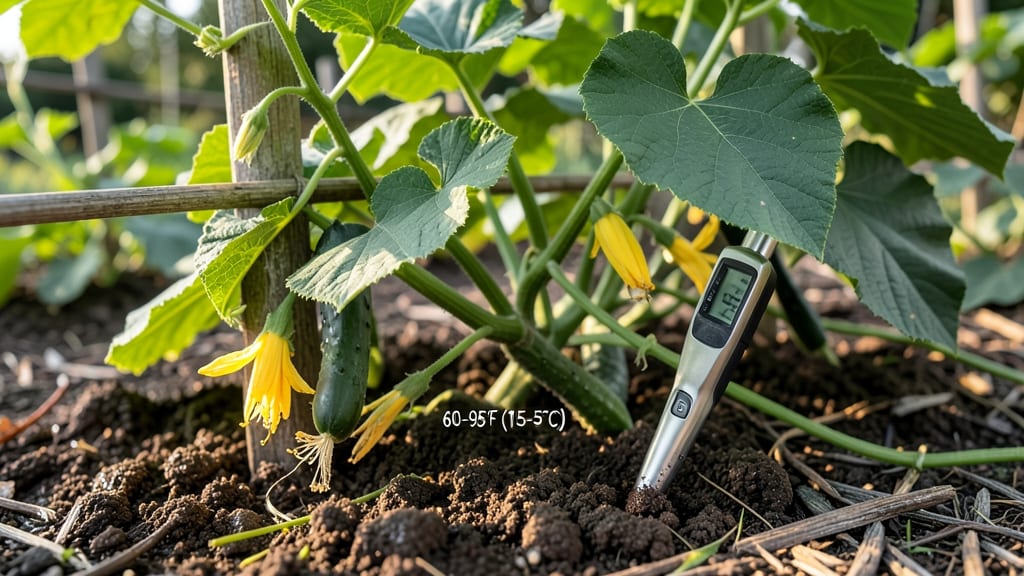
Cucumber soil temperature determines whether your seeds ever sprout or your plants thrive — and getting it wrong can mean the difference between a bountiful harvest and wasted effort.
Struggling with poor cucumber germination or weak plant growth? Soil temperature plays a far bigger role than most gardeners realize. Too cold, and your seeds won’t even wake up; too hot, and the roots suffer. In Zone 6a, where spring can be a slow warm-up, timing is everything.
Ideal germination starts at 70°F (21°C), but cucumbers love warmth even more once they’re up. Below 60°F (15°C), growth stalls, and above 90°F (32°C), roots struggle to absorb water. That’s why knowing when to plant—and how to adjust—is the key to success.
In this guide, I’ll break down the perfect soil temps for each growth stage, share tricks to warm cold soil, and help you avoid common mistakes that kill cucumbers before they even take off. Ready to grow healthier, faster cucumbers? Let’s get started.
Optimal soil temperature ranges for cucumber germination and early growth
Cucumbers are heat-loving plants, and their soil temperature needs are far more critical than most gardeners realize. If your soil is too cold, seeds won't germinate, while scorching heat can stunt young plants.
The key lies in understanding three critical temperature zones: germination, seedling development, and root establishment. Each stage demands precise warmth to ensure strong, healthy plants that produce abundant fruit.
For seed germination, cucumbers require soil temperatures between 70°F (21°C) and 90°F (32°C). Below 60°F (15°C), germination slows dramatically or halts entirely. Even in warm climates, early spring or late fall plantings often fail because the soil hasn't warmed enough.
This is why many experienced gardeners wait until late May or early June in cooler regions to plant cucumbers outdoors.
Once seeds sprout, seedling development thrives in 65°F (18°C) to 85°F (29°C). At this stage, young plants are particularly vulnerable to temperature swings. If nighttime temperatures drop below 55°F (13°C), seedlings may develop blackened stems or yellowing leaves, a condition called damping-off.
To prevent this, use row covers or plant in protected microclimates like greenhouses or raised beds with black plastic mulch.
For root establishment, maintain soil temperatures between 70°F (21°C) and 80°F (27°C). Roots absorb nutrients and water most efficiently in this range. If your soil exceeds 90°F (32°C), roots may become stressed or damaged, leading to weak vines and poor fruit production.
In hot climates, provide afternoon shade cloth to keep soil temperatures in check during peak summer months.
Monitoring soil temperature is easier than you think. Use a soil thermometer inserted 2-3 inches deep—the ideal depth for cucumber roots. Check temperatures in the morning and evening, as midday sun can create misleadingly high readings.
For direct-seeded cucumbers, aim to plant when the 5-day forecast shows consistent warmth above 65°F (18°C). If you're transplanting seedlings, wait until soil reaches at least 70°F (21°C).
In cooler climates like USDA Zones 3-5, extend your growing season by using black plastic mulch or cold frames to warm the soil. These methods can raise soil temperatures by 5-10°F (3-6°C), making it possible to plant cucumbers as early as late April or early May.
For container gardeners, use heat mats under pots to maintain optimal warmth, especially in early spring or fall.
One common mistake is assuming that air temperature equals soil temperature. Soil warms up much slower than the air, especially in shaded or moist conditions. For example, a 75°F (24°C) afternoon might still leave your soil at 60°F (15°C)—too cool for cucumbers.
To accelerate warming, till in compost or aged manure a few weeks before planting, as organic matter retains heat better than bare soil.
If you're planting in early spring, consider starting seeds indoors under grow lights and transplanting only when soil temperatures are ideal. This gives you a head start and reduces the risk of poor germination.
For fall plantings, choose fast-maturing varieties like 'Straight Eight' or 'Marketmore' to harvest before the first frost. These varieties tolerate slightly cooler soil better than heirloom types.
Remember, cucumbers are warm-season crops
How to adjust soil temperature for cucumbers in different climates
Cucumbers thrive when soil temperatures stay within their ideal range of 70-90°F (21-32°C), but achieving this varies dramatically by climate. In cool regions, cold soil can delay germination for weeks, while hot climates may require shade to prevent stress.
The key is adapting your approach based on your local conditions—whether you're dealing with late spring chills or summer heatwaves.
For gardeners in USDA Zones 3-5, where soil warms slowly, extending the season with protective covers or soil warming methods is essential. Meanwhile, those in Zones 8-10 face the opposite challenge—preventing soil from overheating while maintaining moisture.
Let’s explore practical solutions tailored to your climate, so you can give your cucumbers the perfect start every season.
Soil Temperature Adjustment Methods for Cucumbers
Black Plastic Mulch
- Pros: Raises soil temp by 10-15°F, suppresses weeds, retains moisture
- Cons: Can overheat soil in hot climates, requires removal for harvesting
Row Covers (Floating)
- Pros: Warms soil by 2-5°F, protects from frost, extends season
- Cons: Reduces sunlight slightly, may trap excess moisture
Straw Mulch
- Pros: Insulates soil, retains moisture, prevents crusting
- Cons: Slower warming than plastic, may harbor pests if not fresh
Soil Warmers (Electric)
- Pros: Precise temperature control, speeds germination, ideal for greenhouses
- Cons: Expensive, requires power source, not eco-friendly
In cool climates, I’ve had the most success combining black plastic mulch with a low tunnel made from PVC pipes and row cover fabric. This setup raises soil temperatures by 15-20°F while protecting seedlings from wind.
For example, in my Zone 4 garden, cucumbers planted under this method germinated in just 5 days instead of the usual 2 weeks.
For hot climates, focus on shade cloth and drip irrigation to keep soil cool. I’ve seen soil temps drop by 10°F when using a 30% shade cloth during peak afternoon hours.
Pair this with organic mulch like straw to maintain even moisture levels. Avoid dark mulches like black plastic, as they can push soil temps above 95°F (35°C), stressing young plants.
Seasonal adjustments are also critical. In spring, use cold frames or soil warming cables to jumpstart germination. By summer, switch to reflective mulches or daily watering to prevent overheating.
My Zone 7 garden thrives with cucumbers planted in early May under row covers, then transitioning to shade cloth by July.
Always monitor soil temperature with a soil thermometer—aim for 70°F (21°C) at planting and 75-85°F (24-29°C) during growth. In extreme cases, container growing gives you control over soil conditions, especially in unpredictable climates. With the right adjustments, you can grow cucumbers successfully from Alaska to Florida!