
How To
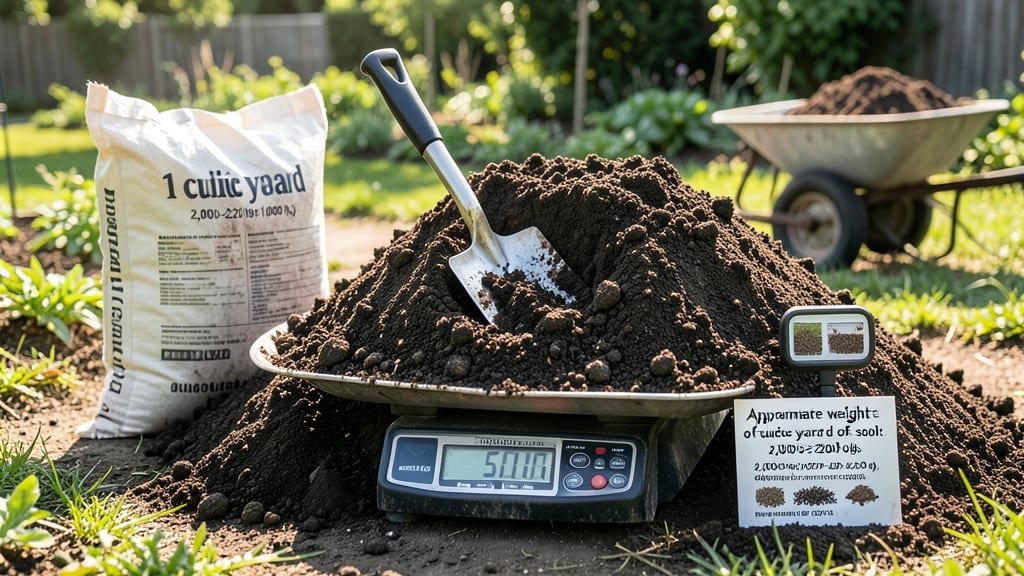
The weight of a cubic yard of topsoil ranges from 2,000 to 2,800 pounds when completely dry, but water absorption can push this up to 2,500 to 3,500 pounds. Soil type and compaction play a major role in determining the final weight.
The weight of topsoil per cubic yard isn't fixed—it shifts based on moisture levels and soil composition. 💧 For example, a clay-heavy mix can weigh significantly more than sandy loam due to its higher density, while screened, loose topsoil might sit closer to the lower end of the scale.
This variability is why contractors and gardeners always specify whether they need "dry weight" or "wet weight" when ordering bulk deliveries. Understanding these differences helps avoid costly over- or under-ordering for projects like raised garden beds or lawn leveling.
Here's a quick tip: if you're planning a project, ask your supplier for the moisture-adjusted weight—this gives you the most accurate estimate for your specific conditions. For instance, topsoil used in wet climates will naturally weigh more than the same volume in arid regions.
💡 In This Article
- How Moisture and Soil Composition Affect Topsoil Weight
- Practical Topsoil Weight Calculations for Gardening Projects
How moisture and soil composition affect topsoil weight
Moisture is the single biggest factor in topsoil weight variation. When dry, topsoil's weight comes primarily from mineral particles like sand, silt, and clay, with organic matter contributing about 5-10% of the total mass. However, water can account for 20-40% of the weight in natural conditions.
For example, clay particles have microscopic spaces that absorb water like a sponge, increasing weight dramatically—up to 300 pounds per cubic yard when saturated compared to dry conditions. 💧
Soil composition creates dramatic differences in density. Sandy loam, with its larger particles, typically weighs 2,000-2,400 pounds per cubic yard when dry, while clay-heavy topsoil can reach 2,600-3,200 pounds due to its tightly packed structure.
Organic matter, though lighter than minerals, adds bulk—compost-amended topsoil might weigh 1,800-2,200 pounds dry because of its air pockets. The porosity of each type determines how much water it can hold, directly affecting weight fluctuations.
Compaction plays a hidden role in weight calculations. Foot traffic or heavy machinery can compress soil by 10-20%, increasing its density and weight per cubic yard.
This is why construction sites often specify "bulk density" measurements—compacted topsoil might weigh 2,800 pounds in a truck bed but expand to 2,400 pounds when loosened for gardening. The key is understanding whether your supplier's weight estimate assumes loose, screened soil or compacted delivery conditions.
Seasonal variations matter too. Topsoil in spring, after winter rains, can weigh 15-25% more than in summer due to retained moisture. For precise projects, test your soil's moisture content by weighing a 1-gallon sample before and after drying it in an oven at 212°F for 24 hours.
This simple lab method reveals your local topsoil's natural water absorption patterns, helping you adjust delivery orders accordingly.
Here's what most people overlook: the role of soil particles' surface area. Clay particles have 10-100 times more surface area than sand grains, which means they bind more water molecules through capillary action.
This is why clay soils feel heavier when wet—their water-holding capacity creates a 2-3x weight increase compared to sandy soils during saturation events.
For practical applications, remember this rule: 1 cubic yard of dry, loose topsoil ≈ 2,000 pounds, but add 500-1,000 pounds if moisture content exceeds 20%.
Always verify with your supplier whether their quoted weight includes moisture—this single detail can mean the difference between having enough soil for your project or needing an extra delivery.