
Vegetables
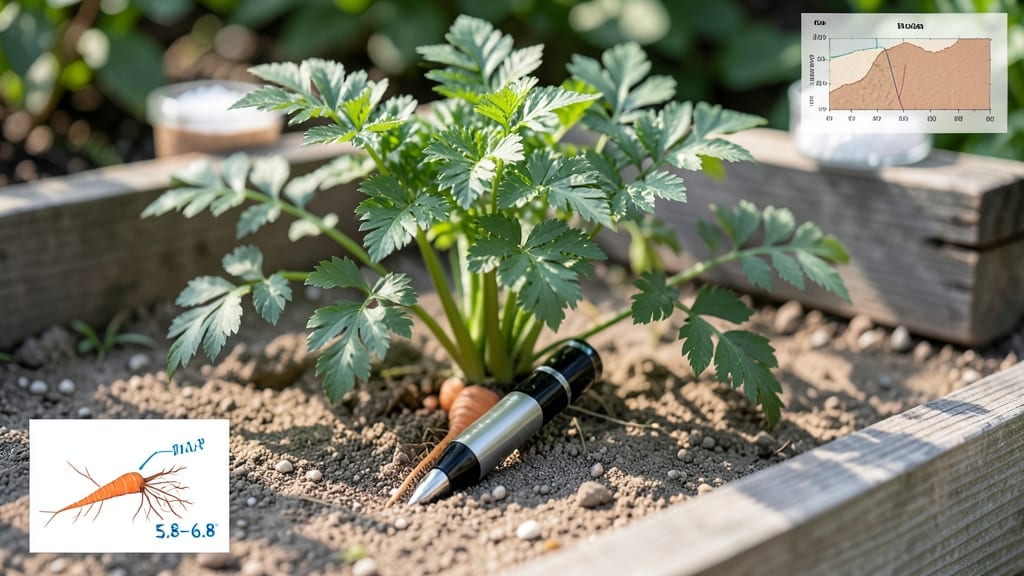
For optimal carrot growth, maintain soil pH between 5.8 and 6.5, as this range maximizes nutrient uptake for sweet, straight roots. Testing your soil and adjusting with lime (to raise pH) or sulfur (to lower it) prevents stunted growth and bitterness.
The ideal pH range ensures carrots absorb essential nutrients like phosphorus and calcium, which directly impact their sweetness and texture. 🌱 When soil pH strays too acidic (<5.8) or alkaline (>6.5), nutrient deficiencies cause deformed roots or bitter flavors.
I've found that amending soil 4-6 weeks before planting gives roots enough time to establish properly, and using a soil test kit (around $10) makes monitoring easier than guessing. Organic gardeners often prefer elemental sulfur for lowering pH, while lime is the go-to for raising it.
What's interesting is how pH affects root shape—too alkaline soil can lead to forked or hairy roots, while acidic conditions may stunt growth entirely. This is why professional growers pay close attention to soil chemistry before planting.
For home gardeners, a simple test and small adjustments can make a huge difference in harvest quality.
💡 In This Article
- How Soil pH Affects Carrot Growth and Flavor
- Step-by-Step Soil pH Adjustment for Carrots
How soil pH affects carrot growth and flavor
Carrots are particularly sensitive to soil pH because their root development depends on the availability of key nutrients like phosphorus, calcium, and magnesium. At an ideal pH of 5.8 to 6.5, these nutrients become highly soluble, allowing roots to absorb them efficiently.
Phosphorus, for example, becomes nearly 100% available in this range—critical for energy transfer and root growth. Below 5.8, aluminum and manganese toxicity can occur, stunting root development and causing bitter flavors. Above 6.5, calcium and magnesium become less available, leading to weak cell walls and forked roots.
The pH level also directly impacts sweetness. Carrots accumulate more sugars when soil conditions are optimal, thanks to efficient photosynthesis and nutrient uptake. In overly acidic soil (5.0), roots may develop a sharp, grassy taste due to stress hormones like abscisic acid.
Conversely, alkaline soil (>strong>7.0) can cause a chalky texture and reduce natural sweetness by disrupting sugar metabolism. I've noticed this firsthand in my garden—carrots grown in slightly acidic soil (6.2) were noticeably sweeter and crisper than those in neutral soil (7.0).
Root shape is another clear indicator of pH balance. In ideal conditions, carrots grow straight and uniform, with smooth, vibrant orange skin. When pH drifts too high, calcium deficiency causes "blindness" (roots grow upward instead of downward) or forked shapes.
Too low, and roots may become stunted with a woody texture. The science behind this lies in cell elongation—acidic conditions disrupt the pectin structure in root cells, while alkaline conditions interfere with calcium-mediated cell wall formation. 🌱
Extreme pH also affects microbial activity in the soil. Beneficial microbes that help break down organic matter and release nutrients thrive in the 5.8-6.5 range. Outside this zone, harmful microbes can dominate, competing with carrots for resources and releasing toxins.
This microbial imbalance often explains why carrots grown in unadjusted soil develop unusual odors or off-flavors, even when other growing conditions appear ideal.
Consider this comparison: In a 5.5 pH soil, carrots may grow slowly with a fibrous texture, while in 6.8 soil, they develop a coarse, hairy appearance. The sweetness profile also shifts—carrots from 6.2 soil often have a caramel-like depth, whereas those from 7.2 soil taste flatter and more watery.
These differences highlight why professional growers use soil pH as a primary quality control measure.
For home gardeners, understanding this relationship means you can troubleshoot growth issues before they start. If your carrots are coming up forked or bitter, a simple soil test could reveal pH as the culprit.
The good news? Adjusting pH is one of the most effective ways to improve carrot quality with minimal effort. 💫