
Neem Oil
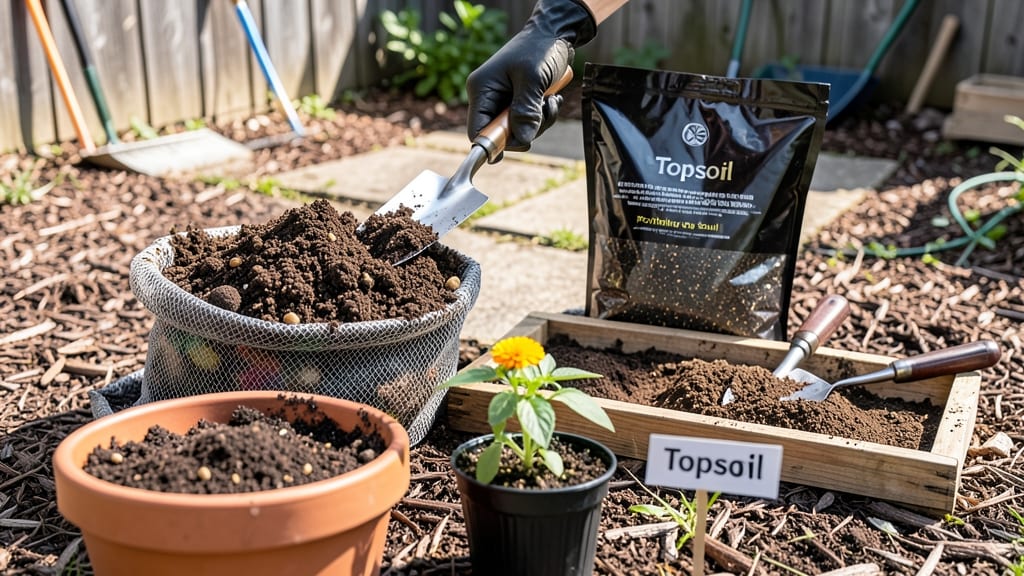
You shouldn't use topsoil for potting soil because it compacts easily, drains poorly, and lacks the organic matter and aeration plants need in containers. Instead, opt for lightweight potting mixes with perlite, vermiculite, or coconut coir for optimal root growth and moisture balance.
Topsoil's heavy clay content makes it too dense for container gardening, where roots need plenty of oxygen and quick drainage. 🌱 Plants in pots rely on a mix designed to stay loose and breathe—something garden soil simply can't provide.
I've seen houseplants thrive in store-bought blends with added perlite, which prevents compaction and keeps moisture balanced. For DIY mixes, combine equal parts peat moss, compost, and coarse sand to mimic that ideal air-to-moisture ratio.
If you're tempted to use topsoil, try mixing it with 50% coconut coir or 30% perlite to lighten the texture—but even then, it won't match commercial potting mixes.
The key difference? Potting soil is formulated to prevent root rot while garden soil is built for in-ground planting where natural drainage exists.
💡 In This Article
- Why Topsoil Fails as Potting Mix
- Best Potting Soil Alternatives for Containers
Why topsoil fails as potting mix
Topsoil is designed for in-ground planting where natural drainage and microbial activity can break down its dense structure over time. In containers, however, its high clay content becomes a problem because it lacks the air pockets that roots need to breathe.
When compacted, topsoil can reduce oxygen levels to as low as 5-10%—far below the 20-30% ideal for healthy root respiration. This suffocation leads to stunted growth or even root rot, especially in warm conditions where microbial activity accelerates.
The moisture retention in topsoil is another critical issue. While it holds water well for garden beds, this same trait becomes dangerous in pots where excess water has nowhere to escape.
Without proper aeration, water pools around roots, creating anaerobic conditions that promote harmful bacteria and fungi. 🌱 For example, a 5-gallon container filled with topsoil may take 3-5 days to dry out completely, compared to 1-2 days in a well-amended potting mix with perlite or vermiculite.
Nutrient availability also differs dramatically. Topsoil contains natural organic matter over time, but it's not immediately accessible to container plants that rely on quick nutrient uptake. Potting mixes, on the other hand, incorporate composted materials that break down rapidly, providing a steady supply of nitrogen, phosphorus, and potassium.
Without this balance, plants in topsoil often show signs of deficiency—yellowing leaves or weak stems—despite regular watering.
Consider the texture: topsoil feels dense and gritty when dry, while ideal potting soil has a light, crumbly consistency that falls apart easily. This difference is due to the addition of organic amendments like peat moss or coconut coir, which create a sponge-like structure.
When you squeeze a handful of potting mix, it should feel slightly resistant but still break apart—topsoil, however, will hold its shape like wet clay.
Even the microbial ecosystem differs. Garden soil supports a broad range of soil organisms that help decompose organic matter, but these microbes struggle in the compacted, low-oxygen environment of containerized topsoil. The result?
Fewer beneficial bacteria and mycorrhizal fungi to aid root development. This is why plants in topsoil often show slower growth compared to those in properly formulated potting mixes, even when given identical care.
One common misconception is that adding sand to topsoil will improve drainage. While this helps slightly, it actually creates larger air pockets that can dry out too quickly, leading to another set of problems.
The solution lies in a balanced approach: using ingredients that maintain both moisture and aeration, like the 1:1:1 ratio of peat moss, compost, and perlite found in many commercial potting mixes.