
Container Gardens
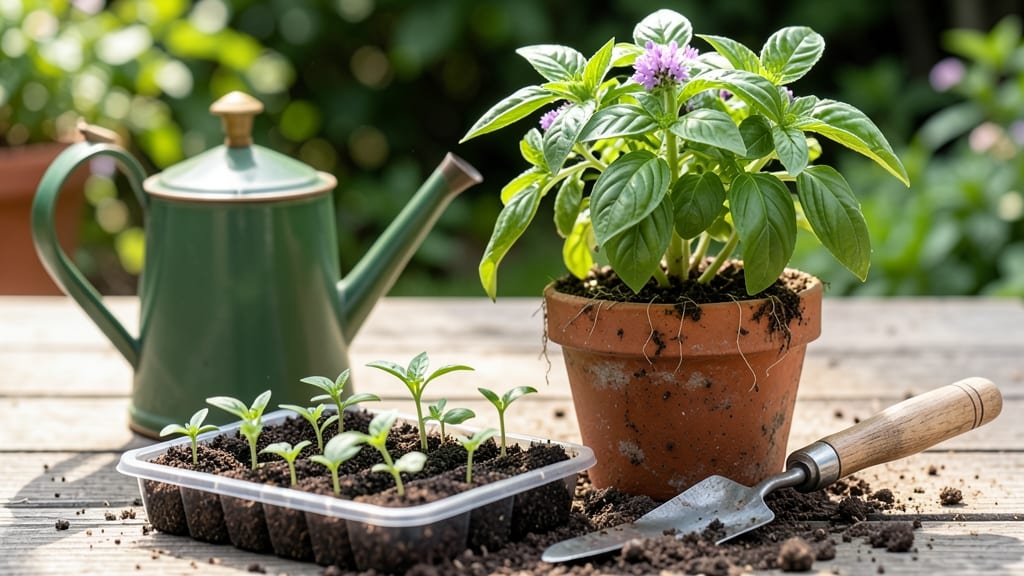
Using garden soil in containers creates root compaction and drainage issues because it's too dense and lacks organic matter. For healthy container plants, blend it with perlite or coconut coir, or use specialized potting mixes that improve aeration and moisture control.
Garden soil's heavy clay content and lack of organic structure make it ideal for in-ground planting but disastrous for containers. 🌱 The dense particles prevent roots from expanding, while poor drainage leads to waterlogged soil that suffocates plant roots.
I've seen firsthand how even well-draining garden soil can turn containers into soggy, anaerobic environments that encourage root rot. The solution lies in amending it with porous additives like perlite or using commercial potting mixes formulated specifically for containers, which balance drainage and nutrient availability.
For best results, aim for a mix that's 30% garden soil, 30% compost, and 40% perlite or vermiculite. 🌿 This combination mimics the airy texture of natural forest soil while providing the nutrients plants need.
If you're growing succulents or cacti, increase the perlite ratio to 50% or more to prevent moisture retention. The key is creating a medium that lets roots breathe while holding enough moisture for consistent growth.
💡 In This Article
- Why Garden Soil Fails in Container Gardening
- Best Soil Blends for Container Plants
Why garden soil fails in container gardening
Garden soil's dense structure creates a suffocating environment for container plants. The heavy clay particles pack tightly together, reducing pore space by up to 70% compared to ideal potting mixes.
This compaction restricts root expansion, forcing roots to grow in tight circles—a condition called "root binding" that stunts growth and reduces nutrient uptake. The problem worsens in containers because there's no room for roots to escape downward like they would in garden beds.
Poor aeration is another critical issue. Garden soil typically contains only 5-10% air pockets by volume, while healthy potting mixes achieve 20-30% aeration. These air spaces are essential for root respiration—the process where roots exchange gases (absorbing oxygen, releasing carbon dioxide).
Without proper aeration, roots suffocate, leading to yellowing leaves and weakened plants. The dense structure also prevents water from draining efficiently, creating waterlogged conditions that promote harmful bacteria and fungal growth.
Nutrient imbalances further complicate matters. Garden soil often contains uneven distributions of organic matter, with some areas rich in nutrients and others depleted. Container plants rely on consistent nutrient availability since they can't spread their roots to find resources.
The lack of structure also means nutrients leach out quickly when watered, requiring more frequent fertilization.
For example, a tomato plant in garden soil may show signs of nitrogen deficiency within 3-4 weeks due to rapid leaching, while the same plant in a balanced potting mix maintains healthy growth for 6-8 weeks between feedings.
Consider the texture difference: garden soil feels heavy and clumps tightly when moist, while ideal potting mixes crumble easily between fingers and maintain structure. This physical difference directly impacts root health.
When roots can't spread, they become crowded and compete for the same limited resources, leading to stress responses like leaf drop or stunted flowering. The science is clear—roots need both space to grow and air to breathe, and garden soil simply can't provide both in confined containers.
Even "well-draining" garden soil often contains organic debris that breaks down over time, creating air pockets—but this process takes months. In the meantime, your container plants are struggling.
The solution lies in understanding that container gardening requires a fundamentally different growing medium: one that's designed to be loose, breathable, and nutrient-balanced from day one. 🌱
What most gardeners don't realize is that the problem isn't just the soil itself—it's how it interacts with the container's limited volume.
A 5-gallon pot filled with garden soil might look like it has enough space, but the dense medium actually reduces the effective rooting volume by 40-50% compared to a properly amended mix. This is why even large containers often fail to support healthy plants when using garden soil.