
Vegetables
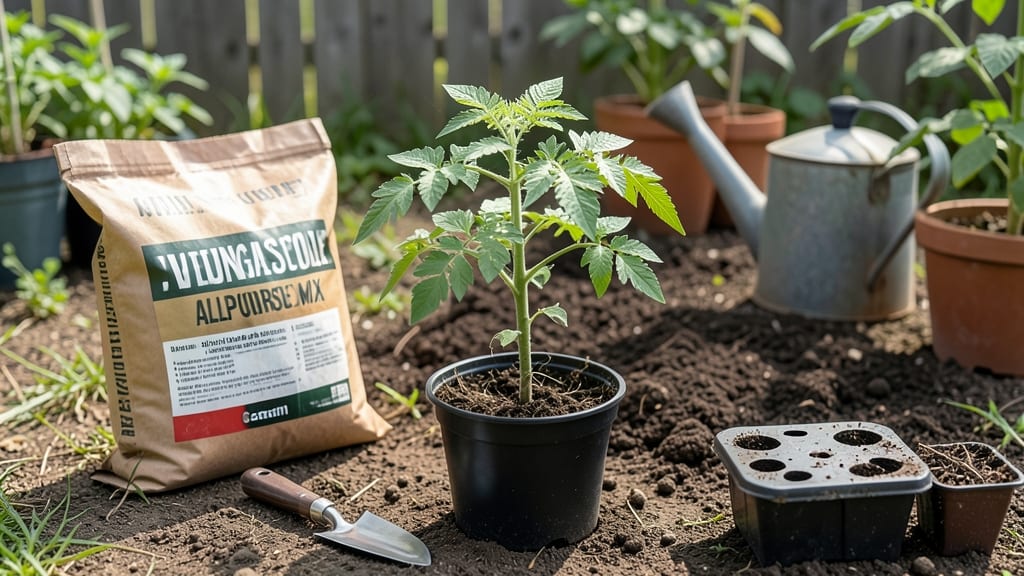
You can use potting soil for vegetables, but it's not ideal because it lacks the nutrients, drainage, and microbial life needed for healthy growth and strong yields. A better approach is to mix garden soil with compost for optimal results.
Potting soil is designed for short-term container plants, not the nutrient demands of vegetables. 🌱 Without proper organic matter, roots struggle to access essential minerals like nitrogen and phosphorus, leading to stunted growth or poor harvests.
Even "organic" potting mixes often lack the microbial diversity found in garden soil, which helps break down nutrients into usable forms for plants.
For vegetable gardens, I recommend blending 60% garden soil with 30% compost and 10% coarse sand to improve drainage while retaining moisture. This mix supports root development and provides the slow-release nutrients vegetables need to thrive throughout the growing season.
💡 In This Article
- Why Potting Soil Fails Vegetable Gardens
- Best Soil Mixes for Growing Vegetables
Why potting soil fails vegetable gardens
Potting soil is engineered for short-lived container plants—not vegetables that need sustained nutrition. The key issue is its low organic matter content, typically 10-20%, compared to garden soil's 30-50%. This organic matter is crucial because it feeds beneficial microbes that break down nutrients into forms plants can absorb.
Without it, vegetables like tomatoes or peppers struggle to access essential minerals like nitrogen and phosphorus, leading to yellowing leaves or weak stems.
The texture of potting soil is another problem. It's designed to stay loose and airy to prevent compaction in small pots, but this same quality creates instability for deep-rooted vegetables.
Garden soil, with its natural clay and silt particles, holds structure better, allowing roots to penetrate 12-24 inches deep—critical for crops like carrots or potatoes.
Potting soil's lightweight nature also means it dries out faster, forcing you to water 2-3 times daily in hot climates, while garden soil retains moisture longer.
Microbial imbalance is the silent killer of vegetable growth. Potting soil often contains sterilized or pasteurized components to prevent mold, but this eliminates the diverse fungi and bacteria that decompose organic matter and suppress plant diseases.
Garden soil, by contrast, hosts thousands of microbial species that create a symbiotic relationship with roots, improving nutrient uptake by up to 30%. Without this ecosystem, vegetables become vulnerable to pests and nutrient deficiencies.
Consider this comparison: Potting soil is like feeding your plants a single vitamin pill, while garden soil provides a balanced, slow-release meal. The lack of structure also means nutrients leach out quickly during watering, wasting what little fertility exists.
For example, a 5-gallon container of potting soil may only provide enough nitrogen for 4-6 weeks of growth, while garden soil with compost can sustain plants for 3-4 months.
Even premium potting mixes often contain peat moss or coconut coir, which break down rapidly, leaving a compacted mess that suffocates roots. The pH balance is another factor—potting soil typically sits at 5.5-6.5, while vegetables like blueberries or kale thrive in 4.5-5.5 or 6.0-7.0 ranges.
Without adjustments, you're limiting your plants' ability to absorb critical minerals like iron or calcium.
The bottom line? Potting soil is a temporary solution that works for herbs or salad greens in small pots, but it fails for vegetables that need deep, nutrient-rich soil to produce abundant harvests. 🌱