
Neem Oil
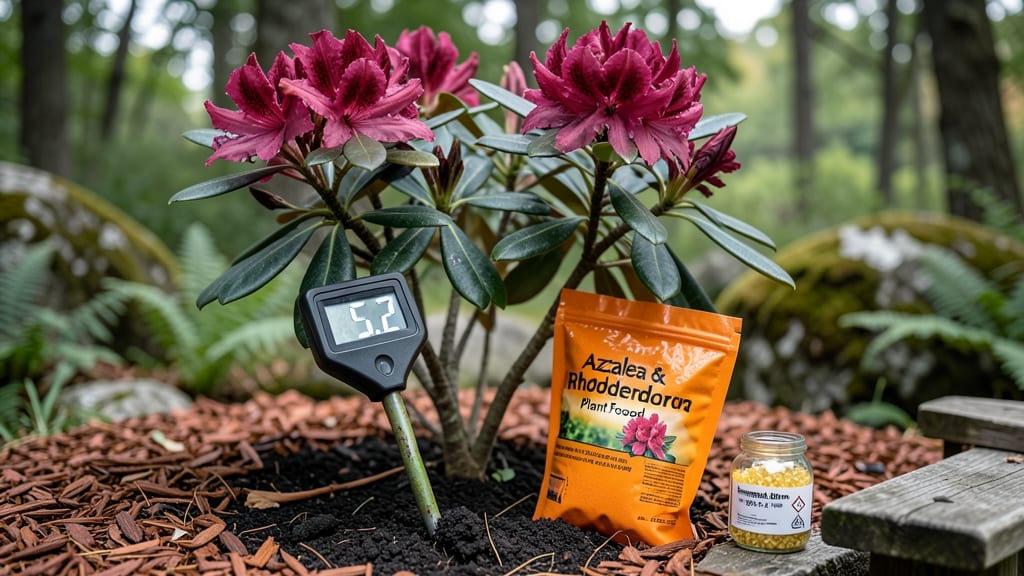
Azaleas need acid soil with a pH between 4.5 and 6.0 to mimic their natural forest environment. Test your soil's acidity with a simple kit or meter, then adjust using sulfur or peat moss if the pH is too high—never use lime or wood ash, which make the soil more alkaline.
Azaleas are picky about their growing conditions, and soil acidity is one of the most critical factors for their health. 🌿 The right pH level helps their roots absorb essential nutrients like iron and manganese, which keep leaves vibrant and stems strong.
If your soil is too alkaline, you'll notice yellowing leaves even when the plant has enough water—a classic sign of nutrient lockout. I've seen this happen when gardeners use garden lime to sweeten soil, unaware it harms azaleas by raising the pH beyond their ideal range.
For testing, home kits are affordable and accurate enough for most gardeners, while lab tests provide precise readings if you're dealing with large garden beds. Once you know your soil's pH, organic amendments like sulfur or pine needles work best for gradual acidification.
Remember, azaleas prefer a slow release of acidity—adding too much at once can stress the plant's delicate root system. Over time, regular monitoring and small adjustments keep your azaleas thriving year after year.
💡 In This Article
- How Soil pH Affects Azalea Root Health and Nutrient Uptake
- Step-by-Step Soil Acidification Guide for Azalea Gardens
How soil pH affects azalea root health and nutrient uptake
Azalea roots thrive in acidic conditions because their natural habitat—moist, shaded forest floors—naturally produces soil with a pH of 4.5 to 6.0. This acidity isn't just about hydrogen ions; it's about how those ions interact with nutrients like iron, manganese, and phosphorus.
In alkaline soil (pH 7.0+), these essential minerals become locked in the soil, unavailable for root absorption, even when the plant has enough water.
This creates a condition called chlorosis, where leaves turn yellow between veins while the veins stay green—a clear sign your azaleas are starving despite looking hydrated. 🌱
The root system of azaleas has specialized mycorrhizal fungi that help absorb nutrients, but these fungi only function optimally in acidic environments. At pH levels above 6.0, the fungi's ability to break down organic matter and transfer nutrients to the plant weakens dramatically.
For example, iron—a critical nutrient for chlorophyll production—becomes insoluble in alkaline soil, forming compounds that roots can't access. This is why even well-fertilized azaleas in alkaline soil develop yellow leaves, a condition that persists until the soil pH is corrected.
The roots themselves may also become stunted, as high pH levels can inhibit root growth and reduce the plant's overall vigor.
What most gardeners don't realize is that azaleas also struggle with aluminum toxicity in overly acidic soil (below pH 4.5). While this seems counterintuitive—since we're aiming for acidity—too much acidity releases aluminum ions that can damage root cell membranes.
This creates a delicate balance: you need enough acidity for nutrient availability, but not so much that it harms the roots. The ideal pH range of 4.5 to 6.0 strikes this balance perfectly, allowing azaleas to absorb the maximum amount of nutrients while avoiding toxic metal buildup. 🌿
Another critical factor is how pH affects soil microbes. Beneficial bacteria and fungi that help break down organic matter and cycle nutrients thrive in acidic conditions. These microbes produce chelating agents that bind to nutrients like iron and manganese, making them soluble and plant-available.
In alkaline soil, these microbes become less active, reducing the plant's access to nutrients even further. This microbial activity is why composted leaves or pine needles—both naturally acidic—work so well as soil amendments for azaleas. They not only lower pH but also introduce beneficial microbes that enhance nutrient uptake.
To visualize this, imagine azalea roots as tiny fishing nets trying to catch nutrients in a pond. In acidic soil, the pond is clear and full of freely moving fish (nutrients).
In alkaline soil, the fish become stuck in mud (insoluble compounds), and the net gets clogged with debris (toxic metals). The goal is to keep the pond clear and the fish swimming freely—neither too murky (too acidic) nor too muddy (too alkaline).
This balance is what makes the 4.5 to 6.0 pH range so critical for azalea health. 💫
One practical example of this in action is how azaleas respond to rainwater. Rainwater is naturally acidic (pH 5.6), which is why azaleas often thrive in regions with frequent rainfall. In drier climates, where soil naturally trends toward alkalinity, gardeners must actively acidify the soil to mimic these natural conditions.
This is why many azalea growers in arid areas use organic amendments like sulfur or pine needles—not just to lower pH, but to restore the microbial balance that supports healthy root function.
Understanding this science helps explain why azaleas often struggle in garden centers or urban environments, where soil is frequently amended with lime or composted manure (both alkaline). The key takeaway is that azaleas aren't just "loving" acidity—they've evolved to depend on it for their very survival.
Without the right soil chemistry, even the most beautiful azalea plants will eventually decline, no matter how much water or sunlight they receive. 🌸