
How To
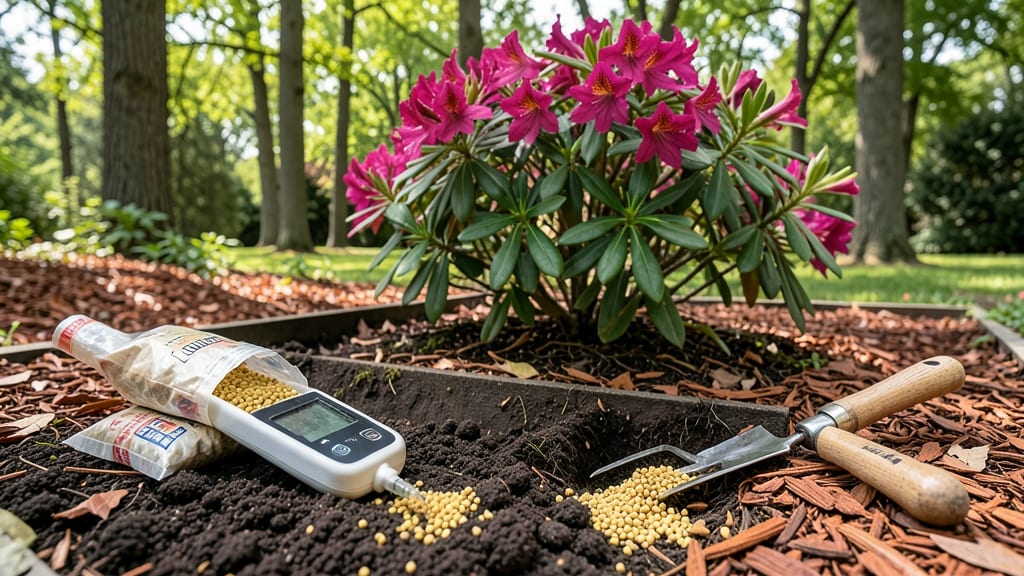
Your rhododendrons won’t just survive—they’ll explode with color when the acid soil for rhododendrons stays between pH 4.5 and 6.0. I learned this the hard way after my plants grew leggy and sparse, despite my best care. The fix?
A simple acid soil blend that mimics their natural forest-floor habitat, using organic materials that work over time. Start with a 50-50 mix of peat moss and pine bark, the dynamic duo for rhododendrons.
Peat moss holds moisture while lowering pH, and pine bark adds structure while keeping the soil airy. For existing beds, work 2-3 inches of this blend into the topsoil, then mulch with 3-4 inches of pine needles to maintain acidity naturally.
You’ll see the difference within a season: deeper green foliage, stronger stems, and blooms that last longer. The key is patience—organic amendments take time, but they won’t burn roots like synthetic fertilizers. Test your soil every 2-3 years to adjust as needed.
This same mix works for azaleas, blueberries, and camellias, too. Pair them together for a low-maintenance, high-impact acid-loving garden that thrives with minimal fuss. Let’s get those roots happy!
📚 In This Guide
- What you need
- Instructions
- Tips and common mistakes
- Wrapping up and next steps
What you need
- ● Peat moss (sphagnum) – 50% of the mix (5 gallons for a standard 5-gallon blend). Use high-quality, sterile peat moss to avoid weeds or pests.
- ● Pine bark fines – 30% of the mix (3 gallons). Choose coarse or medium-grade bark (1/4" to 1/2" size) for aeration.
- ● Perlite or pumice – 10% of the mix (1 gallon). Improves drainage and prevents compaction.
- ○ Sulfur or aluminum sulfate – Optional but recommended (1–2 tbsp per 5 gallons). Lowers pH if your soil isn’t acidic enough (aim for pH 4.5–6.0).
- ● Composted pine needles or oak leaves – 10% of the mix (1 gallon). Adds organic matter and enhances acidity naturally.
- ● Garden gloves – To protect your hands from sharp bark and soil particles.
- ● Wheelbarrow or large mixing bin – For blending ingredients evenly (at least 7–8 gallons capacity).
- ● Garden trowel or shovel – For amending existing soil or planting.
- ● pH testing kit – Highly recommended (digital or liquid test strips) to verify soil acidity before and after mixing.
- ● Watering can or hose – For moistening the mix before planting.
- ○ Mulch (optional) – Pine straw or wood chips (2–3 inches thick) to retain moisture and acidity.
How to create the perfect acid soil mix for rhododendrons
Creating the ideal growing medium for rhododendrons is all about balance—acidity, drainage, and organic matter work together to unlock vibrant blooms.
Combine Peat Moss and Pine Bark in the Right Ratio
Start by mixing 4 parts peat moss with 1 part finely ground pine bark in a large container. Peat moss provides the essential acidity rhododendrons crave, while pine bark improves aeration and prevents compaction. I like to sift the pine bark first to remove any large chunks—those can create air pockets that disrupt root development.
For 4 servings (enough to fill four 15-gallon containers), you’ll need 16 quarts of peat moss and 4 quarts of pine bark. Spread the peat moss evenly in the container first, then sprinkle the pine bark over the top. Use a garden fork to gently blend them together, ensuring an even distribution throughout. The final mix should look dark, fibrous, and uniformly crumbly.
Add Perlite or Sand for Improved Drainage
Rhododendrons despise soggy roots, so drainage is non-negotiable. Stir in 1 part perlite or coarse sand to the peat-pine bark blend—this keeps the mix loose and prevents waterlogging. For the same 4 servings, add 4 quarts of perlite (or sand if perlite isn’t available). Work it in thoroughly with your hands or a trowel until the texture feels light and airy.
Here’s the thing—if you skip this step, the mix will compact over time, suffocating roots. Test the drainage by filling a small container with your blend, watering it, and checking how quickly excess moisture drains away. It should take no more than 10-15 minutes for water to fully pass through. If it pools at the bottom, add a little more perlite.
Incorporate Organic Matter for Nutrient Retention
Rhododendrons thrive when their soil holds nutrients without becoming waterlogged. Fold in 1 part composted leaf mold or well-aged pine needles to the mix—this adds organic matter that slowly releases nutrients while maintaining acidity. For 4 servings, use 4 quarts of leaf mold (or pine needles if leaf mold isn’t available). Spread it evenly over the peat-pine-perlite blend and mix thoroughly.
Leaf mold is my secret weapon because it mimics the natural forest floor conditions rhododendrons evolved in. If you can’t find it, finely shredded pine needles work almost as well. Avoid fresh pine needles—they release too many resins and can harm roots. The final mix should smell earthy, not sharp or chemical-like.
Adjust pH to the Ideal Range of 4.5–5.5
Test the pH of your mix before planting—rhododendrons are finicky about acidity. Use a soil pH test kit to check the blend. If the pH reads higher than 5.5, amend it with elemental sulfur (½ cup per 4 quarts of mix) or peat moss (add more if needed). For every 0.5 pH point above 5.5, add ¼ cup of sulfur and remix thoroughly.
Don’t rush this step. Let the sulfur work for 2-3 weeks before planting, as it takes time to lower pH. If your mix is already in the right range, skip this—over-acidifying can harm roots just as much as soil that’s too alkaline. The goal is 4.5–5.5, no higher, no lower.
Prepare the Mix for Planting
Once the pH is perfect, fluff the mix one last time to ensure even consistency. Fill your containers or garden beds with the blend, leaving 1-2 inches of space at the top for mulch. Rhododendrons hate having their roots exposed, so tamp the soil lightly around the base of the plant to eliminate air pockets—but don’t pack it down like clay.
Water the mix gently before planting to settle it slightly. You’ll know it’s ready when the surface feels slightly damp but not wet, like a wrung-out sponge. This ensures roots can establish contact with the soil immediately. Mulch with 2-3 inches of pine bark or wood chips to lock in moisture and maintain acidity over time.
Tips & tricks for perfect acid soil mix for rhododendrons
Between us, crafting the ideal growing medium for rhododendrons isn't just about throwing ingredients together—it's about creating an environment that mimics their natural forest habitat. Here's how to elevate your mix from good to exceptional.
Texture Matters: The 10-15 minute drainage test in Step 2 is your quality control moment. Pour water into a small container filled with your mix and time how quickly it drains. The ideal mix should feel like a wrung-out sponge—moist but not soggy. If water pools after 15 minutes, add another ½ quart of perlite and remix. This prevents that suffocating compactness that kills rhododendron roots faster than anything else.
Ingredient Selection Tip: When choosing pine bark in Step 1, look for finely ground pieces no larger than ¼ inch. The larger chunks create air pockets that disrupt root development. I've learned this the hard way after seeing roots struggle in uneven mixes. For the best results, sift your pine bark through a ¼-inch mesh screen before mixing—it makes all the difference in creating that perfectly uniform crumbly texture.
pH Adjustment Strategy: The 4.5-5.5 pH range in Step 4 is non-negotiable, but don't guess—test first. Many gardeners overshoot the acidity, thinking more is better. If your test kit shows 5.8, add just ¼ cup of sulfur for every 0.5 points above 5.5. Remember, sulfur takes 2-3 weeks to work, so plan ahead. I always make a small test batch first to dial in the exact amount needed for my specific mix.
Organic Matter Quality Check: In Step 3, the leaf mold or pine needles should smell earthy, not sharp or chemical-like. Fresh pine needles contain harmful resins that can damage roots, while decomposed organic matter provides slow-release nutrients. If you're using pine needles, age them for at least 6 months before using. The difference between fresh and aged needles is like night and day for your rhododendrons' health.
Pro Tips for Acid Soil For Rhododendrons
- Between us, crafting the ideal growing medium for rhododendrons isn't just about throwing ingredients together—it's about creating an environment that mimics their natural forest habitat.
- Texture Matters: The 10-15 minute drainage test in Step 2 is your quality control moment.
- Ingredient Selection Tip: When choosing pine bark in Step 1, look for finely ground pieces no larger than ¼ inch.
Frequently asked questions
Got questions about creating the perfect acid soil for your rhododendrons?
Here are some of the most common concerns—plus straightforward answers to help your plants thrive!
How do I test if my soil is acidic enough for rhododendrons?
Use a soil pH test kit (available at garden centers) or send a sample to a local extension office. Rhododendrons thrive in soil with a pH between 4.5 and 6.0. If your soil is too alkaline, amend it with sulfur or peat moss to lower the pH gradually over 2–3 months.
Can I use regular garden soil mixed with peat moss?
While you can mix regular soil with peat moss, it’s not ideal—most garden soils are too alkaline. For best results, use a pre-mixed acid-loving plant blend (like the one in this recipe) or create a custom mix with 50% peat moss, 30% pine bark, and 20% perlite for better drainage.
How long does it take to acidify soil for rhododendrons?
Acidifying soil takes time! Amendments like elemental sulfur or pine needles may take 2–3 months to adjust pH. For faster results, use sphagnum peat moss or pine bark fines, which work within a few weeks. Test pH regularly for accuracy.
What happens if my rhododendron leaves turn yellow?
Yellow leaves often signal chlorosis (iron deficiency), common in alkaline soil. Check pH levels—if too high, amend with more acidifying materials. Also, ensure proper watering (avoid soggy roots) and fertilize with an acid-loving plant food like iron chelate.
Are there alternatives to peat moss for acid soil?
Yes! If peat moss is hard to find or expensive, try:
- Coconut coir – A sustainable, peat-like alternative.
- Composted pine bark – Adds acidity and improves drainage.
- Leaf mold – Breaks down into a rich, acidic humus.
- Sphagnum moss – Retains moisture and lowers pH.
Wrapping up and next steps
Creating the perfect acid soil mix for your rhododendrons is all about balancing the right ingredients—like peat moss, pine bark, and perlite—to mimic their natural, nutrient-rich environment. 🌿 With this simple blend, you’ll set the stage for vibrant blooms and lush foliage, ensuring your plants thrive year after year.
Now that you’re armed with the knowledge, it’s time to roll up your sleeves and get planting—your rhododendrons will thank you!
Next steps:
- Test your soil’s pH before and after mixing to confirm acidity.
- Monitor your plants’ response and adjust the blend if needed.
- Share your success (or blooming challenges!) with fellow gardeners—community tips help everyone grow!