
Vegetables
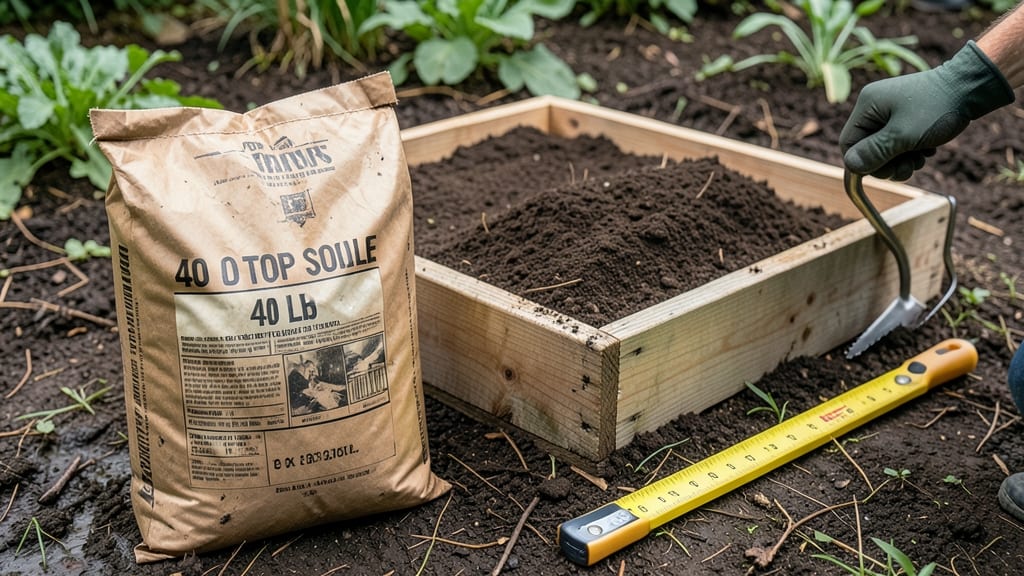
A 40 lb bag of topsoil converts to about 0.018 to 0.028 cubic yards, with variations based on moisture levels and soil composition—sandy soil expands more than clay-heavy blends.
A 40 lb bag of topsoil's actual volume depends heavily on how much water it contains. Wet soil can weigh up to 50% more than dry soil, shrinking its cubic yard equivalent by nearly half. Sandy topsoil stays looser and occupies more space, while clay-heavy mixes compact tightly when wet.
For precise gardening projects, I recommend weighing your soil after purchase—most nurseries provide moisture-adjusted conversions if you ask. 🌱
This conversion becomes especially critical when planning large projects like raised beds or lawn topdressing. A single cubic yard covers about 100 square feet at 3 inches deep, so knowing your exact needs prevents costly over- or under-ordering.
Pro tip: Use a measuring wheel for accurate area calculations before buying bulk soil. The difference between 0.02 and 0.03 cubic yards per bag can mean several extra trips to the garden center!
💡 In This Article
- How Soil Density and Moisture Affect Cubic Yard Calculations
- Converting Topsoil Bags to Cubic Yards for Gardening Projects
How soil density and moisture affect cubic yard calculations
Soil volume isn't just about weight—it's a dance between moisture content and particle composition. When topsoil is dry, it contains mostly air pockets between particles, making it lighter and fluffier. But add water, and those air gaps fill with moisture, increasing weight while reducing total volume.
For example, a 40 lb bag of dry sandy soil might occupy 0.75 cubic feet, but if it's damp, the same weight could shrink to just 0.5 cubic feet due to compaction.
This moisture effect explains why nurseries often label bags as "loose" or "compacted"—a 10% moisture increase can cut usable volume by nearly 20%.
The science gets even more interesting when you consider soil composition. Sandy soil, with its large particles, stays loose and drains quickly, maintaining higher volume even when wet.
Clay-heavy mixes, however, have tiny particles that cling together when moist, creating a dense, compacted mass. Organic matter (like compost) adds another variable—it absorbs water like a sponge, swelling when damp and shrinking as it dries.
That's why a bag labeled "topsoil blend" might vary by 30% in volume depending on its organic content. 🌱 Think of it like packing snow: fresh, fluffy snow takes up way more space than packed snow, even if the weight stays similar.
Compaction plays a critical role too. When soil is loosely bagged, it retains more air and expands to its fullest potential. But once you transport or store it, vibrations and pressure can compress those particles, reducing volume by 15-25%.
This is why gardeners often see their soil "settle" after spreading—what looked like enough for a project suddenly feels insufficient. The key takeaway? Always check if your soil is "loose" or "compacted" on the label, as this directly impacts your cubic yard calculations.
Here's a practical example: Imagine you need to fill a 4'x8' raised bed to 12" deep. That's 3.33 cubic feet of space. If you're using sandy soil at 0.7 cubic feet per 40 lb bag, you'd need about 5 bags.
But if that same soil is 60% moisture (common in rainy seasons), each bag might only yield 0.5 cubic feet, requiring 7 bags instead. That's a 40% difference in material needs—enough to derail your project if you're not prepared.
For precise planning, I recommend this quick test: Take a 1-gallon container (about 0.134 cubic feet), fill it with your soil, and weigh it. Divide the weight by 7.48 (gallons per cubic foot) to estimate density.
For a 40 lb bag, this helps you calculate whether you're getting 0.5 or 0.75 cubic feet. Most garden centers will provide this data if you ask—it's worth the extra 30 seconds to avoid overbuying or running short mid-project. 💫
One final nuance: Bulk soil deliveries often settle even more than bagged soil due to heavy machinery compaction. If you're ordering a full cubic yard (27 cubic feet), expect it to shrink to about 22-24 cubic feet after spreading.
This "shrinkage factor" is why experienced gardeners always order 10-15% more than their calculations suggest—it's the difference between a perfectly filled bed and a half-empty one.