
Lawn
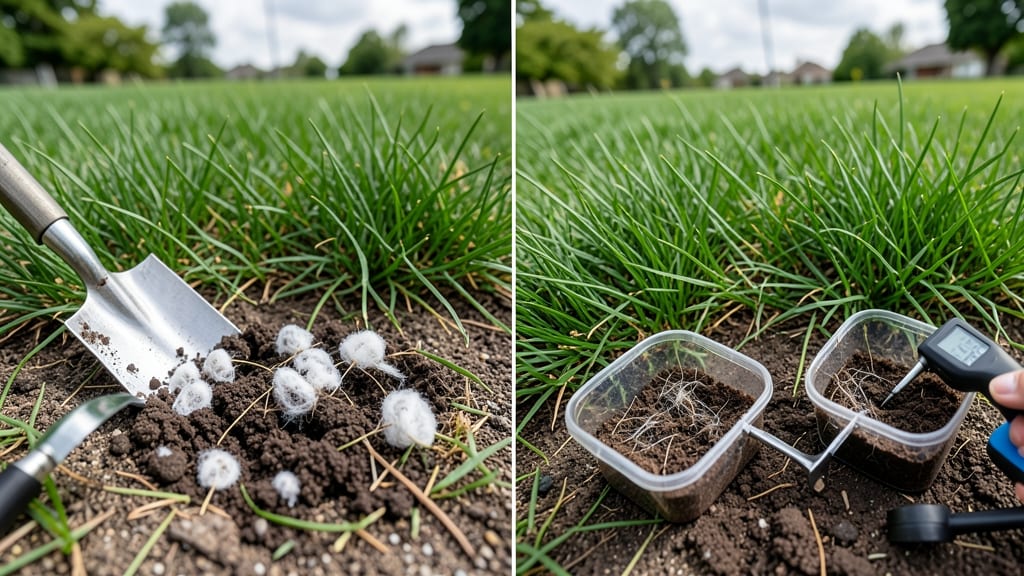
That white fungus in the soil under your lawn isn’t just unsightly—it’s stealing nutrients and weakening grass roots. 🌱 I’ve seen it turn lush lawns into patchy, struggling messes in just weeks, and the key to stopping it fast is understanding what you’re really dealing with.
Most people assume it’s mold, but this is usually lawn thatch or snow mold—thick fungal growth that thrives in compacted, waterlogged soil. The good news? You can reverse it in 2-3 weeks with the right approach, without harsh chemicals if you act quickly.
Start by raking out the worst patches (yes, it’s gross, but necessary) and improving drainage. Aerate compacted areas, then top-dress with compost to crowd out the fungus naturally. For stubborn cases, a targeted fungicide works—but only after you’ve fixed the underlying soil issues.
Prevention is easier than cleanup: mow high, overseed thin spots, and avoid overwatering. Once you break the cycle, your lawn will bounce back stronger than ever.
Root Causes Of Soil Fungus Growth
Discovering a white, fuzzy fungus creeping under your lawn isn’t just unsightly—it’s a sign your soil’s balance is off. Understanding the why behind its growth is the first step to stopping it before it spreads.
Let’s break down the key triggers, from hidden moisture to nutrient imbalances, so you can target the real problem.
Fungi thrive in damp, oxygen-starved environments. If your lawn retains too much water—whether from overwatering, heavy clay soil, or poor drainage—you’re creating the perfect breeding ground. Here’s how it happens:
- Compacted soil prevents water from draining, leaving the root zone soggy. Fungi like Rhizoctonia or Pythium (common lawn pathogens) flourish in these conditions.
- Irrigation habits matter: Watering at night or using sprinklers that soak the soil (instead of encouraging evaporation) prolongs moisture levels, inviting fungal spores to germinate.
- Low-lying areas or slopes where water pools after rain are hotspots for fungal outbreaks.
💡 Pro Tip: Test your soil’s drainage by digging a 6-inch hole and filling it with water. If it drains slower than 4 hours, your lawn may need amendments like sand or compost to improve aeration.
Fungi feed on decaying matter, and an overabundance of organic material—like thatch, fallen leaves, or old grass clippings—gives them a buffet. But it’s not just about food; imbalanced nutrients (too much nitrogen, not enough potassium) can weaken grass, making it vulnerable to fungal attacks.
- Thatch buildup (a layer of dead grass and roots) traps moisture and blocks airflow, creating a cozy home for fungi like fairy ring (which often appears as white mycelium).
- Over-fertilizing with nitrogen (common in fast-growing grass) can stress roots, leaving gaps for fungi to exploit.
- Lack of potassium weakens the grass’s natural defenses, making it easier for pathogens to take hold.
🔥 Action Step: Dethatch your lawn in spring or fall if the layer exceeds ½ inch. Use a soil test to check nutrient levels—aim for a balanced NPK ratio (e.g., 10-10-10) to support healthy grass.
Fungi are opportunistic—they strike when conditions are just right. Warm, humid weather (ideal for lawns) is also prime time for fungal growth. Here’s the science:
- 60–85°F (15–30°C) is the sweet spot for most lawn fungi. If your area has mild winters or hot, muggy summers, fungi stay active year-round.
- High humidity (above 70%) keeps fungal spores alive longer, even if the soil isn’t waterlogged. Early mornings with dew are a red flag.
- Sudden temperature drops (like spring frost followed by warmth) can shock grass, weakening its resistance.
🌡️ Climate Hack: If you live in a humid region, water your lawn early in the morning (before 10 AM) to let foliage dry quickly. Avoid nighttime watering, which extends moisture on blades.
Some fungi hitchhike on insects, grubs, or existing plant diseases. For example:
- Grubs (larvae of beetles) damage roots, creating entry points for fungal infections like brown patch.
- Ants or termites can disturb soil, exposing roots to fungal spores in the air.
- Pre-existing diseases (e.g., dollar spot) create stressed grass patches where white fungal mats spread rapidly.
🛡️ Defense Strategy: Treat grub infestations with beneficial nematodes or milky spore before they weaken your lawn. If you spot pests, act fast—fungi move in within 24–48 hours of root damage.
Not all grass is equally resistant to fungi. If your lawn is made up of susceptible varieties (like Kentucky bluegrass or tall fescue) or is already struggling, fungi will exploit the weakness.
- Thin or patchy lawns lack competition, allowing fungi to spread unchecked.
- Shade-tolerant grasses (like fine fescue) often grow slower, leaving gaps for fungal colonization.
- Overseeding without prepping soil can introduce fungal spores from new seed sources.
✨ Long-Term Fix: Choose fungus-resistant grass types like perennial ryegrass or zoysia for warm climates. If reseeding, sterilize soil first with a vinegar solution (1:1 ratio) to kill existing spores.
How to Fix Fungal Lawn Soil
Now that you understand why white fungus thrives under your lawn, it’s time to take action. The good news? With the right approach, you can eliminate existing growth and prevent future outbreaks—without harsh chemicals that harm your grass.
Below, we’ve mapped practical solutions to the most common causes, along with prevention tips to keep your lawn healthy long-term.
Problem: Fungus loves damp, stagnant soil. If your lawn stays soggy for too long, spores multiply like crazy.
Solution:
- 🔥 Adjust Your Watering Schedule
- Water deeply but infrequently—aim for 1–1.5 inches per week (including rain).
- Morning is best (before 10 AM) to allow soil to dry out during the day.
- Test drainage: Dig a small hole (6 inches deep), fill it with water, and time how long it takes to drain. If it’s slower than 4–6 hours, you’ve got poor drainage.
- 👨🍳 Improve Soil Aeration
- Core aeration (rent a machine or hire a pro) 2–3 times a year to break up compacted soil.
- Top-dress with sand or compost (50/50 mix) to boost drainage naturally.
- ⏰ Fix Low Spots & Grading
- If water pools in certain areas, level the lawn with a rake or topsoil.
- Install French drains or swales (shallow trenches) to redirect water away from problem zones.
💡 Prevention Tip:
- Mow high (3–4 inches) to encourage deep roots, which help soil dry faster.
- Avoid walking on wet grass—compression worsens compaction.
Problem: Thatch (that spongy layer of dead grass and roots) traps moisture and fungus spores, creating a perfect hiding spot.
Solution:
- 🔪 Dethatch Properly
- Use a manual thatch rake or power dethatcher (set to ¼-inch depth to avoid damaging roots).
- Focus on areas where fungus is thickest—don’t overdo it in healthy spots.
- 🌡️ Apply Fungicide (If Needed)
- For stubborn cases, use a natural fungicide like:
- Neem oil (1–2 tbsp per gallon of water, spray evenly).
- Baking soda solution (1 tbsp baking soda + 1 quart water + a few drops of dish soap).
- Avoid chemical fungicides unless severe—they can disrupt soil microbes.
- For stubborn cases, use a natural fungicide like:
- ✨ Remove Debris & Clean Tools
- Rake up leaves, clippings, and thatch regularly.
- Disinfect mower blades with rubbing alcohol after each use to prevent spreading spores.
💡 Prevention Tip:
- Mow frequently (never remove more than ⅓ of the blade height at once) to reduce thatch buildup.
- Overseed thin areas in fall to crowd out fungus-friendly debris.
Problem: Fungus thrives in shady, humid conditions where airflow is poor.
Solution:
- 🌳 Trim Overhanging Branches
- Open up the canopy to let sunlight and air circulate.
- Aim for at least 6 hours of direct sunlight per day for turfgrass.
- 🍳 Boost Airflow with Proper Spacing
- If your lawn has dense trees or shrubs, thin them out or replace them with fungus-resistant plants (like ornamental grasses).
- Avoid mulching too close to the lawn—keep mulch 2–3 inches away from grass edges.
- 💨 Use a Leaf Blower or Rake
- Gently blow or rake grass blades to reduce humidity on hot days.
- Ventilate the lawn by mowing in different patterns each time.
💡 Prevention Tip:
- Choose fungus-resistant grass types (e.g., tall fescue, zoysia, or buffalo grass) if shade is unavoidable.
- Install a soil solarizer (clear plastic sheeting) in fall to bake out fungus spores before reseeding.
Problem: Too much nitrogen, phosphorus, or improper pH (below 6.0) can weaken grass and invite fungus.
Solution:
- 📊 Test Your Soil
- Get a DIY soil test kit (or send a sample to a local extension office) to check:
- pH (ideal: 6.0–7.0 for most grasses).
- N-P-K levels (balance is key—too much nitrogen = weak roots).
- Get a DIY soil test kit (or send a sample to a local extension office) to check:
- 💪 Adjust Fertilizer Use
- Switch to slow-release, organic fertilizers (like composted manure or fish emulsion).
- Avoid high-phosphorus fertilizers—they encourage fungus growth.
- Fall is the best time to fertilize (avoid spring overfeeding).
- 🌿 Add Lime or Sulfur
- If pH is too low (acidic), sprinkle pelletized lime (follow package rates).
- If pH is too high (alkaline), apply elemental sulfur (½ lb per 100 sq ft).
💡 Prevention Tip:
- Aerate before fertilizing to help nutrients reach roots.
- Use a soil conditioner (like humic acid) to improve microbial balance.
| Task | When to Do It | How to Do It |
|---|---|---|
| Deep watering | Early morning, 2–3x/week | 1–1.5 inches total (including rain) |
| Aerate & overseed | Early fall | Core aerate + spread fungus-resistant seed |
| Dethatch | Late spring/early fall | Rake or machine-dethatch (¼-inch depth) |
| Test soil pH | Every 2–3 years | DIY kit or lab test |
| Clean mower blades | After each mow | Wipe with rubbing alcohol |
| Remove debris | Weekly | Rake leaves/clippings promptly |
Final Thought: Fungal issues under your lawn don’t have to be a permanent problem—just a temporary setback if you act fast. Start with drainage fixes, reduce thatch, and boost grass health, and you’ll see a noticeable difference in 4–6 weeks.
For severe cases, combine neem oil treatments with proper cultural practices, and your lawn will bounce back stronger than ever.
🚀 Ready to reclaim your lawn? Pick one fix from above and tackle it this weekend—your grass will thank you!
Frequently asked questions
Is white fungus in lawn soil always harmful?
Not all white fungal growth is dangerous! Some varieties like fairy ring are mostly cosmetic, creating white rings where grass may thin. However, pathogenic fungi (like Rhizoctonia or Pythium) weaken roots and spread quickly. If you see yellowing grass, bare patches, or thick cottony growth, it's likely harmful and needs treatment.
How quickly can white fungus spread under my lawn?
Fungal spores can spread rapidly—sometimes within 48 hours under ideal conditions (warm, humid weather with poor drainage). The white mycelium you see is just the visible part; underground roots can become infected even faster. Act within 1 week of noticing growth to prevent total lawn damage.
Will raking up white fungus actually help?
Yes! Raking removes 90% of visible spores and improves airflow to dry out soil. For stubborn cases, double-bag the debris and dispose of it in yard waste (don't compost it). Follow up by aerating and applying a neem oil solution to prevent regrowth.
Can I use vinegar to kill white fungus in my lawn?
Undiluted vinegar (5% acetic acid) can kill fungus, but it's too harsh for grass—it will burn blades. Instead, use a 1:1 vinegar-water mix as a spot treatment (test on a small area first). For lawn-wide treatment, baking soda solution (1 tbsp per quart of water) is safer and equally effective.
When should I call a professional for lawn fungus?
Consider a pro if:
- the fungus covers 50%+ of your lawn,
- chemical treatments haven't worked after 3 attempts, or
- you suspect grubs or other pests are contributing. Professionals can perform soil solarization or targeted fungicide applications that DIY methods can't match.