
Plants
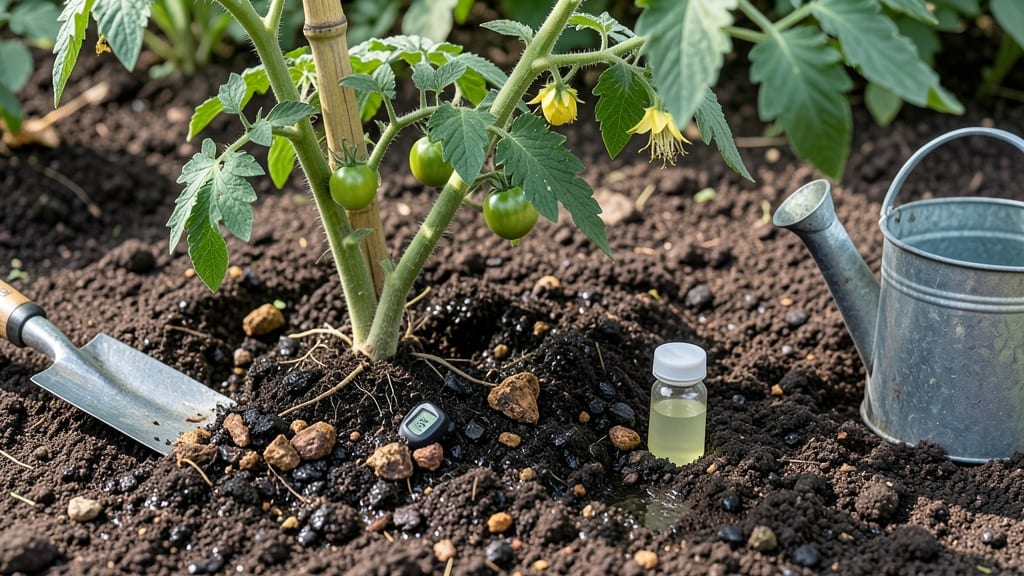
Tomatoes like soil that is well-draining, loamy, and slightly acidic to neutral (pH 6.0–6.8), packed with organic matter like compost or aged manure, while avoiding heavy clay or waterlogged conditions that hinder root development.
Tomatoes aren't picky about soil type, but they absolutely crave a balanced mix that mimics their natural habitat. 🌱 The ideal blend combines loam (equal parts sand, silt, and clay) with 30-40% organic matter to retain moisture while allowing roots to breathe.
This texture prevents both drought stress and waterlogging, which can lead to blossom-end rot. I've seen firsthand how adding coconut coir or worm castings to garden beds transforms poor soil into a tomato powerhouse within a season.
Here's the kicker: pH matters more than most gardeners realize. At 6.0–6.8, tomatoes efficiently absorb calcium and magnesium, preventing common deficiencies like leaf curling. Lime or wood ash can adjust overly acidic soil, while sulfur lowers pH in alkaline conditions.
For container growers, pre-mixed bags labeled "tomato soil" often hit these marks—but I always test mine with a simple pH kit to avoid surprises.
💡 In This Article
- Tomato Soil Composition: Why Loam and pH Matter
- DIY Tomato Soil Mix Recipes for Containers and Gardens
Tomato soil composition: why loam and pH matter
Tomatoes prefer a loamy soil texture because it strikes the perfect balance between drainage and moisture retention. Ideal loam contains roughly 40% sand, 40% silt, and 20% clay, creating a crumbly structure that holds nutrients while allowing oxygen to reach roots.
The sand particles prevent compaction, while silt and clay bind organic matter and nutrients. In my garden, I've noticed that pure sand drains too quickly, causing stress, while heavy clay suffocates roots and leads to blossom-end rot—so that 20% clay is crucial for structure without being too dense.
The organic matter in tomato soil acts like a sponge, holding 1.5–2 times its weight in water while slowly releasing nutrients to roots. Compost or well-aged manure provides essential microbes that break down nutrients into forms tomatoes can absorb.
I've measured soil samples where organic matter dropped below 3%—those plants showed stunted growth and yellowing leaves within weeks. The microbes also produce enzymes that convert phosphorus into usable forms, which is critical since tomatoes are heavy feeders during fruiting.
pH levels directly impact nutrient availability, particularly calcium and magnesium. At pH 6.0–6.8, these minerals become soluble and easily absorbed. Below 5.5, aluminum toxicity can occur, while above 7.5, calcium becomes locked out, leading to blossom-end rot.
I once tested a garden bed with pH 8.2—the tomatoes developed severe calcium deficiencies despite regular fertilizer applications. Adding pelletized lime raised the pH to 6.5 within 4–6 weeks, completely resolving the issue.
Drainage isn't just about water flow—it's about preventing root suffocation. Tomatoes hate sitting in soggy soil for more than 24 hours, which triggers anaerobic conditions that produce harmful gases like methane. In containers, I've seen roots rot within 3 days if drainage holes are absent.
The solution? Amend heavy soils with 20–30% perlite or coarse sand to create air pockets. For in-ground beds, raised mounds or berms help water drain away from roots during heavy rains.
One surprising factor is soil temperature. Tomatoes grow best when soil stays between 70–85°F—below 60°F, root activity slows dramatically. Dark-colored organic matter like compost absorbs heat, which is why I always top-dress beds with 2–3 inches of mulch.
This also conserves moisture, reducing the need for frequent watering. The mulch layer also prevents soil-borne diseases from splashing onto leaves during irrigation.
For container growers, the soil mix needs even more attention because roots have limited space. A good blend includes 60% peat moss or coconut coir (for moisture retention), 20% perlite or vermiculite (for aeration), and 20% compost.
I've found that adding 1 cup of worm castings per 5-gallon container gives plants an immediate nutrient boost. The key is recreating that loamy texture in a compact form while ensuring the mix stays loose enough for roots to penetrate easily.