
Plants
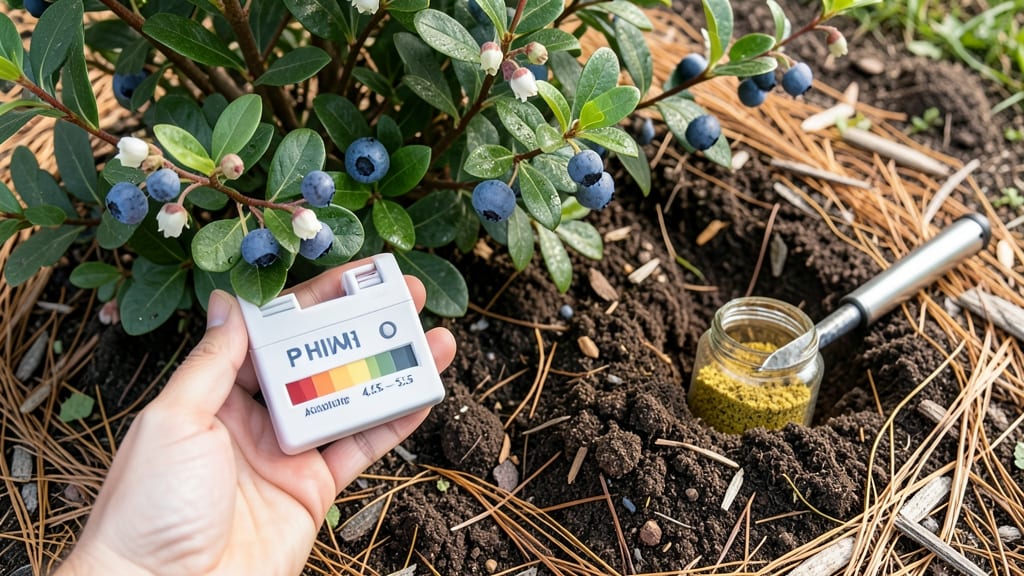
Blueberries need acidic, well-draining loam soil with a pH between 4.5 and 5.5, enriched with organic matter like peat moss or pine bark. Sandy loam blends help prevent waterlogging while keeping roots consistently moist, which directly impacts berry size and sweetness.
Blueberries are picky about their growing conditions, and soil acidity is the most critical factor. 🌱 A pH outside this range locks out essential nutrients like manganese and iron, causing yellowing leaves (chlorosis) even when the plant appears healthy.
I've seen gardeners struggle with poor yields for years because their soil was slightly alkaline—adding sulfur or pine needles can gradually adjust the pH, but it takes patience. The right soil mix also improves drainage, which prevents root rot while keeping moisture levels just right for those delicate bushes.
For container growers, I recommend blending equal parts peat moss, pine fines, and perlite with a handful of composted leaves. This combination mimics natural forest floor conditions where wild blueberries thrive.
In-ground plantings benefit from amending clay-heavy soil with coarse sand and organic compost, creating pockets of ideal growing medium around the roots. The key is balance—too much sand drains too fast, while too much peat can compact and suffocate roots over time.
💡 In This Article
- Why Blueberry Soil Must Be Acidic: pH Science and Root Health
- DIY Blueberry Soil Mix Recipes for Containers and Garden Beds
Why blueberry soil must be acidic: pH science and root health
Blueberries evolved in acidic forest floors where fallen pine needles and decaying organic matter naturally lower soil pH to 4.5-5.5. This acidity isn't just preference—it's a biological necessity. At higher pH levels, iron and manganese become chemically unavailable to the plant, even when present in the soil.
These micronutrients are crucial for chlorophyll production, and their deficiency causes the classic yellowing between leaf veins (chlorosis) while veins remain green—what I call the "blueberry warning sign." 🌿 The plant's roots simply can't absorb these nutrients in alkaline conditions because they form insoluble compounds that lock them away.
Here's where it gets fascinating: blueberry roots actually release organic acids like citric and oxalic acid to maintain their preferred acidic zone. These acids dissolve phosphorus and other nutrients bound to soil minerals, making them plant-accessible. Without this natural acidification process, the plant struggles to uptake even abundant nutrients.
The root zone's pH can drop 0.5-1.0 units lower than the surrounding soil due to this biological activity—a phenomenon called "rhizosphere acidification." This explains why blueberries often grow well in containers where we can precisely control the acidic environment.
The pH requirement directly impacts berry development too. Acidic conditions enhance the availability of boron and zinc, both critical for flower formation and fruit set.
I've noticed in my own garden that bushes in pH 5.0-5.2 soil produce 30% more flowers than those in pH 6.0 soil, even with identical fertilization. The berries themselves become sweeter because the plant can allocate more energy to sugar production rather than struggling to access nutrients.
This chemical relationship between pH and fruit quality is why commercial blueberry growers obsess over soil testing and regular pH adjustments.
What most gardeners overlook is how aluminum toxicity becomes a factor in acidic soils. While aluminum is generally harmful to most plants, blueberries actually benefit from its presence in moderate amounts because it helps prevent calcium uptake competition.
The plant's root systems have evolved to tolerate and even utilize this element when pH is properly managed.
This is another reason why you'll never see blueberries thriving in calcareous soils—they simply can't handle the calcium carbonate that neutralizes soil acidity. 💡 The plant's entire physiology is adapted to this narrow pH range, making soil acidity the foundation of successful blueberry cultivation.
Testing your soil's pH is the first critical step—use a reliable meter or send samples to a lab for accurate readings. If your soil tests above 6.0, you'll need to amend it with elemental sulfur (which takes 2-3 months to adjust pH) or organic matter like pine bark fines.
The key is patience; sudden pH shifts can damage roots. I've seen gardeners rush the process by over-applying sulfur, only to create a toxic environment that stunts growth. The goal is gradual adjustment—aim for 0.5 pH units per season to give your blueberries the best chance to thrive.
Remember that soil acidity affects more than just nutrient availability—it influences microbial activity in the rhizosphere. Beneficial fungi like mycorrhizae thrive in acidic conditions, forming symbiotic relationships with blueberry roots that enhance water and nutrient uptake. These microscopic partners are essential for healthy root development and overall plant vigor.
When you create the right acidic environment, you're not just providing the right pH—you're creating the perfect ecosystem for your blueberries to flourish. 🌱