
Container Gardens
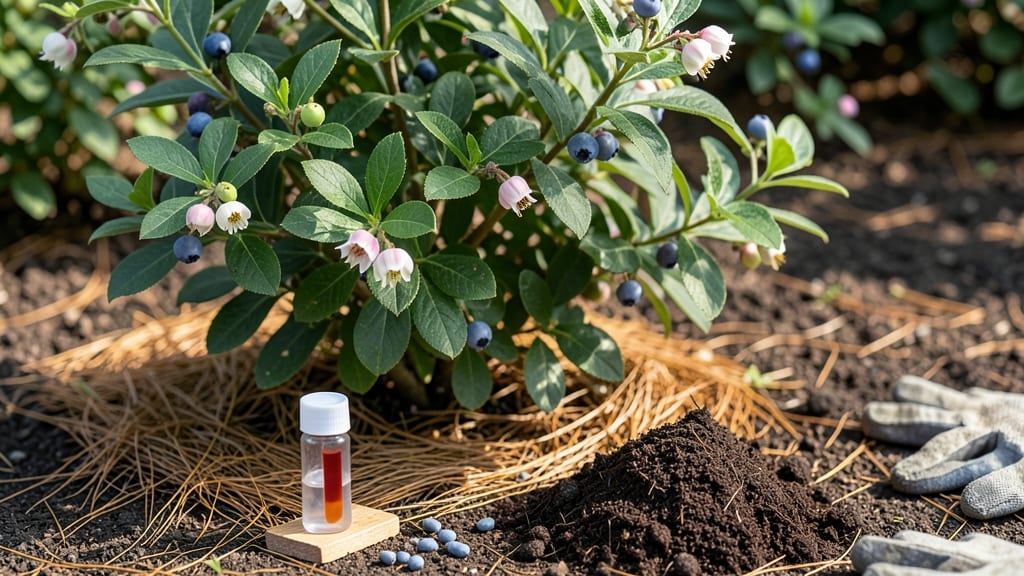
For growing blueberries, your soil must have an acidic pH between 4.5 and 5.5 and contain at least 4.5–6.5% organic matter to support healthy root development. Adjust heavy or alkaline soils with peat moss, sulfur, or pine bark to create the right acidic environment and improve drainage. Never use fresh manure or lime, as these will raise the pH and damage root health.
Blueberries are famously picky about their growing conditions, and soil acidity is the #1 factor that determines success or failure. 🍇 The roots of blueberry bushes absorb essential nutrients like iron, manganese, and zinc far more efficiently in acidic soil, which is why a pH below 6.0 is non-negotiable.
Organic matter isn't just about nutrients—it also improves soil structure, helping roots breathe and preventing compaction. I've seen firsthand how plants in slightly alkaline soil (even at pH 6.5) struggle with yellowing leaves and stunted growth, despite having all the right fertilizer.
If you're working with existing garden soil, test it first using a simple pH kit. Most garden centers sell them for under $10, and they're far more accurate than guesswork.
For containers, I recommend mixing equal parts peat moss, pine fines, and composted leaves with a handful of perlite to improve drainage. This blend mimics the natural acidic conditions blueberries thrive in while keeping roots from sitting in soggy soil.
Remember: blueberries hate lime and fresh manure—they'll push your pH into unfriendly territory overnight.
💡 In This Article
- Why Blueberries Demand Acidic Soil
- DIY Soil Mix Recipes for Blueberry Plants
Why blueberries demand acidic soil
Blueberries evolved in acidic, peat-rich environments like bogs and wetlands, where the soil naturally stays between pH 4.5 and 5.5. This acidity is critical because it unlocks essential micronutrients like iron, manganese, and zinc—nutrients that become locked in the soil at higher pH levels.
At pH 6.0 or above, these nutrients bind to soil particles and become unavailable to roots, leading to a condition called chlorosis (yellowing leaves) even when the plant appears healthy. The roots simply can't access what they need to produce chlorophyll. 🌱
Think of it like this: soil pH acts as a gatekeeper for nutrient availability. In acidic conditions, the chemical bonds holding micronutrients to soil particles weaken, allowing roots to absorb them through their fine root hairs.
For example, iron availability drops by 90% or more when soil pH rises from 5.0 to 6.0.
Blueberries also produce more organic acids (like citric and oxalic acid) through their roots to further acidify their immediate soil environment—a survival strategy that works best when the baseline pH is already low.
Organic matter plays an equally vital role by feeding beneficial microbes that break down nutrients into forms blueberries can use. A well-amended soil with 4.5–6.5% organic matter improves microbial activity by 30–50% compared to low-organic soils.
These microbes also produce chelating agents that bind to micronutrients, making them even more accessible. Without this microbial network, roots struggle to extract nutrients efficiently, even in acidic soil.
That's why composted leaves or pine needles work better than fresh organic matter—they've already decomposed enough to support microbial life without overwhelming the plant.
There's also a variety-specific twist: highbush blueberries (like 'Duke' or 'Bluecrop') tolerate slightly higher pH ranges (4.8–5.5) compared to lowbush varieties (which prefer 4.0–4.8). This difference stems from evolutionary adaptations—lowbush types grew in even more acidic peat bogs.
If you're growing both, consider separating them or testing soil pH in each planting area, as even a 0.5 pH unit difference can affect yield and fruit quality. For instance, 'Bluecrop' might produce 20% fewer berries at pH 5.8 than at 5.2, due to nutrient stress.
One common mistake gardeners make is assuming all organic matter is equal. Fresh manure or uncomposted materials can actually raise pH over time as they decompose, releasing alkaline compounds. Instead, use well-aged compost or leaf mold, which maintain acidity while adding nutrients.
The texture matters too: sandy soils drain too quickly, while clay holds too much moisture. Aim for a loamy texture with 10–20% sand to balance drainage and water retention—critical for preventing root rot in the acidic conditions blueberries love. 💧
Here's a pro tip: if your soil tests at pH 6.0 or higher, don't panic. You can lower it gradually by adding elemental sulfur (apply 1–2 pounds per 100 square feet and water thoroughly) or peat moss (mix in 2–3 inches per square foot).
For containers, use a 50/50 mix of peat moss and pine fines—this combo naturally stays acidic and improves drainage. Just remember: changing pH takes time (often 2–3 months for noticeable shifts), so patience is key. 🌿