
Succulent
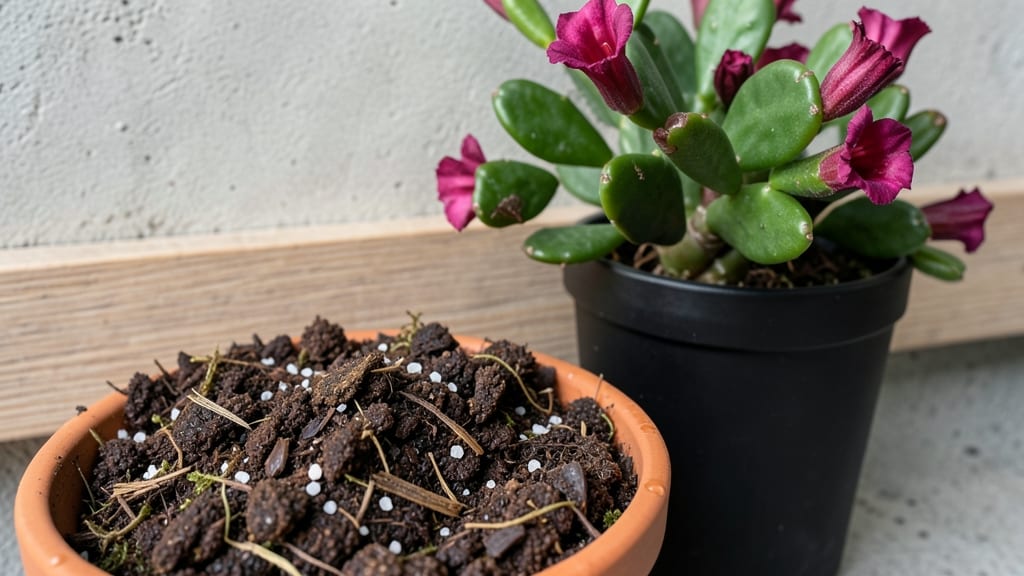
The kind of soil for your Christmas cactus 🌵 is the hidden factor behind its stunning blooms—or its stubborn refusal to flower.
If you’ve ever watched your Schlumbergera sit there year after year, looking healthy but never producing those iconic holiday flowers, the problem might be right under your hands. Too much moisture? Roots drown.
Too little air? They suffocate. The right mix keeps roots happy, encourages blooms, and prevents the slow decline that turns a thriving plant into a sad, leggy shadow of itself.
Most store-bought cactus mixes are too dense, trapping water and blocking airflow—the exact opposite of what your Christmas cactus needs. Instead, we’re talking a well-draining blend with 50% perlite to keep roots aerated, plus a touch of organic matter to hold just enough moisture without drowning the roots.
It’s the difference between a plant that blooms like clockwork and one that just… sits there.
Below, I’ll break down the exact ratio to use (and what to avoid), how to DIY your mix at home, and the telltale signs your soil is silently sabotaging your plant’s blooming potential.
Christmas cactus soil requirements: the perfect mix for blooms
Your Christmas cactus (Schlumbergera) thrives when its roots breathe easily, but many gardeners unknowingly smother them with the wrong soil mix. The key to vibrant blooms and lush foliage lies in a well-draining, airy blend that mimics its natural epiphytic habitat.
Unlike heavy garden soil, this plant needs a mix that prevents root rot while retaining just enough moisture to stay hydrated without drowning.
I’ve found that the golden ratio for Christmas cactus soil is 50% perlite, 30% peat or coco coir, and 20% bark or orchid mix. This combination ensures optimal aeration, moisture control, and nutrient availability—all critical for triggering those stunning holiday blooms.
Let’s break down why each component matters and how to avoid common pitfalls that stifle growth.
The 50% perlite in this mix is non-negotiable. Perlite creates tiny air pockets that prevent waterlogged roots, which are the #1 killer of Christmas cacti. Without it, your plant’s roots suffocate, leading to yellowing leaves and failed blooms.
I’ve seen gardeners skip perlite to save money, but trust me—your cactus will thank you for the extra effort.
Next, the 30% peat or coco coir balances moisture retention. Unlike sandy soil, which drains too quickly, this component holds just enough water to keep roots hydrated between waterings.
Coco coir is my preferred choice because it’s sustainable and less prone to compaction than traditional peat. If you’re using peat, ensure it’s sterilized to avoid introducing pathogens.
The final 20% bark or orchid mix adds structure and mimics the cactus’s natural epiphytic environment. Bark chunks prevent soil from becoming too dense, while orchid mix (which often includes charcoal) helps neutralize odors and prevent bacterial growth.
This layer is especially important if you’ve noticed a musty smell from your pot—it’s a red flag for poor drainage.
One critical mistake I see often is using regular potting soil straight from the bag. Garden soil is too heavy and retains too much moisture, causing root rot within weeks. Even "cactus soil" from stores can sometimes be too fine—always check for at least 50% perlite or pumice.
If you’re unsure, squeeze a handful: it should crumble easily and not stick together.
Another pitfall is over-retaining moisture with too much peat or coconut coir. While these ingredients are essential, they can turn your mix into a sponge if overused. Test your soil’s moisture level by sticking your finger 1-2 inches deep: it should feel slightly damp but not soggy.
If water pools on top after watering, your mix is too dense—add more perlite immediately.
To repot your Christmas cactus with the perfect mix, choose a pot just 1-2 inches larger than its current one. Larger pots hold excess moisture, inviting root rot. Gently remove the plant, loosen any compacted roots, and place it in the new pot with your custom blend.
The first watering after repotting should be light to allow the soil to settle and avoid displacing the roots.
Pro tip: If your cactus has been struggling, sterilize the new pot by soaking it in a 10% bleach solution for 10 minutes before repotting. This kills hidden pathogens that could infect fresh soil.
After repotting, place your plant in bright, indirect light and hold off on fertilizing for 4-6 weeks to let the roots adjust.
With the right soil mix, your Christmas cactus will reward you with vibrant blooms year after year. The secret isn’t just in the ingredients—it’s in the balance.
Give your plant the breathable, well-draining environment it craves, and you’ll be the envy of every holiday season with a cactus that flourishes and flowers like never before.
How to make DIY Christmas cactus soil at home (with store-bought alternatives)
Creating the perfect Christmas cactus soil is easier than you think! Your Schlumbergera thrives in a mix that mimics its natural epiphytic habitat—lightweight, airy, and fast-draining. Skip the heavy garden soil, which holds too much moisture and risks root rot.
Instead, focus on a blend that balances moisture retention with aeration. The good news? You likely already have the ingredients at home.
For a DIY Christmas cactus mix, combine 50% perlite or pumice (for drainage), 30% peat moss or coco coir (for moisture), and 20% orchid bark or pine bark fines (for structure). This ratio ensures roots stay oxygenated while absorbing just enough water.
If you’re repotting, sterilize your mix by baking it in the oven at 200°F for 30 minutes to kill pests or pathogens.
-
🌱 DIY Mix
50% Perlite/Pumice
30% Peat Moss/Coco Coir
20% Orchid Bark -
🛒 Store-Bought Options
Cactus/Succulent Mix + 20% Perlite
Orchid Soil (already airy) -
⚠️ Avoid
Garden soil
Heavy clay mixes
Pure sand (no moisture retention) -
💡 Pro Tip
Add 10% worm castings for nutrients
Use terracotta pots for extra drainage
If you prefer convenience, store-bought cactus/succulent soil works well—but don’t use it straight from the bag. Amend it by adding 20% perlite or pumice to improve aeration. Brands like Black Gold Cactus Mix or Sunset Red Cactus Soil are excellent starting points.
For an extra boost, mix in orchid bark to mimic the plant’s natural growing conditions.
When repotting, choose a container with drainage holes—this is non-negotiable for Christmas cacti. Gently remove the plant from its current pot, loosen the roots, and place it in the new mix.
Water lightly after repotting to settle the soil, but avoid overwatering for the first 5-7 days. This gives roots time to establish without drowning.
One common mistake is overwatering, which leads to mushy stems or yellow leaves. Your soil should dry out slightly between waterings—stick your finger 1 inch deep. If it’s damp, wait a few more days.
In winter, reduce watering to once a month to mimic dormancy. A well-draining mix paired with proper watering habits will keep your Christmas cactus blooming for years.
Remember, the key to Christmas cactus care is balance. Too much moisture strangles roots, while too little causes wilting. With the right soil mix, your plant will reward you with vibrant fall blooms every year. Happy gardening! 🌷