
Plants
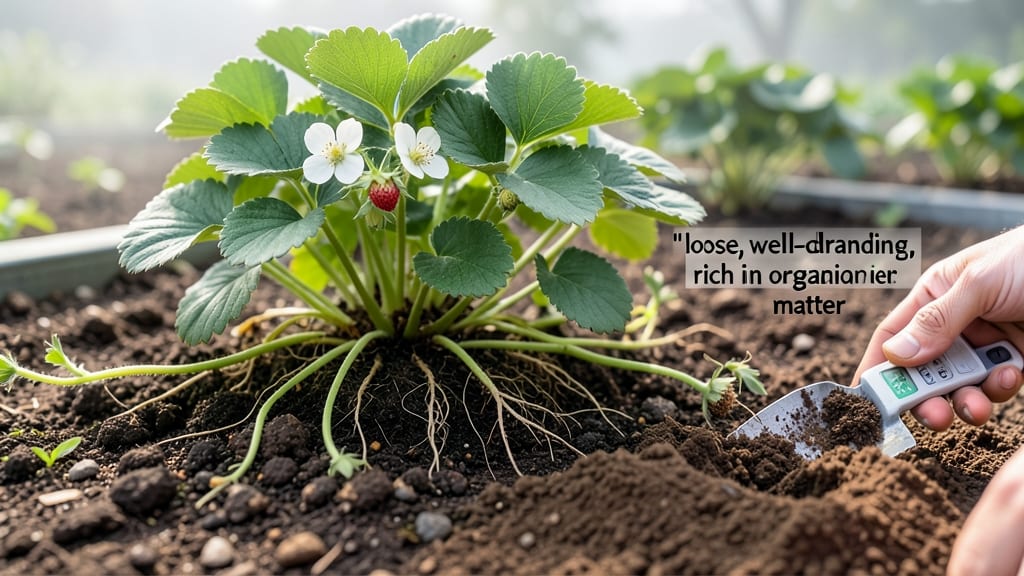
Strawberries like well-draining, slightly acidic soil with a pH between 5.5 and 6.8—the kind that mimics their natural forest-floor home.
If your strawberries 🍓 are struggling with stunted growth or sour fruit, the soil might be the culprit. Too much clay or sand can choke roots, while alkaline soil locks out essential nutrients like phosphorus. The right mix makes all the difference.
Most gardeners don’t realize strawberries prefer a loamy texture—think of a crumbly, moist cake rather than dense mud or gritty sand. Adding compost and a touch of sand or perlite can transform heavy soil into the perfect growing medium.
In this guide, I’ll walk you through testing your soil, adjusting pH, and avoiding common mistakes that leave strawberries hungry for better conditions. Sweet, juicy fruit starts with the right foundation.
Ideal soil composition for strawberries: loam mix, texture, and organic matter
Strawberries demand a well-aerated, nutrient-rich soil that mimics their native forest floor. The perfect mix combines 60% loam—the balanced foundation—with 30% compost for organic matter and 10% sand or perlite to prevent compaction.
This trio creates an airy, crumbly texture that strawberry roots adore, ensuring they breathe and expand freely.
Why loam? It’s the goldilocks of soil types—not too sandy, not too clay-heavy—holding moisture without drowning roots. The 30% compost adds microbial life and slow-release nutrients, while sand/perlite prevents waterlogging, a common killer of strawberry plants. Together, they create the ideal 6.0–6.8 pH environment strawberries crave.
Let’s break down the science: Loam’s 40% sand, 40% silt, and 20% clay grants strawberries the perfect balance. The silt particles retain moisture, while sand and clay prevent suffocation. Organic matter from compost feeds the soil’s ecosystem, and perlite/sand mimics the natural drainage of woodland soils where strawberries thrive.
| Soil Component | Percentage | Purpose | Benefits |
|---|---|---|---|
| Loam | 60% | Balanced texture | Holds moisture, drains well, rich in nutrients |
| Compost | 30% | Organic matter | Boosts microbes, adds nutrients, improves structure |
| Sand/Perlite | 10% | Aeration | Prevents compaction, improves drainage |
Before amending your soil, test its current texture using the ribbon squeeze method. Grab a handful of moist soil and press it gently—if it crumbles easily, you’re close to ideal. If it forms a hard clod, add sand and compost.
If it sticks together like clay, mix in perlite or coarse sand. Strawberries hate soggy roots, so drainage is non-negotiable.
For heavy clay soils, consider raised beds filled with your custom loam mix. This gives strawberries the perfect head start, especially in USDA Zones 3–8, where clay dominates. In sandy soils, add 2–3 inches of compost annually to retain moisture and prevent nutrient loss.
The goal? A soil that feels like a soft, damp sponge—not a brick or a sieve.
Organic matter isn’t just food for your plants—it’s a living ecosystem. Compost introduces beneficial bacteria and fungi that break down nutrients into forms strawberries can absorb. Aim for 5% organic matter in your soil mix.
Use well-aged compost (no fresh manure!) to avoid burning tender roots. Worm castings are a bonus—they’re packed with nutrients and improve soil structure.
Texture matters more than you think. Fine, powdery soil drains too quickly, while dense, compacted soil suffocates roots. Strawberries need a crumbly, loose texture that allows roots to spread 12–18 inches wide.
Test your soil’s workability by digging a hole—if the sides collapse easily, you’re golden. If they resist, amend with more compost and perlite.
Regional adaptations matter. In hot, dry climates, add extra perlite or coarse sand to prevent moisture loss. In cool, wet areas, focus on organic matter and sand to improve drainage.
Always mulch with straw or shredded leaves to regulate soil temperature and retain moisture. This simple step can double your harvest by keeping roots happy year-round.
Remember: Healthy soil = healthy strawberries. If your plants look leggy or produce small, tart fruit, it’s a sign your soil needs attention. By following this 60-30-10 mix and testing texture regularly, you’ll create the perfect foundation for sweet, juicy berries that taste like summer. Happy digging! 🌱
pH levels and soil amendments: how to adjust acidic or alkaline soil for strawberries
Strawberries are fussy about their soil pH, preferring a slightly acidic range of 5.5–6.8. If your soil tests outside this range, your plants will struggle to absorb essential nutrients like phosphorus and iron, leading to poor fruit quality or stunted growth.
Before you panic, though, most garden soils can be adjusted with simple organic amendments—once you know what your soil needs.
Testing your soil pH is the first step. You can use a DIY home test kit (like vinegar or baking soda tests) for a rough estimate, but for accuracy, send a sample to a local extension office or use a digital pH meter.
I recommend testing in early spring before planting, as pH can shift over time with rain, compost breakdown, or fertilizer use.
If your soil tests above 7.0 (alkaline), strawberries will suffer from chlorosis—yellowing leaves with green veins—because iron becomes locked away. To lower pH, work in elemental sulfur (½ cup per 100 sq ft) or peat moss (2–3 inches mixed into the top 6 inches of soil).
For below 5.5 (acidic) soil, add lime (½–1 cup per 100 sq ft) or crushed oyster shell to raise pH gradually.
⚠️ PROS-CONS BOX ⚠️
What Kind of Soil Do Strawberries Like?
| Soil Type | pH Range | Pros | Cons |
|---|---|---|---|
| Loamy Soil | 5.5–6.8 | Drains well, retains moisture, rich in organic matter | Hard to find naturally; often needs amendments |
| Sandy Soil | 5.0–6.5 (often too acidic) | Drains excess water quickly, prevents root rot | Poor nutrient retention; needs frequent compost |
| Clay Soil | 6.5–7.5 (often alkaline) | Holds moisture and nutrients well | Compacts easily; roots suffocate without amendments |
💡 Tip: For alkaline soil, mix in 2–3 inches of peat moss or pine needles to lower pH over time. For sandy soil, add composted manure to improve moisture retention.
Timing is critical when amending soil. For elemental sulfur or peat moss, work them into the soil 3–4 months before planting—they need time to adjust pH gradually. If you’re in a hurry, use sulfur-coated urea (apply 1–2 lbs per 100 sq ft in early spring).
Over-amending can harm roots, so test pH again 6 weeks after applying amendments and adjust as needed.
Avoid common mistakes like adding too much lime at once, which can raise pH too quickly and burn roots. Instead, split applications into two doses over the growing season.
Also, don’t skip soil testing—guessing can lead to over- or under-correcting pH. My rule of thumb? Test, amend, wait, and test again before planting.
Once your soil pH is in the ideal range, maintain it by mulching with pine straw (to keep soil acidic) or compost (to buffer pH swings). Regularly adding organic matter like leaf mold or well-rotted manure will help stabilize pH naturally over time.