
Companion Plants
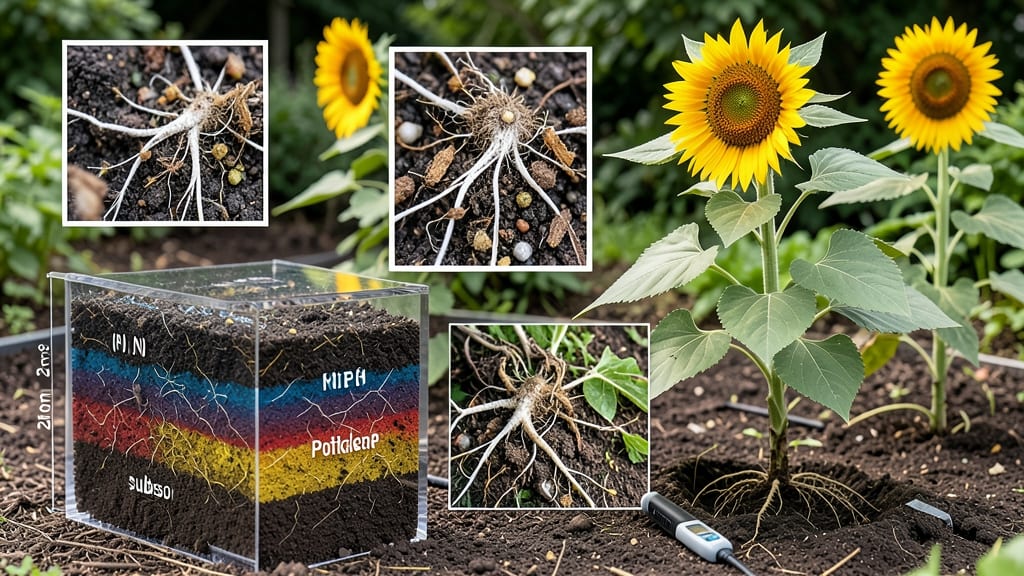
Soil gives plants essential nutrients like nitrogen, phosphorus, and potassium, while providing water retention, oxygen for roots, and physical support to anchor growth. Healthy soil also fosters beneficial microbes that improve nutrient absorption and disease resistance.
Soil isn't just dirt—it's a dynamic ecosystem that provides everything from nutrient-rich sustenance to a stable foundation for roots. 🌱 The three primary nutrients (nitrogen, phosphorus, potassium) fuel leaf growth, flowering, and energy storage, while trace minerals like calcium and magnesium strengthen cell walls.
Without proper soil structure, plants struggle to access these resources efficiently, leading to stunted growth or poor yields. I've seen firsthand how amending compacted soil with compost can transform a struggling garden into a thriving one within just a few seasons.
Beyond nutrients, soil acts as a water reservoir and air filter, delivering oxygen to roots while preventing waterlogging.
The microbial community—including bacteria and fungi—works like a natural fertilizer factory, breaking down organic matter into plant-available forms. Healthy soil isn't just about what's in it but how it functions as a living system that supports plant vitality at every stage.
💡 In This Article
- Key Nutrients and Minerals Plants Extract from Soil
- How Soil Structure and Microorganisms Boost Plant Health
Key nutrients and minerals plants extract from soil
Plants rely on soil for three critical macronutrients—nitrogen (N), phosphorus (P), and potassium (K)—often called NPK, which act like a growth trifecta. Nitrogen, found in amino acids and chlorophyll, powers leaf development and vibrant green color.
Without enough nitrogen, plants grow pale and leggy, a condition I’ve seen in nitrogen-deficient spinach that turns yellow between veins. Phosphorus, meanwhile, fuels energy transfer and root growth, while potassium regulates water balance and disease resistance.
These nutrients aren’t just present—they’re actively absorbed through root hairs, where soil moisture and microbial activity determine how efficiently plants can uptake them.
Beyond the big three, micronutrients like iron, zinc, and magnesium play equally vital roles. Iron, for example, is essential for chlorophyll production, and a deficiency causes yellowing between leaf veins (interveinal chlorosis).
Zinc boosts enzyme activity, while magnesium sits at the heart of chlorophyll molecules, giving plants their signature green pigment. Soil composition—whether it’s sandy, loamy, or clay-heavy—drastically affects nutrient availability. Sandy soils drain quickly but hold fewer nutrients, while clay soils retain moisture and minerals but can compact, restricting root access.
A loamy mix, with its ideal balance of sand, silt, and clay, offers the best of both worlds: nutrient retention and aeration.
What’s often overlooked is how soil pH influences nutrient solubility. Most plants thrive in slightly acidic to neutral soil (pH 6.0–7.0), where nutrients like phosphorus and iron remain available. In alkaline soils, iron becomes locked away, leading to deficiencies even when the soil appears rich.
I’ve tested garden soils with pH kits and adjusted them with sulfur or lime to unlock nutrients, seeing immediate improvements in plant vigor. This balance is why soil testing is a gardener’s best friend—it reveals what’s missing or excessive before symptoms appear.
Soil organic matter, like decomposed leaves or compost, acts as a nutrient reservoir, slowly releasing minerals as microbes break it down. This process, called mineralization, ensures plants get a steady supply of nutrients over time.
For instance, a 1% increase in organic matter can boost soil’s water-holding capacity by up to 16,500 gallons per acre, while also improving structure. Without this organic layer, nutrients wash away or become inaccessible, leaving plants malnourished despite fertile-looking soil.
Think of it like a bank account: organic matter is the interest that keeps the nutrients flowing.
Consider the case of tomatoes, which are heavy feeders. They demand consistent nitrogen for foliage, phosphorus for fruiting, and potassium for disease resistance. In a poorly amended soil, tomatoes might produce abundant leaves but few fruits, while in rich, balanced soil, they yield plump, flavorful tomatoes.
This is why gardeners often side-dress plants with compost mid-season—to replenish nutrients as they’re depleted. The key takeaway? Soil isn’t just a medium; it’s a dynamic system where chemistry, biology, and physics collide to fuel plant life.