
Plants
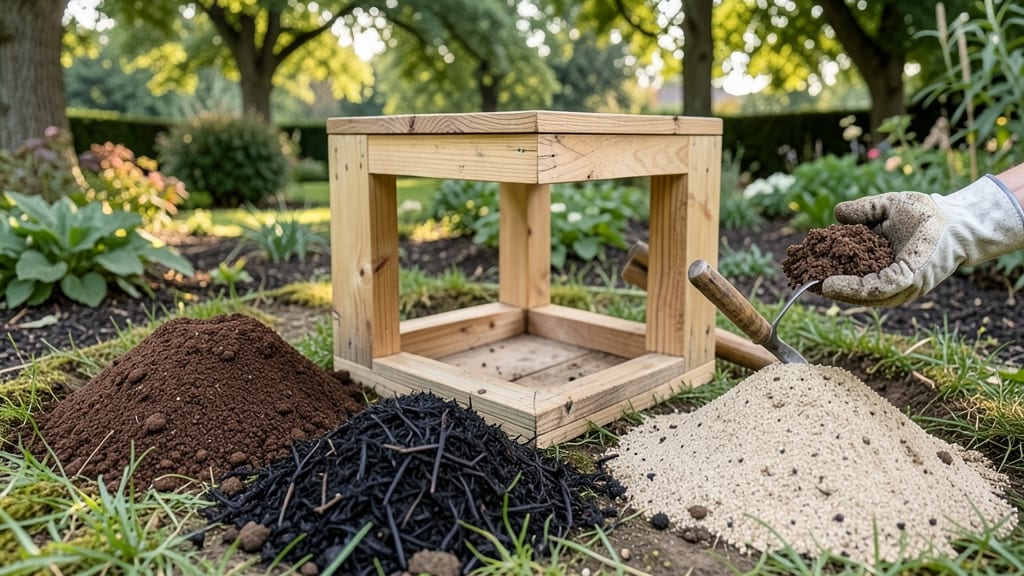
A cubic yard of soil looks like a cube measuring 3 feet in every direction, filling about the same space as a standard wheelbarrow or a small pickup truck bed when packed down. It's roughly equivalent to stacking two large bathtubs or placing a small refrigerator on its side.
A cubic yard represents a three-dimensional space where length, width, and height all measure 3 feet—imagine a box that's the size of a tall refrigerator standing upright. 🌱 For gardeners, this volume helps explain why a single delivery might cover a small raised bed or fill multiple wheelbarrows.
Loose soil expands to nearly 1.3 cubic yards before settling, which is why bulk purchases often seem lighter than expected when compacted.
Visualizing this helps with planning projects like landscaping or garden beds. A standard 40-pound bag of soil contains about 0.6 cubic feet, so you'd need roughly 90 bags to make a cubic yard. This comparison shows why truck beds or pallets become the go-to for transporting large quantities efficiently.
💡 In This Article
- Visualizing Soil Volume: Cubic Yard Dimensions Explained
- Comparing Soil Volume to Common Gardening Objects
Visualizing soil volume: cubic yard dimensions explained
Understanding a cubic yard starts with its three-dimensional measurements: 3 feet × 3 feet × 3 feet. That means if you stacked three standard 12-inch flower pots (each 1 foot tall) on top of each other, you’d need a 3-foot-wide base to contain the soil.
This volume explains why gardeners often use 3-foot-wide raised beds—they’re designed to hold exactly one cubic yard of soil when filled to the top.
The key here is that soil isn’t rigid like a box; it shifts when moved, which is why loose soil expands to nearly 1.3 cubic yards before settling.
The difference between loose and compacted soil becomes obvious when comparing it to gardening tools. A standard wheelbarrow holds about 2 cubic feet of soil, so you’d need 27 wheelbarrow loads to equal one cubic yard.
This is why bulk deliveries use truck beds or pallets—they’re optimized to transport this volume efficiently. The compaction factor also matters: Topsoil (loose and fluffy) weighs about 2,000 pounds per cubic yard, while clay-heavy soil can weigh 3,000 pounds or more due to its density.
That’s why moving a cubic yard of clay feels like lifting a small car!
For practical planning, think of a cubic yard as the volume of a large plastic storage tote (like those used for mulch or compost) or a small refrigerator lying on its side.
The depth is critical: A 3-foot-deep trench filled with soil would require a 3-foot-wide and 3-foot-long space to hold exactly one cubic yard. This is why landscapers often dig trenches in 3-foot sections—it’s the most efficient way to work with this volume.
The science behind this is simple: Volume = length × width × height, and soil’s behavior changes based on moisture and organic matter content.
Here’s a real-world example: If you’re filling a 4-foot-wide raised bed, you’d need 1.5 cubic yards of soil (since 4 × 3 × 1.5 = 18 cubic feet, or 0.66 cubic yards per foot of length).
This helps explain why garden centers sell soil in 0.5-cubic-yard bags—it’s a practical size for smaller projects. The compaction also affects how much soil you’ll need for mulch or compost piles: Loose mulch might take up 1.5 times the volume of the same amount when packed down.
One common mistake is assuming a cubic yard is the same as a yard of soil by volume. It’s not! The cubic yard is a 3D measurement, while a "yard" of soil (like in a bag) refers to weight or loose volume.
For instance, a 40-pound bag of soil is roughly 0.6 cubic feet, meaning you’d need 90 bags to make a cubic yard. This weight-to-volume relationship is why bulk purchases save money—you’re paying for density, not just space. 🌱
For visual learners, imagine a standard bathtub: A large one holds about 0.5 cubic yards of water. To reach a full cubic yard, you’d need two bathtubs side by side, filled to the brim.
This comparison helps when estimating how much soil you’ll need for projects like garden beds, pathways, or erosion control. The takeaway? Always measure your project in three dimensions to avoid under- or over-ordering soil.