
Propagation
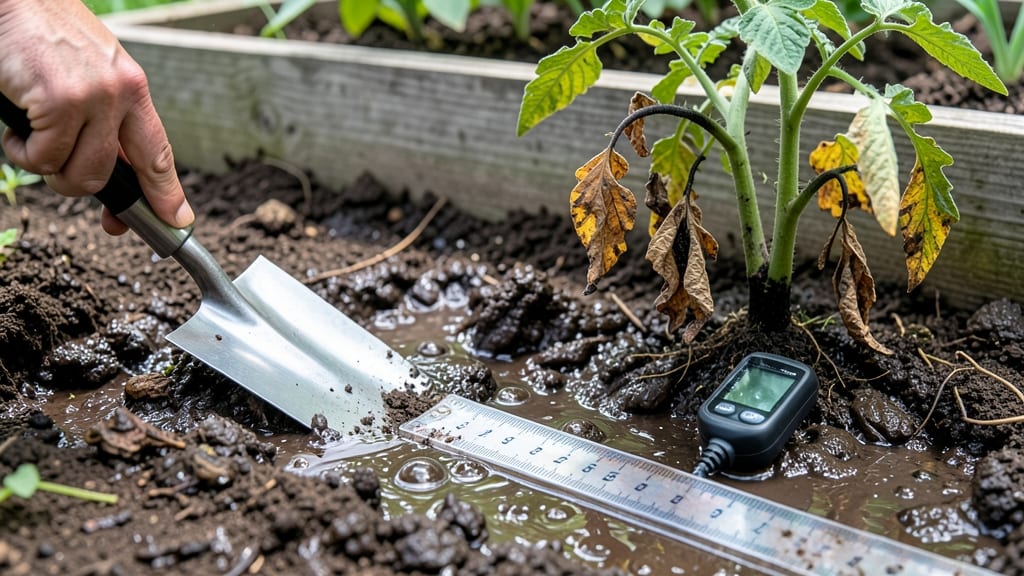
Submerged soil and soil from which water drains completely create opposite growing conditions: one drowns roots by cutting off oxygen, while the other risks drying out plants unless properly amended. These extremes force roots to develop differently, directly impacting how they absorb nutrients and withstand stress.
Understanding these conditions starts with oxygen availability. 🌱 When soil stays saturated, roots suffocate because water displaces air in the pores, triggering ethylene gas production—a stress signal that can kill fine root hairs within days. In contrast, well-drained soil lets roots breathe while still holding enough moisture for microbial activity.
The key is finding that balance: too dry, and roots struggle to transport water; too wet, and they rot. Most garden plants thrive in soil that drains within 6-12 hours after watering, but aquatic species like water lilies actually need submerged conditions to grow properly.
This difference isn't just about moisture—it's about the entire ecosystem around your plants. 🔬 Microbes in waterlogged soil produce toxic byproducts like hydrogen sulfide, while drained soil encourages beneficial fungi that help roots access nutrients.
Even the physical structure changes: submerged soil compacts over time, while drained soil develops stable crumb structure. For container gardening, I recommend mixing in 20-30% perlite or coarse sand to replicate ideal drainage without over-drying.
💡 In This Article
- How Water Saturation Affects Root Oxygen and Plant Physiology
- Choosing the Right Soil Drainage for Different Plants
How water saturation affects root oxygen and plant physiology
When soil stays submerged, roots experience what scientists call anoxic stress—a condition where oxygen levels drop below 5% by volume (normal air contains 21% oxygen). This triggers plants to produce ethylene gas, a natural stress hormone that accelerates root death within 3-7 days by promoting cell senescence.
The root tips, which are most sensitive to oxygen deprivation, begin to rot first, turning brown and mushy as anaerobic microbes take over, producing toxic compounds like hydrogen sulfide and methane. 🔥
In contrast, soil from which water drains freely maintains an oxygen-rich environment thanks to capillary action—water clings to soil particles but leaves air pockets between them. These air spaces allow roots to respire normally, with oxygen levels typically staying above 10-15%. The trade-off?
Drainage also means faster evaporation, which can dry out fine root hairs if not balanced with moisture retention. This is why loamy soils (with 40-60% sand, 20-30% silt, and 20-30% clay) work best—they hold moisture while still allowing oxygen flow.
The microbial ecosystem shifts dramatically between these conditions. Waterlogged soil favors anaerobic bacteria that produce ferrous iron and manganese, which can be toxic to roots. Meanwhile, drained soil supports aerobic microbes that break down organic matter into plant-available nutrients like nitrates and phosphates.
For example, mycorrhizal fungi—critical for nutrient uptake—thrive in well-aerated soil but die off in waterlogged conditions within 2-3 weeks. 💫
Root structure also adapts physically. Submerged roots develop aerenchyma—air channels that look like sponge-like cavities—to transport oxygen from shoots. But this adaptation comes at a cost: these roots are 30-50% less efficient at absorbing nutrients compared to aerobic roots.
Meanwhile, plants in drained soil grow denser root networks with more fine hairs, increasing surface area for nutrient uptake by up to 40%. The difference is visible even in container plants: waterlogged specimens show stunted growth with blackened roots, while properly drained ones develop robust, white-to-tan root systems.
Consider the case of tomatoes: when grown in submerged soil, their roots suffocate and produce 50% fewer fruits due to ethylene-induced flower drop. But in well-drained soil with 1-2% organic matter, the same plants yield 30% more tomatoes with thicker walls.
The lesson? Water saturation isn't just about moisture—it's about creating the right biological environment for roots to function. 🌱
Even the soil's physical texture changes over time. Submerged soil compacts as organic matter decomposes anaerobically, reducing pore space by 15-25% per year. In contrast, drained soil develops a stable crumb structure that improves with age, increasing water infiltration rates by up to 3x.
This structural difference explains why raised beds—elevated to prevent water pooling—can transform heavy clay soil into a productive garden within 1-2 seasons.