
Tools
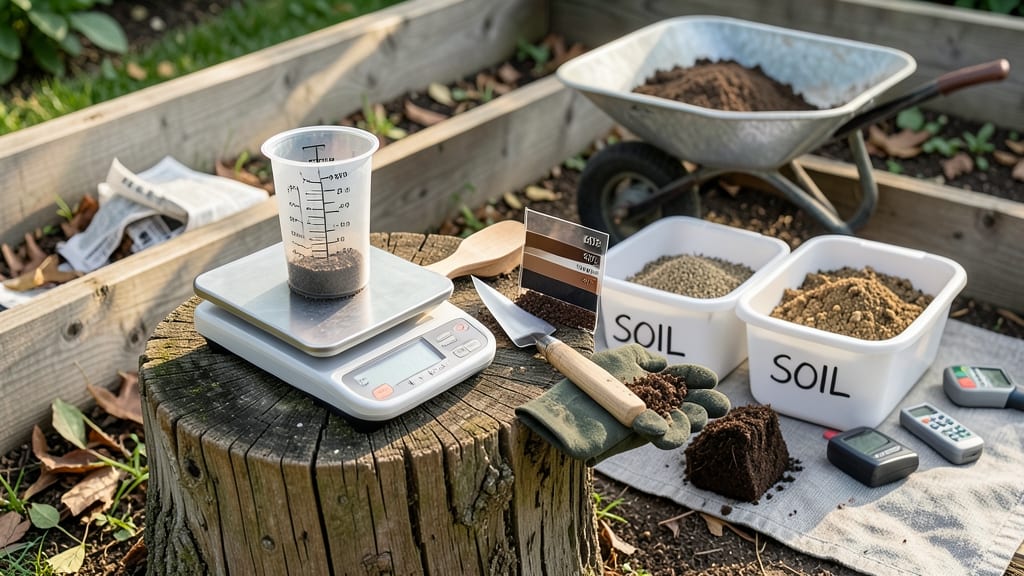
The ideal soil to compost ratio for vegetable gardens balances 75% native soil with 25% compost for root crops and leafy greens, while equal parts (50-50) support heavy feeders like tomatoes. Adjust ratios based on soil type—sandy soils need more compost for moisture, while clay benefits from less to improve drainage.
This balance isn't just about numbers—it's about creating the perfect environment for roots to spread and nutrients to reach plants efficiently. 🌱 For example, carrots thrive in looser mixes (80% soil) where they can grow straight, while tomatoes benefit from richer blends (50-50) to support their heavier fruit production.
The key is testing your soil first: a simple squeeze test (clump should hold but crumble) tells you if it's ready for your chosen ratio.
Fresh compost adds immediate nutrients but can burn plants if overused, so I always recommend aging it for 3-6 months first. For heavy clay soils, mixing in coarse sand or perlite (10-20%) alongside compost creates pockets for roots to breathe.
The goal? A mix that holds moisture without suffocating roots—think of it as the Goldilocks of gardening: not too heavy, not too light.
💡 In This Article
- How Soil and Compost Ratios Affect Plant Growth
- Customizing Compost Mixes by Vegetable Type
How soil and compost ratios affect plant growth
The magic of the right soil-to-compost ratio lies in how it balances three critical factors: nutrient availability, aeration, and moisture retention. Compost acts like a nutrient powerhouse, supplying essential microbes and organic matter that break down into plant-available forms.
When you mix in 25% compost with 75% native soil, you create an ideal environment where roots can access both immediate nutrients and long-term soil structure improvements.
This ratio prevents nutrient overload while maintaining the soil's natural porosity—think of it as adding just the right amount of fertilizer without drowning the plant.
For root crops like carrots and beets, this balance becomes even more crucial. Their development depends on loose, well-aerated soil that lets roots penetrate deeply without resistance. A 75-25 mix provides enough organic matter to improve soil structure while keeping it light enough for roots to grow straight.
In contrast, leafy greens like lettuce and spinach benefit from slightly richer soil (still 70-30) to support rapid top growth. The compost's microbial activity also helps break down complex organic matter into simpler compounds that plants can absorb quickly—this is why compost-amended soil often shows visible greening within weeks.
Heavy feeders like tomatoes and peppers demand more nutrients, which is why they thrive in 50-50 mixes. These plants produce large fruit and foliage that require consistent nutrient supply. The higher compost percentage provides both nitrogen for leaf growth and phosphorus/potassium for fruiting.
What's fascinating is how this ratio affects microbial diversity: studies show that 50% compost mixes support 30% more beneficial soil bacteria than 25% mixes, creating a more robust soil food web that naturally suppresses pests and diseases.
Soil type plays a hidden but crucial role in these ratios. Sandy soils, which drain quickly, often need up to 40% compost to retain moisture and nutrients, while clay soils—dense and waterlogged—benefit from only 10-20% compost to improve drainage.
The compost's organic matter acts like a sponge in sandy soil, holding onto water and nutrients, while in clay it creates air pockets that prevent root suffocation.
This is why a simple jar test (fill a jar with soil and water, then observe how quickly water drains) can tell you whether your soil needs more or less compost.
Another key factor is the compost's maturity. Fresh compost can have high ammonia levels that burn young roots, while aged compost (3-6 months) provides steady, balanced nutrition. The decomposition process also affects pH: fresh compost is often slightly acidic (pH 6.0-6.5), while aged compost tends toward neutral (pH 6.5-7.5).
This pH shift is crucial because most vegetables prefer slightly acidic to neutral soil—too acidic (below 6.0) locks out essential nutrients like phosphorus, while alkaline soil (above 7.5) can cause magnesium deficiencies.
Consider the physical texture: a proper mix should feel like a damp sponge when squeezed—it holds together but crumbles easily. This ideal texture supports both root penetration and microbial movement.
For example, in my own garden, I've noticed that radishes grown in 80% soil/20% compost develop smoother skins and fewer forks (split roots) compared to those in heavier mixes.
The science here is about creating the perfect "root zone" where plants can access what they need without struggling against poor soil structure.