
Soil Temp for Beans: Ideal Ranges by Growth Stage for Best Yields

How To

Soil Temp for Beans: Ideal Ranges by Growth Stage for Best Yields

Getting the right soil temperature for beans 🌱 is the secret to fast germination and strong plants—most gardeners miss the mark without even knowing it.

Struggling to grow healthy bean plants? Soil temperature plays a far bigger role in your success than most gardeners realize—getting it wrong can mean the difference between thriving vines and wasted effort.

Beans need soil to warm up to 60°F (15°C) before they’ll even sprout, and cooler conditions can stall growth for weeks. In USDA Zone 6a, that means waiting until mid-April or later, when the ground finally sheds its chill.

Below, I’ll show you how to test your soil’s warmth, adjust it for faster growth, and pick the best planting window for your region—so you can go from seed to harvest without a hitch.

Optimal soil temperature ranges for beans at every growth stage

Soil temperature isn't just a background factor for beans—it's the foundation of their entire growth cycle. Beans are warm-season crops, meaning they need consistently warm soil to germinate, grow, and produce pods. Too cold delays germination and stunts growth, while too hot can stress plants and reduce yields.

Understanding these ranges at each stage helps you time plantings perfectly and troubleshoot issues before they become serious.

Most gardeners focus on air temperature, but soil temperature is what truly matters for beans. The roots absorb heat directly from the soil, and enzymes that drive growth only activate within specific temperature ranges.

For example, at 50°F (10°C), seeds may sit dormant for weeks, while at 85°F (29°C), they can germinate in just 3-4 days—but then face heat stress later. Balancing these factors ensures robust plants from seed to harvest.

Germination is the most critical stage for temperature sensitivity. Seeds won't sprout until the soil reaches 60°F (15°C), and the ideal range is 65-85°F (18-29°C). Below 55°F (13°C), germination slows dramatically, and seeds may rot instead of sprouting. This is why early spring plantings often fail—even if air temperatures seem warm, the soil may still be too cold.

Vegetative growth thrives when soil stays between 65-75°F (18-24°C). During this phase, beans focus energy on leaf and stem development. If soil drops below 60°F (15°C), growth stalls, and plants may develop yellowing leaves—a sign of chilling injury. Conversely, soil above 80°F (27°C)) can cause wilting and reduced nutrient uptake, leading to weak stems that struggle to support heavy pods.

Growth Stage Optimal Soil Temp (°F/°C) Critical Thresholds Yield Impact
Germination 65-85°F (18-29°C) ❄️ <55°F (13°C): No germination
☀️ >85°F (29°C): Rapid but uneven sprouting
Slow/failed sprouts below 60°F (15°C); weak seedlings above 90°F (32°C)
Vegetative Growth 65-75°F (18-24°C) ❄️ <60°F (15°C): Stunted growth
☀️ >80°F (27°C): Wilting, nutrient stress
Leafy but weak vines; poor pod support
Flowering 70-80°F (21-27°C) ❄️ <65°F (18°C): Fewer flowers
☀️ >85°F (29°C): Dropped blooms
Reduced pollination; lower pod set
Pod Development 70-78°F (21-26°C) ❄️ <68°F (20°C): Slow filling
☀️ >82°F (28°C): Stunted pods
Small, tough pods; poor flavor
Harvest 65-75°F (18-24°C) ❄️ <60°F (15°C): Pods toughen
☀️ >80°F (27°C): Overripe quickly
Reduced shelf life; bitter taste

How to measure and adjust soil temperature for bean growth

Getting your soil temperature right is one of the most overlooked factors in growing healthy beans. Unlike air temperature, which we check daily, soil temperature often stays hidden—yet it directly impacts germination rates and overall plant vigor.

If your beans are slow to sprout or show weak stems, cold soil is likely the culprit. Let’s fix that with practical steps to measure and adjust your soil’s warmth for peak bean performance.

First, understand that beans need warm soil to thrive—ideally between 60°F to 85°F (15°C to 29°C). Below 50°F (10°C), seeds may rot instead of sprouting, while temperatures above 90°F (32°C) can stress plants and reduce pod production.

Testing your soil’s temperature before planting is the first step to avoiding these pitfalls and ensuring a bountiful harvest.

⚠️ Warning: Cold Soil Kills Bean Seeds!

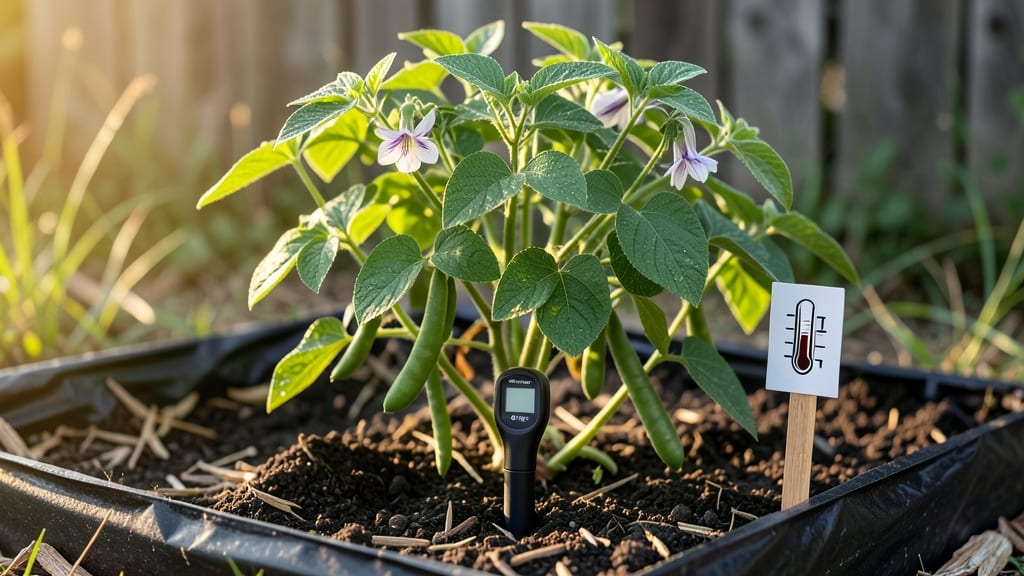
If your soil is below 50°F (10°C), your bean seeds may never sprout—even if the air feels warm. Germination fails when soil stays too cold for too long. Use a soil thermometer (available for under $10) to check temperatures at 2-inch depth—the zone where seeds will germinate.

If it’s too cool, try mulching with black plastic or planting in raised beds to warm the soil faster.

To measure your soil temperature accurately, use a soil thermometer—these are inexpensive and easy to use. Push the probe 2 inches deep (the typical planting depth for beans) and wait 30 seconds for an accurate reading.

Early mornings can show cooler temperatures, while mid-afternoon readings will be warmer. If your soil is consistently below 60°F (15°C), your beans will struggle to germinate, even if the weather forecast says it’s warm.

If your soil is too cold, don’t panic—there are simple fixes. Black plastic mulch absorbs sunlight and warms the soil by 5-10°F (3-6°C) in just a few days. Alternatively, use row covers or cold frames to trap heat near the soil surface.

For immediate results, plant in raised beds, which warm up faster than in-ground soil. These methods can shave weeks off your germination time and give your beans a stronger start.

Watch for temperature-related stress signs in your beans, like stunted growth or yellowing leaves. If your plants look weak but the weather seems fine, check your soil temperature again—it might be the real issue. Adjusting mulch or delaying planting until the soil warms can save your crop.

Remember, patience pays off: waiting for the right soil temperature ensures faster, healthier growth and a bigger harvest later.

For cooler climates, consider warm-season bean varieties like Roma or Kentucky Wonder, which tolerate slightly cooler soils better than others. Pair this with early planting in warm microclimates, like near south-facing walls or in greenhouses, to give your soil a head start.

With these adjustments, you’ll be well on your way to growing vigorous, productive bean plants—no matter your local climate.

★★★★★4.9(9 reviews)
Categories How To