
How To
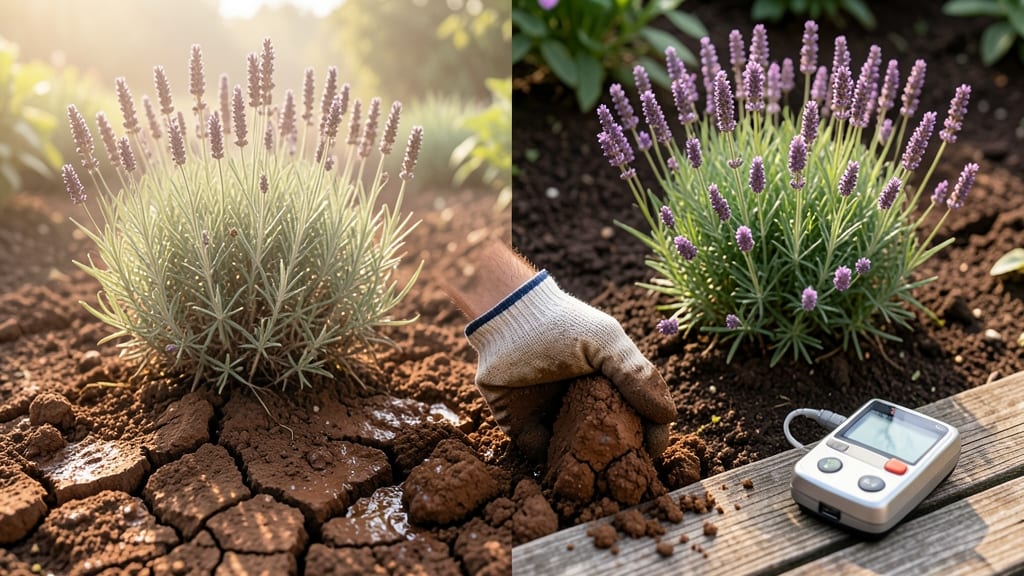
When soil has a high clay content, it drains poorly and compacts easily, but you can improve drainage and plant growth by adding organic matter like compost, mixing in coarse sand, or planting deep-rooted cover crops to break up density naturally over time.
Clay soil's tiny particles pack tightly together, creating a dense matrix that locks in water while blocking air and nutrients from reaching roots. 🌱 This is why plants often struggle—waterlogged conditions can suffocate roots, while the lack of oxygen stunts growth.
The good news? Organic matter like compost or coarse sand creates air pockets, while deep-rooted plants gradually break up the compacted structure over time, transforming heavy clay into more workable soil.
For best results, I recommend combining methods: spread a 2-3 inch layer of compost over the surface, then till it into the top 6 inches of soil.
If your clay is extremely dense, mix in 1 part coarse sand to 3 parts soil—just avoid fine sand, which can make compaction worse. Cover crops like winter rye or clover add another layer of improvement by their root systems aerating the soil naturally as they grow.
💡 In This Article
- How Clay Soil Affects Plant Roots and Water Retention
- Natural Amendments to Break Up Heavy Clay Soil
How clay soil affects plant roots and water retention
Clay soil's tiny particles—each smaller than 0.002 millimeters—create a dense lattice that holds water molecules through strong electrostatic bonds. This is why clay soil can retain 40-50% more water than sandy soil, but the trade-off is severe: roots suffocate because oxygen can't penetrate these tightly packed layers.
In comparison, loamy soil (ideal for most plants) has 40% sand, 40% silt, and 20% clay, allowing both water and air to move freely through its larger pores.
The real damage happens when clay soil dries out. These particles shrink and pull apart, creating cracks that can be 10 times wider than their hydrated state.
While this might seem like improved drainage, the cracks actually create air pockets that dry out the soil unevenly, leaving roots vulnerable to drought stress. The worst part?
Clay's high cation exchange capacity (CEC) means it clings to nutrients like nitrogen and phosphorus, but plants can't access them when the soil stays waterlogged or compacted.
Root growth suffers because clay's density creates resistance—roots expend 30-50% more energy pushing through compacted clay than through loamy soil. This is why you often see surface roots in clay gardens: plants give up on penetrating deeper layers.
The lack of oxygen (below 10% soil oxygen in waterlogged clay) triggers anaerobic conditions, producing toxic compounds like ethanol and methane that further stress roots. 🌱
Visualize it this way: Sandy soil acts like a sieve, letting water drain too quickly, while clay acts like a sponge that never releases water. The ideal balance is loamy soil, where water drains at about 0.5 inches per hour, giving roots both moisture and oxygen.
Clay's water retention can be 10 times slower than this optimal rate, creating the perfect storm for poor plant health.
Here's what happens at the microscopic level: Clay particles have negative charges that attract positively charged nutrients (like calcium and magnesium), but they also repel water-repellent organic compounds. This creates hydrophobic zones where water beads up instead of soaking in, even when the soil appears wet.
The result? Plants wilt because their roots can't absorb moisture efficiently, despite the soil being saturated.
To make matters worse, clay's high plasticity means it compacts easily under foot traffic or machinery. A single pass with a lawnmower can reduce pore space by 30%, making it even harder for roots to grow.
This compaction is why clay soil often feels like walking on concrete—it's not just dense, it's actively resistant to change without intervention.