
How To
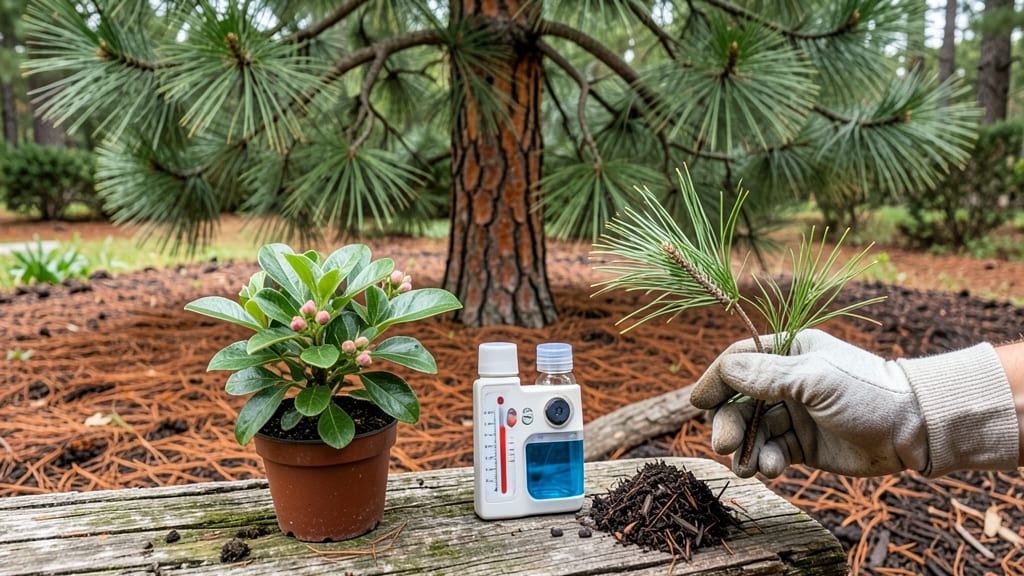
Pine needles do make soil acidic by gradually lowering pH levels as they decompose, releasing organic acids like tannins and humic substances that create an acidic environment ideal for acid-loving plants like azaleas, blueberries, and rhododendrons.
Pine needles create acidic soil primarily through their slow decomposition process, which releases natural organic compounds like tannic and humic acids. 🌲 These compounds break down over time, gradually reducing soil pH—often dropping it into the 4.5–5.5 range—making it perfect for plants that thrive in slightly acidic conditions.
Unlike fast-acting fertilizers, pine needles work over months, so their effects build up gradually rather than causing sudden pH shifts.
This acidification isn't just about the needles themselves—it's also tied to how they interact with soil microbes. As they decompose, they release carbon-rich compounds that feed beneficial fungi and bacteria, which further contribute to the acidic environment.
The result? A soil profile that mimics the natural forest floor where many acid-loving plants originally evolved. For gardeners, this means fewer adjustments are needed to maintain the ideal growing conditions for plants like gardenias or blueberries.
💡 In This Article
- How Pine Needles Lower Soil pH: Chemical Breakdown and Decomposition Process
- Best Acid-Loving Plants for Pine Needle Soil and Alternative Mulch Options
How pine needles lower soil pH: chemical breakdown and decomposition process
The acidification process begins when pine needles decompose, releasing compounds like tannins and humic acids that directly lower soil pH. These organic acids have a pH of around 3.0–4.5 when freshly released, creating a slow but steady drop in soil acidity over months.
Unlike synthetic fertilizers that alter pH quickly, pine needles work gradually, making them ideal for long-term soil conditioning. 🌲
As needles break down, they also immobilize nitrogen in the soil, which shifts microbial activity toward fungi that thrive in acidic conditions. This process can reduce soil pH by 0.5–1.5 units over a year, depending on needle thickness and climate.
For example, loblolly pine needles (common in the Southeast) decompose faster than white pine needles, creating a more rapid pH shift. The needle's waxy coating slows decomposition, extending their acidifying effects.
This chemical transformation creates a microbiome shift—beneficial acid-loving bacteria and mycorrhizal fungi flourish, while many weeds struggle. The resulting soil often mirrors the natural forest floor where pines dominate, with pH levels typically stabilizing between 4.5–5.5.
This range is perfect for plants adapted to acidic soils, like blueberries or rhododendrons, which can't tolerate higher pH levels. 💫
However, the acidification effect varies by pine species and environmental factors. Southern pines (like slash or longleaf) produce more acidic mulch than northern pines (like white or red pine), due to differences in needle chemistry.
Rainfall also plays a role—wet climates accelerate decomposition, while dry areas slow the process, making acidification more gradual. Testing soil pH before and after mulching helps gauge the exact impact.
One surprising detail is how pine needle acidity interacts with minerals in the soil. The released organic acids chelate (bind to) essential nutrients like iron and manganese, making them more available to plants.
This is why acid-loving plants often show vibrant foliage when grown in pine-needle-amended soil—they're not just getting lower pH, but also improved nutrient uptake. The trade-off? Nutrients like phosphorus may become less available, requiring careful soil testing. ✨
For gardeners, this means pine needles aren't just mulch—they're a slow-release acidifier that reshapes soil chemistry over time. The process is most effective when needles are applied in 3–4 inch layers, allowing them to break down while protecting the soil from extreme temperature fluctuations.
Over time, this creates a self-sustaining acidic environment that many ornamental plants crave. 🔥