
Container Gardens
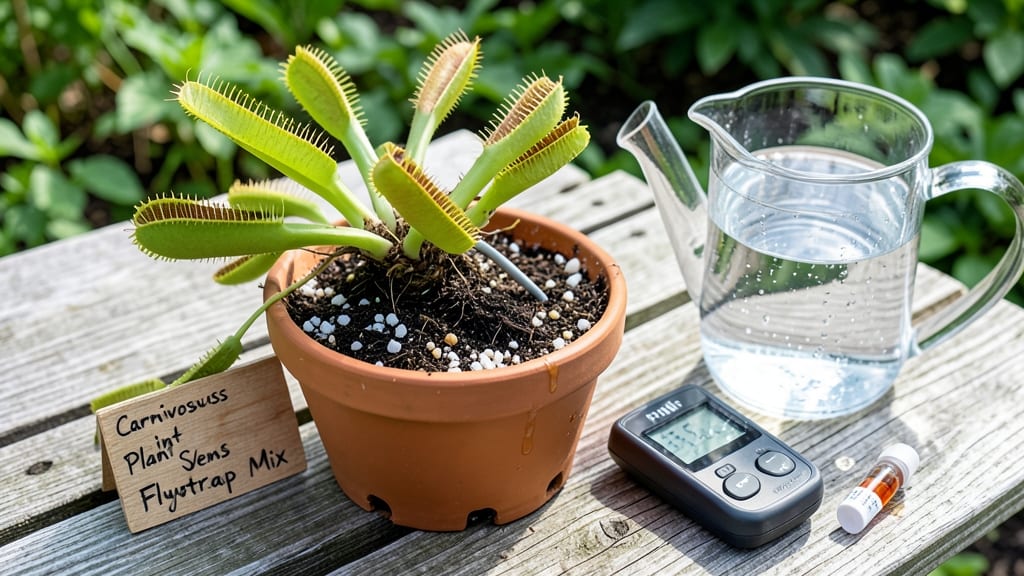
The right soil for a Venus fly trap 🪰 isn’t just dirt—it’s a carefully balanced mix of peat moss and perlite that mimics its swampy home.
If you’ve ever watched your Venus fly trap’s leaves turn yellow or its traps fail to snap shut, you’re not alone. That’s usually a sign the soil is either too dense or too alkaline, suffocating the roots or starving the plant of the nutrients it actually needs.
Most garden soil is a death sentence for these carnivorous plants—it’s packed with minerals and microbes that would drown a Venus fly trap in seconds. Instead, we’re talking about a light, airy blend that holds just enough moisture without turning into a swamp.
Below, I’ll walk you through the exact ratios, why pH matters, and how to troubleshoot common soil mistakes—so your Venus fly trap can finally thrive instead of just surviving.
Why peat moss and perlite are the gold standard for Venus fly trap soil
Venus fly traps (Dionaea muscipula) aren’t your average houseplants—they’re carnivorous survivors that evolved in the nutrient-poor, acidic bogs of the southeastern U.S. Their soil needs mirror these conditions: low pH, high aeration, and zero synthetic fertilizers.
That’s why a simple mix of peat moss and perlite becomes non-negotiable. Without it, your plant faces root rot, nutrient overload, or suffocation from compacted soil.
The magic lies in the science: peat moss holds moisture while maintaining a pH of 3.5–5.5, while perlite prevents compaction and mimics the air pockets in their native bogs. Garden soil or potting mix?
A death sentence. These contain mineral nutrients (like nitrogen and phosphorus) that trigger a metabolic shutdown in Venus fly traps—because they’ve adapted to starve their roots while hunting insects for nutrition.
Here’s the breakdown of why this mix works—and why alternatives fail:
The 50/50 peat moss-perlite mix is the gold standard because it balances moisture retention and oxygen flow. Peat moss mimics the waterlogged yet acidic conditions of their native habitats, while perlite prevents the roots from suffocating—a common killer in dense soils.
Without perlite, the mix becomes too compact, trapping water and inviting fungal infections like Phytophthora. Without peat moss, the soil dries out too quickly, and the pH spikes, stressing the plant.
Venus fly traps also reject garden soil because it contains mineral nutrients that trigger a survival response. In the wild, these plants evolved to avoid nutrient-rich soils because they’d stop hunting insects—a critical survival trait.
Even a small amount of compost or fertilizer can cause leaf yellowing or stunted growth within weeks. Think of it like feeding a lion steak: it’s unnecessary and disrupts their natural behavior.
Another pitfall is overwatering, which turns deadly when combined with the wrong soil. A peat-perlite mix drains excess water quickly, preventing root rot.
But if you use a mix with sand or coconut coir (common in some "carnivorous plant mixes"), the pH can drift toward neutral, and the soil may not retain enough moisture during dry spells. Always stick to sphagnum peat moss (not horticultural peat) and culinary-grade perlite to ensure purity.
For humid climates, a 70% peat moss/30% perlite ratio works best because the air stays moister. In dry climates, bump perlite to 40% to prevent the mix from drying out too fast.
Pro tip: Test your mix’s pH with a digital pH meter—it should read 4.0–5.0. If it’s higher, add a pinch of
Step-by-step guide to mixing the perfect Venus fly trap soil at home
Mixing the right soil for your Venus fly trap is like crafting a custom habitat—too dense, and roots suffocate; too loose, and they dry out. The gold standard is a 50/50 or 70/30 blend of peat moss (for acidity and moisture) and perlite (for aeration).
This mimics the boggy, well-draining conditions of their natural wetlands. Without this balance, your plant will struggle, even with perfect light and care.
Before you start, gather your supplies: high-quality sphagnum peat moss (never garden soil or compost), perlite (not vermiculite or sand), and a clean container. Avoid store-bought mixes—they’re packed with nutrients that will kill your carnivore.
Your goal? A light, airy, and acidic medium that holds just enough moisture without drowning roots. Let’s get mixing!
Step-by-Step Mixing Guide
- 1 Measure your ingredients: For a 50/50 mix, use 1 part sphagnum peat moss to 1 part perlite. For dry climates, try a 70/30 ratio (more perlite to prevent compaction).
- 2 Sterilize the mix: Spread ingredients on a clean baking sheet and bake at 200°F for 30 minutes to kill fungi or bacteria. Let cool completely before handling.
- 3 Mix thoroughly: Combine ingredients in a sterile container, breaking up clumps of peat moss with your hands. Aim for a fluffy, even texture—no dense pockets should remain.
- 4 Test the pH: Use a soil pH kit to confirm the mix is acidic (pH 3.5–5.5). If needed, add a pinch of sulfur to lower pH further.
- 5 Layer in the pot: Fill your container 2/3 full with the mix, leaving room for the plant’s roots. Gently press down to remove air pockets without compacting.
Where to source ingredients? Skip the garden center—peat moss should be sphagnum-based (available at carnivorous plant nurseries or online). For perlite, choose food-grade (no dust mask needed). Pro tip: Store extra mix in a sealed container to keep it sterile until use.
If you’re in a humid climate, lean toward more perlite (70/30) to prevent fungal issues.
Common mixing mistakes? Over-compacting the soil (roots need air!) or using tap water to hydrate the mix (chemicals harm the plant). Always use distilled or rainwater for both mixing and watering.
If your soil feels too dense after mixing, add a little more perlite—your fly trap’s roots will thank you with vibrant traps and healthy growth.
Once your mix is ready, repot your Venus fly trap using the new soil, and water lightly with distilled water. Avoid fertilizers—this plant gets all its nutrients from insects! With the right soil, your carnivore will thrive, ready to snap up flies with ease. 🪰