
Vegetables
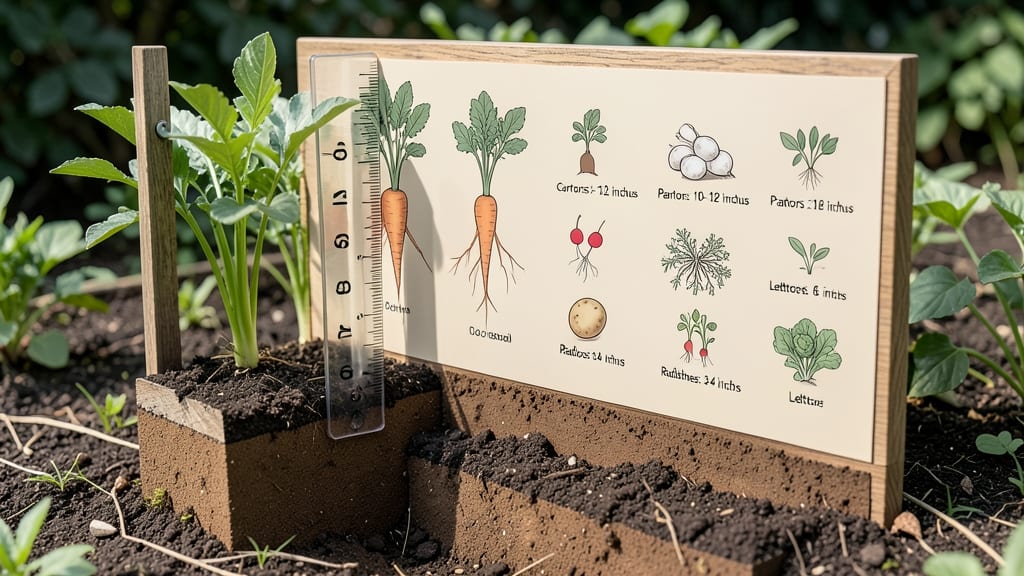
A soil depth chart for vegetables shows that shallow-rooted plants like lettuce thrive in just 6–12 inches, while deep-rooted varieties such as carrots need 18–24 inches or more for optimal growth and nutrient access.
A vegetable's root system determines how much soil it needs to spread and absorb nutrients.
Shallow-rooted greens like spinach or radishes don't need deep soil because they grow quickly above ground, while root vegetables like beets or parsnips require deeper layers to develop their edible portions fully. 🌱 The soil's texture also matters—sandy soils drain faster, so deeper roots help plants reach moisture, whereas clay soils may need amending to prevent compaction that restricts root growth.
I always recommend testing your soil's depth before planting heavy feeders like tomatoes or potatoes, as they'll struggle in shallow beds.
For gardeners working with limited space, raised beds offer a solution by allowing you to control soil depth precisely. You can layer in compost or organic matter to create the ideal growing environment for both shallow and deep-rooted plants.
This approach also reduces competition between plants with different root depths, ensuring each gets the space it needs to thrive. 💫
💡 In This Article
- How Root Systems Affect Vegetable Soil Depth Requirements
- Best Vegetables by Root Depth: A Quick Reference Guide
How root systems affect vegetable soil depth requirements
The difference between shallow and deep-rooted vegetables comes down to their root architecture and nutrient absorption needs. Plants with taproots—like carrots, parsnips, and beets—send a single, thick root downward to access water and minerals deep in the soil.
These roots can extend 18-36 inches deep, requiring loose, well-drained soil to prevent stunted growth or forking. In contrast, fibrous-rooted plants like lettuce, onions, or radishes spread horizontally in the top 6-12 inches of soil, absorbing nutrients from a wider surface area rather than depth.
Here's what's actually happening underground: Taproots act like straws, pulling moisture from deep reservoirs, while fibrous roots create a dense network to capture nutrients near the surface. Soil compaction is the silent enemy—when heavy machinery or foot traffic compresses soil, roots struggle to penetrate.
For example, carrots grown in compacted clay may fork or split because their roots can't grow straight downward. Loosening soil to 12-18 inches before planting deep-rooted crops can double yield potential by reducing resistance.
The nutrient absorption zone matters too. Most vegetable roots absorb 90% of their nutrients from the top 12 inches of soil, but deep-rooted plants need that extra depth to access minerals like phosphorus and potassium that leach downward.
Shallow-rooted plants, however, rely on organic matter-rich topsoil. That's why composting or using raised beds with 6-12 inches of amended soil works wonders for greens like spinach or kale, which mature quickly and don't need deep penetration.
What most people don't realize is how root length correlates with plant maturity. Deep-rooted crops like asparagus take 2-3 years to establish their root systems before producing spears, while shallow-rooted radishes mature in just 20-30 days.
This timing affects when you should plant companion crops—pairing deep-rooted tomatoes with shallow basil ensures neither competes for space or nutrients during critical growth phases. The key is matching soil depth to the plant's lifecycle and root behavior.
Consider these root system characteristics when planning your garden:
- Taproots: Need 18+ inches of loose soil (carrots, parsnips, dandelions)
- Fibrous roots: Thrive in 6-12 inches (lettuce, onions, radishes)
- Moderate roots: Require 12-18 inches (potatoes, beets, turnips)
The science behind this involves root pressure—the force plants use to push roots through soil. Deep-rooted vegetables generate more pressure to overcome compaction, which is why they often need 2-3 times the soil depth of shallow-rooted varieties.
For instance, a 12-inch soil profile might suffice for lettuce but would leave carrots struggling to reach maturity. 🌱