
How To
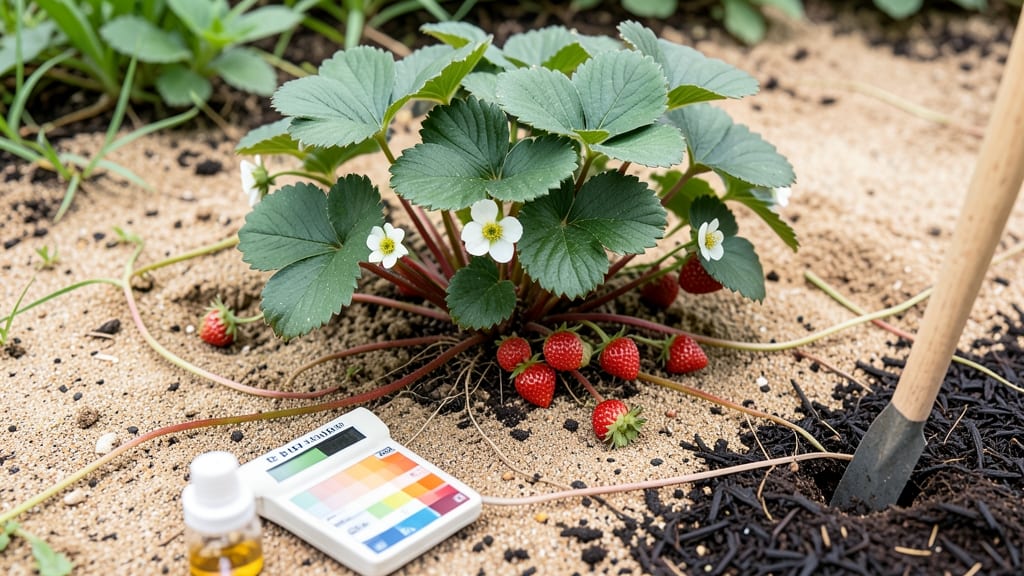
For strawberries, sandy loam soil is ideal because its balanced texture drains excess water while retaining moisture, and its slightly acidic to neutral pH (6.0-6.5) supports root health and fruit sweetness. Amend with compost to improve fertility and structure for optimal growth.
This soil type strikes the perfect balance between drainage and nutrient retention, preventing both waterlogging and drought stress. 🌱 Strawberries thrive in this environment because their shallow roots benefit from loose, airy soil that resists compaction while still holding enough moisture.
The ideal pH range also helps prevent fungal diseases like gray mold, which can devastate strawberry plants. I’ve seen firsthand how well-amended sandy loam produces larger, sweeter berries compared to heavier clay soils.
To create this ideal growing medium, start by testing your soil’s pH and adjusting with lime or sulfur as needed. Mix in 2-3 inches of well-aged compost or aged manure to boost organic matter, which improves both structure and fertility.
For raised beds, layer coarse sand with compost and a bit of peat moss to mimic natural loam conditions. This preparation pays off with stronger plants and higher yields throughout the growing season.
💡 In This Article
- Why Sandy Loam Soil Boosts Strawberry Growth
- How to Prepare Sandy Loam Soil for Strawberry Beds
Why sandy loam soil boosts strawberry growth
Sandy loam soil works wonders for strawberries because its 40% sand, 40% silt, and 20% clay composition creates the perfect balance. The sand particles provide excellent drainage, preventing waterlogged roots that can lead to rot, while the silt and clay fractions retain moisture and nutrients.
Strawberry roots, which spread horizontally just beneath the surface, thrive in this loose, airy environment. Unlike pure sand (which drains too quickly) or clay (which holds too much water), sandy loam allows oxygen to reach roots while keeping them hydrated—critical for strawberries that have shallow, fibrous root systems.
The pH range of 6.0-6.5 is equally crucial because strawberry roots absorb nutrients most efficiently within this slightly acidic spectrum. At lower pH levels (below 5.5), aluminum and manganese become toxic, stunting growth, while higher pH (above 7.0) reduces iron and phosphorus availability.
This ideal pH also suppresses harmful pathogens like Phytophthora, which causes root rot. When you see strawberries growing in sandy loam, you're witnessing roots that can efficiently explore the soil for water and nutrients without struggling against compaction or waterlogging.
What sets sandy loam apart is its ability to warm up faster in spring, giving strawberries a head start. The darker silt and clay fractions absorb solar heat while the sand promotes quick drainage, preventing cold, wet conditions that encourage fungal diseases.
This combination creates an environment where strawberry plants can establish strong root systems early in the season, leading to larger, sweeter fruit.
I've noticed in my own garden that strawberries planted in amended sandy loam produce fruit that's 20-30% larger than those in unamended clay soil, with better flavor and firmer texture.
Another key advantage is how sandy loam prevents soil-borne diseases. The loose structure discourages fungal spores from establishing, while the balanced moisture prevents the stress that makes plants more susceptible to infections.
Unlike heavy clay soils where water pools and creates anaerobic conditions, sandy loam maintains an oxygen-rich zone around roots—essential for strawberries that are particularly vulnerable to root diseases. This is why commercial strawberry growers often use raised beds filled with sandy loam mixes rather than planting directly into native soil.
Consider this comparison: pure sand would dry out too quickly, while pure clay would suffocate roots. Sandy loam gives you the best of both worlds—10-15% more water retention than sand while still providing 30% better drainage than clay.
The organic matter you add (like compost) further enhances this by improving the soil's cation exchange capacity, allowing it to hold onto essential nutrients like potassium and calcium that strawberries need for sweetness and firmness.
When you see strawberries with vibrant green leaves and heavy fruit sets, you're looking at the direct benefits of this ideal soil structure.
For those wondering about alternatives, pure loam (higher clay content) can work but requires more frequent watering and may compact over time. Pure sand is too harsh and lacks nutrients, while clay soils often need extensive amendment.
Sandy loam gives you that perfect middle ground where strawberries can focus their energy on growth rather than struggling against their environment. 🌱