
Tools
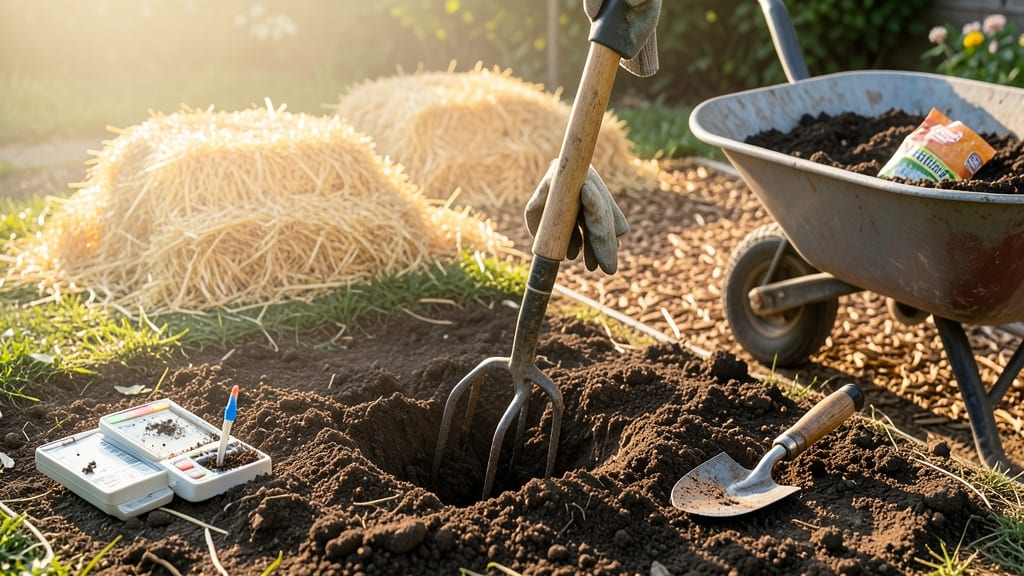
To prepare soil for a flower garden, you'll need to aerate the ground, clear out weeds and debris, enrich it with compost or organic matter, and adjust the pH level for healthy root development and nutrient absorption. A well-prepared base sets the stage for lush, thriving blooms.
Soil preparation isn't just about digging—it's about creating the perfect environment for your flowers to thrive. 🌸 Start by testing your soil's pH (most flowers prefer a range between 6.0 and 7.0), as extreme acidity or alkalinity can stunt growth.
If your soil is too dense, work in compost or aged manure to improve drainage and aeration, while sandy soil benefits from organic matter to retain moisture.
I always recommend a layered approach: till in amendments first, then top with a thin layer of mulch to lock in nutrients and suppress weeds.
Don't overlook the importance of timing—preparing soil in early spring or fall gives plants time to establish roots before extreme temperatures. For heavy clay soil, consider adding perlite or coarse sand to break up compaction, while peat moss helps retain moisture in sandy areas.
The goal is a crumbly, nutrient-rich bed that feels like a warm hug for your flower roots!
💡 In This Article
- How to Test and Improve Flower Garden Soil Quality
- Essential Tools and Materials for Soil Preparation
How to test and improve flower garden soil quality
Soil composition is the foundation of any successful flower garden, and understanding its balance is key. The ideal soil for most flowers contains about 5-10% organic matter, which improves water retention and nutrient availability.
Clay-heavy soils (with particles less than 0.002mm) can hold too much water, while sandy soils (particles 0.05-2mm) drain too quickly. The magic happens in loamy soil—a perfect blend of sand, silt, and organic matter that feels like a moist, crumbly sponge when squeezed. 🌱
pH balance is equally critical, as it directly affects nutrient absorption. Most flowers thrive in slightly acidic to neutral soil (pH 6.0-7.0), but some like hydrangeas (pH 5.5-6.2) or lavender (pH 6.5-7.5) have specific needs.
Testing kits measure pH by reacting soil with colored indicators—blue for alkaline, red for acidic. For precise adjustments, add lime (pH-raising) or sulfur (pH-lowering) based on test results, but always work these into the top 6-12 inches of soil for even distribution.
Nutrient testing reveals what's missing in your soil. DIY kits check for nitrogen (leaf growth), phosphorus (root development), and potassium (overall health), while lab tests provide deeper insights like micronutrient levels.
For example, a phosphorus deficiency (common in sandy soils) shows as stunted growth, while excess nitrogen can lead to lush foliage but fewer blooms. Amending with compost adds a balanced mix of nutrients, while targeted fertilizers address specific deficiencies—like bone meal for phosphorus or kelp meal for potassium. 💡
Different flowers have unique soil preferences that go beyond basic pH. Acid-loving plants like azaleas and blueberries need organic matter like peat moss or pine needles to maintain their ideal 4.5-6.0 pH. Meanwhile, alkaline-tolerant flowers such as snapdragons or lilacs thrive in soil with crushed limestone or wood ash.
The key is matching your soil amendments to the specific needs of your flower varieties—this precision makes all the difference in bloom quality and plant vigor.
For a hands-on approach, I recommend the "dig-and-test" method: take soil samples from 6-8 inches deep in multiple garden spots, mix them thoroughly, and test before amending. This ensures you're addressing the entire root zone rather than just the surface.
Over time, you'll develop an intuition for your soil's needs—like recognizing that clay soil needs 2-3 years of compost to improve, while sandy soil shows results within a single season. 🌿
One common mistake is over-amending with fresh manure, which can burn plant roots due to high ammonia levels. Always use aged compost or well-rotted manure (at least 6 months old) to provide nutrients without harming delicate flower roots.
The goal is to create a living, breathing soil ecosystem where beneficial microbes can thrive alongside your plants—this biological activity is what truly fuels vibrant blooms. ✨