
Companion Plants
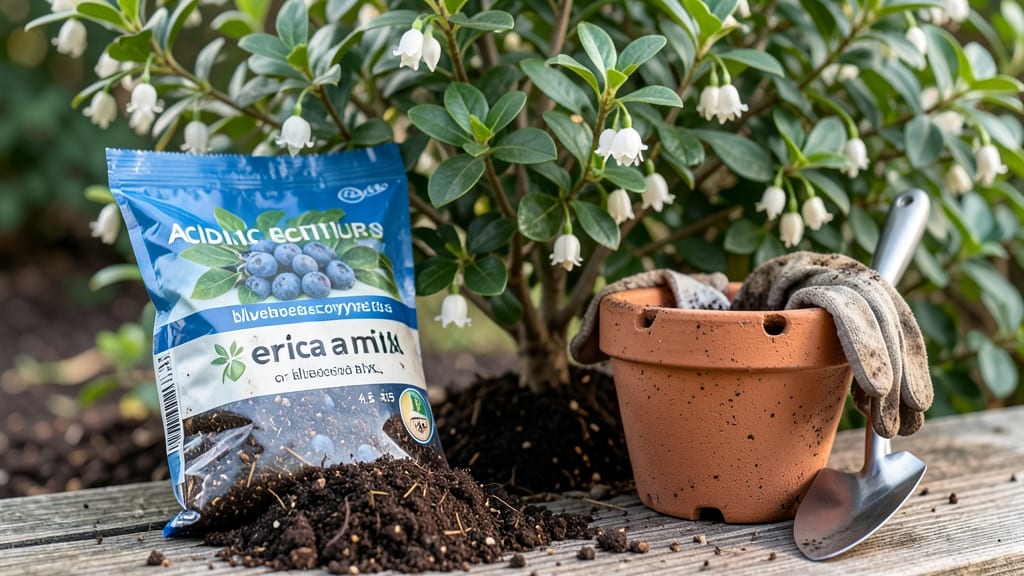
Your blueberry bushes deserve soil that mimics their wild, acidic forest floor—potting soil for blueberry plants isn't just dirt, it's their foundation for sweet, plump berries. 🌿 I learned the hard way that store-bought mixes often lack the acidity and organic richness these plants crave, leading to stunted growth and sour-tasting fruit.
The right blend keeps roots happy, water flowing, and your harvest bursting with flavor.
Start with a base of peat moss or coconut coir (both hold moisture while staying loose), then add pine bark fines for acidity and perlite or sand for drainage—blueberries hate soggy roots.
A pH test kit is your best friend here; aim for 4.5-5.5, the same as a pine needle bed. Most pre-mixed bagged soils sit around 6.5, which is a no-go for these finicky shrubs.
Mix in composted pine needles or sphagnum peat for that essential acidity boost, and a handful of organic fertilizer (like fish emulsion) to feed hungry roots. When repotting, choose containers with drainage holes—blueberries despise wet feet.
With the right soil, you'll see new growth within 4-6 weeks, and by next summer, your bushes will be heavy with fruit.
Pro tip: Refresh your soil every 2-3 years by top-dressing with fresh pine fines or composted leaves. Avoid garden soil (it's too alkaline) and never use lime—this is one plant that thrives when its soil tastes like a damp forest floor.
Your berries will thank you with bigger, sweeter harvests every season.
📚 In This Guide
- What you need
- Instructions
- Tips and common mistakes
- Wrapping up and next steps
What you need
- ● Peat moss or coconut coir (3 parts) – Retains moisture and mimics acidic forest floors.
- ● Pine bark fines or orchid bark (2 parts) – Improves drainage and aeration.
- ● Perlite or vermiculite (1 part) – Boosts airflow and prevents compaction.
- ○ Sphagnum peat moss (optional but helpful) – Enhances acidity and water retention.
- ● Slow-release fertilizer (10-10-10 or 5-5-5) – 1–2 tbsp per gallon of mix.
- ● Sulfur or aluminum sulfate – Adjusts pH to 4.5–5.5 (test with a pH meter!).
- ● Garden gloves – Protects hands from sharp bark and soil particles.
- ● Large mixing container or wheelbarrow – At least 5–10 gallons for bulk mixing.
- ● pH testing kit – Critical for ensuring acidity levels!
- ● Trowel or shovel – For blending ingredients evenly.
- ● Watering can or hose – To moisten the mix before planting.
- ○ Pot or container (optional) – Ensure drainage holes if repotting.
- ● 💡 Skip peat moss? Use composted pine needles for a sustainable, acidic alternative.
- ● 🌡️ Store-bought "acid-loving" mixes (like Fafard Premium Potting Mix) can be a shortcut—just amend with extra sulfur if needed.
- ● ✨ Add 1 cup of coffee grounds per gallon (dried!) for a natural nitrogen boost.
Step-by-Step guide for creating the perfect acidic potting mix for blueberries
Blueberries demand precise soil chemistry—here's how to craft the ideal blend for thriving container plants.
🌱 Step 1: Combine the Base Components
Start with 50% peat moss—this is the acidifying backbone of your mix. I use sphagnum peat because it holds moisture while maintaining aeration. Mix it with 30% perlite to prevent compaction and improve drainage. The perlite also helps maintain that critical acidic pH by preventing soil from becoming waterlogged.
Add 20% coarse sand—this isn't your typical beach sand but horticultural-grade grit (about 1/8-inch in size). It mimics the mineral structure blueberries prefer in their native bogs. Sift the sand first to remove any fine particles that could clog pores. This blend gives you loose, well-draining soil that mimics the airy, acidic conditions blueberries crave.
💧 Step 2: Incorporate Organic Matter for Nutrients
Stir in 10% composted pine bark fines—this lowers the pH naturally while adding organic matter. Avoid cedar or oak bark, as they can be too acidic or contain harmful compounds. The bark fines should be finely ground (about 1/4-inch pieces) to break down gradually. Mix thoroughly so the pine fines distribute evenly throughout.
Add 5% worm castings—this might seem counterintuitive (worms aren't acidic!), but the castings provide slow-release nutrients without altering the pH significantly. Use 1 part castings to 10 parts of your dry mix to keep the blend light. Avoid fresh manure or compost, as these can raise the pH over time and create ammonia burns.
✂️ Step 3: Adjust pH and Test Before Use
Blueberries thrive in pH 4.5-5.5—test your mix before planting. Use a digital pH meter or liquid test kit for accuracy. If your mix tests above 5.5, add elemental sulfur (about 1 teaspoon per gallon of mix) and re-test in 2-3 weeks. For mixes below 4.5, blend in 10% additional peat moss to buffer the acidity.
I like to water the mix with 1 part vinegar to 10 parts water (just enough to moisten) before finalizing. This gives an extra acid boost. Let the mix sit for 24 hours before using—this allows the sulfur (if added) to react fully. Fluff the mix gently with a fork to maintain aeration before filling pots.
☀️ Step 4: Layer and Plant for Optimal Growth
Fill your 12-18 inch deep containers with the mix, leaving 2 inches of space at the top for watering. Tap the pot gently to settle the soil but avoid compacting it. Blueberries have shallow but wide root systems, so ensure the top 6 inches of soil is the loosest layer—this is where most roots will spread.
Plant blueberry bushes 1 inch deeper than their container depth to encourage root development. Water deeply until moisture runs from the drainage holes, then let the top 1 inch dry slightly before watering again. Mulch with 2 inches of pine needles to maintain acidity and retain moisture—this mimics their natural forest-floor habitat.
🪴 Step 5: Maintain Soil Chemistry Long-Term
Test the pH monthly during the growing season. Blueberries are heavy feeders but sensitive to salt buildup, so I use chelated iron (like Ironite) every 4-6 weeks to prevent chlorosis. Avoid synthetic fertilizers—they raise pH over time. Instead, top-dress with composted pine fines annually to replenish organic matter.
If you notice yellowing leaves with green veins, your pH is too high. Flush the pot with 2 inches of rainwater (or distilled water) to leach out excess minerals, then re-acidify with vinegar water. For purple stems or small leaves, the pH is too low—amend with 1 part lime-free compost to buffer the mix.
Tips & tricks for perfect blueberry potting mix
Between us, crafting the ideal soil for blueberries is all about precision—and these little details make all the difference.
Sifting is Non-Negotiable: When measuring your 20% coarse sand and 50% peat moss in Step 1, sift both components through a fine mesh screen before mixing. This eliminates clumps that can create air pockets or compacted areas in your blend. I use a 1/4-inch mesh for peat moss and 1/8-inch for sand—this mimics the natural aeration blueberries crave in their bog habitats. The result? A consistently loose, well-aerated mix that prevents root suffocation.
The Peat Moss Quality Factor: Not all peat moss works equally well. For Step 1, choose sphagnum peat moss with a low fiber content (look for "horticultural-grade" labels). The higher the fiber, the slower it breaks down and the more likely it is to compact over time. I've found that reed-sedge peat blends better with perlite but holds slightly less moisture—adjust your watering schedule if you use this alternative. Store your peat moss in a sealed container to prevent it from drying out before use.
pH Testing Timing Matters: In Step 3, when you're testing your mix's pH before planting, do it after the 24-hour resting period but before adding the final watering. The sulfur (if used) needs this full time to fully acidify the mix, and the vinegar water should be measured fresh. I test again 48 hours after planting to confirm the pH hasn't shifted during the initial watering. This double-check prevents those frustrating cases where plants struggle despite your best efforts.
Layering for Root Development: When you fill your 12-18 inch deep containers in Step 4, create a two-layer system—place the loosest, most organic-rich portion (with extra worm castings) in the top 6 inches, where most roots will spread. The bottom layer can be slightly firmer to provide stability. This mimics the natural forest floor where blueberries grow in loose topsoil over denser subsoil. After planting, gently press the mix around the roots to eliminate air gaps without compacting it.
Pro Tips for Potting Soil For Blueberry Plants
- Between us, crafting the ideal soil for blueberries is all about precision—and these little details make all the difference.
- Sifting is Non-Negotiable: When measuring your 20% coarse sand and 50% peat moss in Step 1, sift both components through a fine mesh screen before mixing.
- The Peat Moss Quality Factor: Not all peat moss works equally well.
Frequently asked questions
Got questions about the perfect potting mix for your blueberry bushes? You’re not alone! Here are some of the most common concerns—plus quick, actionable answers to keep your plants thriving.
What’s the best potting soil mix for blueberries?
Blueberries love acidic, well-draining soil with a pH of 4.5–5.5. A blend of 50% peat moss or coconut coir, 30% perlite/pine bark, and 20% compost or sand works best. Avoid garden soil—it’s too alkaline and can stunt growth.
When should I repot my blueberry plants?
Repot in early spring (before new growth) or fall (after harvest). If roots are circling or soil dries out too fast, it’s time to upgrade. Use a pot 2–3 inches larger than the root ball to avoid overcrowding.
Can I use regular potting soil for blueberries?
Not ideal! Regular potting soil is usually too alkaline (pH 6.0–7.0). To fix it, amend with sulfur or pine needles to lower pH. Test your soil with a pH meter—blueberries are picky, but worth the effort!
Why are my blueberries not fruiting even with the right soil?
Lack of fruit can mean low acidity, poor drainage, or insufficient sunlight (6+ hours daily). Check for yellow leaves (high pH) or mushy roots (overwatering). Feed with an acid-loving fertilizer (like cottonseed meal) in spring.
What’s a quick DIY soil test for acidity?
Drop a spoonful of soil in water—if it’s cloudy or smells sour, it’s acidic. For a visual test, mix soil with vinegar: fizzing = alkaline; no reaction = acidic. Adjust with sulfur (to lower pH) or lime (to raise it).
Wrapping up and next steps
Choosing the right potting soil for blueberry plants is your secret weapon for thriving bushes and juicy harvests! 🌱 With the perfect acid-loving blend—rich in organic matter, proper drainage, and a pH of 4.5–5.5—you’re setting your blueberries up for success.
Don’t overcomplicate it: prioritize quality over quantity, and your plants will reward you with vibrant growth and sweet, plump berries.
Ready to get growing? Roll up your sleeves, grab that soil mix, and plant with confidence! Next, check out our guide on blueberry care tips to keep your bushes happy all season long.