
Tools
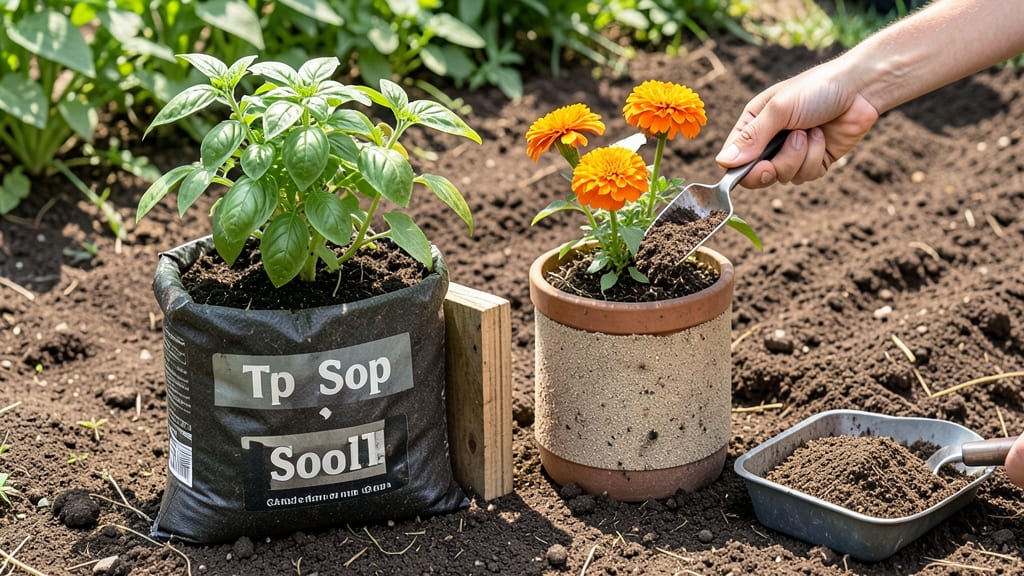
Top soil and garden soil are not the same: top soil is the nutrient-rich uppermost layer of earth, ideal for planting roots, while garden soil is a blended mix often containing compost, sand, or peat to improve fertility and drainage for specific plants.
Top soil forms naturally over centuries as organic matter decomposes, creating a living ecosystem for roots and microbes. 🌱 This natural layer is perfect for establishing new garden beds or repairing slopes, as it provides essential structure and nutrients without needing additives.
Garden soil, on the other hand, is a custom blend designed to address specific needs—like improving drainage in containers or boosting fertility in vegetable plots.
Think of top soil as the foundation layer for your garden, while garden soil acts like a tailored supplement. For example, if you're planting perennials, you might amend top soil with compost to enhance its existing nutrients.
But for container gardens, a pre-mixed garden soil with added perlite could prevent root rot. The key difference lies in their purpose: one is nature's original recipe, while the other is a gardener's custom creation.
To determine which you need, consider your project's requirements. Top soil works best for large-scale planting where roots need depth, while garden soil shines in controlled environments like raised beds or pots.
Always test your soil first—many nurseries offer simple pH kits to ensure you're giving your plants the right growing conditions.
💡 In This Article
- Composition and Nutritional Differences Between Top Soil and Garden Soil
- Choosing the Right Soil for Your Garden or Lawn
Composition and nutritional differences between top soil and garden soil
Top soil, also called the A-horizon, forms naturally through centuries of organic decomposition, weathering, and microbial activity. It typically contains 5-10% organic matter, including decomposed leaves, roots, and animal matter, which provides essential nutrients like nitrogen, phosphorus, and potassium.
This natural layer also supports beneficial microbes and earthworms that aerate the soil and break down organic material further. The texture is usually loamy, meaning it balances sand, silt, and clay particles for optimal water retention and drainage.
Garden soil, however, is an engineered blend designed for specific gardening needs. It often includes 20-40% organic matter (like compost or peat moss) plus inorganic amendments such as perlite, vermiculite, or sand to adjust texture and drainage.
For example, a bagged garden soil might contain 50% top soil, 20% compost, 15% peat moss, and 15% perlite—a mix tailored for container gardening.
The pH balance also varies: top soil usually ranges from 6.0 to 7.5, while garden soil blends can be adjusted to 5.5-7.0 depending on the plants being grown, like acid-loving blueberries or neutral-preferring tomatoes.
The microbial activity in these soils differs dramatically. Top soil hosts a diverse ecosystem of bacteria, fungi, and protozoa that naturally cycle nutrients and suppress plant diseases.
In contrast, garden soil blends prioritize immediate nutrient availability over long-term microbial diversity, often including slow-release fertilizers or mycorrhizal fungi to boost root growth.
This makes garden soil ideal for short-term projects like seed starting or potted herbs, while top soil excels in long-term garden beds where roots need to establish deep networks.
Consider the texture differences: top soil feels rich and slightly crumbly when moist, with visible organic fragments like twigs or leaf litter. Garden soil, especially pre-mixed varieties, tends to be lighter and more uniform, almost like a fine, moist sand with added compost.
The trade-off? Top soil requires less amendment but may compact over time, while garden soil stays loose but needs regular replenishment of organic matter. 🌱
For example, if you're planting a fruit tree, top soil provides the deep, stable foundation roots need to anchor and spread. But for a container garden with peppers, a garden soil blend with added perlite ensures excess water drains quickly, preventing root rot.
The choice depends on whether you need nature's balanced ecosystem (top soil) or a customized growing medium (garden soil).
Another key factor is nutrient timing. Top soil releases nutrients gradually as microbes break down organic matter—a process that can take weeks or months. Garden soil, however, often includes fast-acting fertilizers or pre-composted materials that deliver nutrients within days.
This makes garden soil perfect for fast-growing crops like lettuce or radishes, while top soil is better suited for perennials or deep-rooted plants like asparagus.