
How To
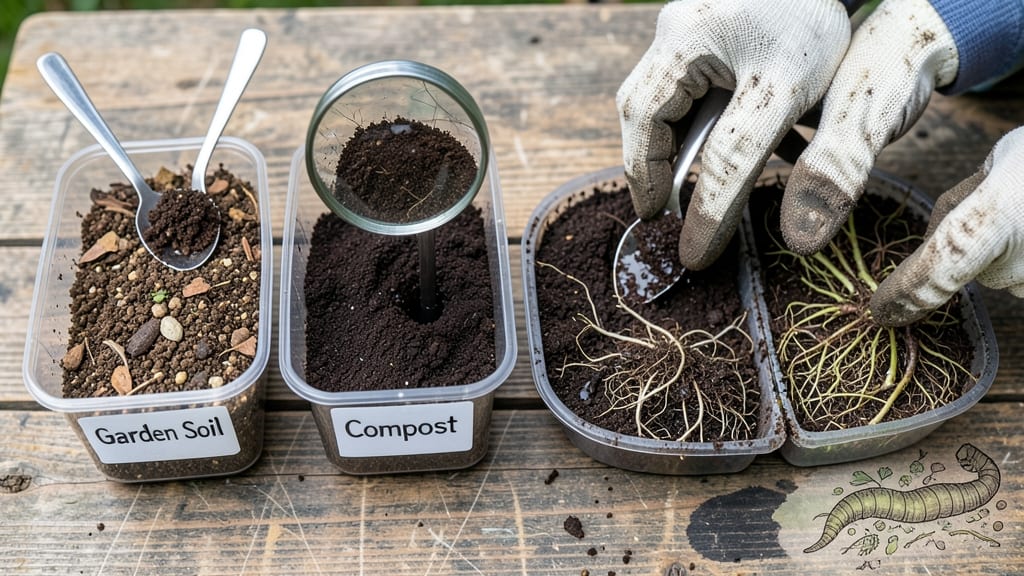
Soil and compost are not the same thing: soil is the natural medium where plants grow, containing minerals, organic matter, and microorganisms, while compost is decomposed organic material used to enrich soil fertility and structure.
Soil is the foundation of any garden, providing a stable environment where roots anchor and nutrients are naturally available. 🌱 It contains a mix of sand, silt, clay, and organic matter, along with beneficial microbes that break down materials over time.
Compost, on the other hand, is a concentrated form of decomposed plant and food waste that gardeners add to soil to boost fertility and improve texture.
Think of soil as the canvas and compost as the paint—you wouldn’t paint directly on a blank wall, and you wouldn’t plant directly in pure compost. While compost feeds the soil, soil provides the structure and habitat for plants to thrive.
The key difference lies in their roles: soil supports growth, while compost enhances it.
For best results, I recommend mixing compost into existing soil at a ratio of about 25-30% compost to 70-75% soil. This balance ensures plants get the nutrients they need without overwhelming the soil's natural structure. Overdoing compost can lead to clumping or nutrient imbalances, so moderation is key.
💡 In This Article
- How Soil and Compost Differ in Composition and Function
- When and How to Use Soil vs Compost in Gardening
How soil and compost differ in composition and function
The core difference between soil and compost lies in their biological makeup and purpose. Soil is a complex ecosystem containing 45% minerals (sand, silt, clay), 25% water, 25% air, and 5% organic matter—this structure supports root growth and microbial life.
Compost, however, is primarily decomposed organic material (like food scraps, leaves, or grass clippings) that's broken down to 50-70% organic matter with minimal mineral content. 🌱
Microbial activity is where they truly diverge: soil contains thousands of microbial species that naturally decompose organic matter, while compost is a concentrated product of that decomposition process. Soil microbes work continuously to recycle nutrients, whereas compost's microbes are mostly dormant once the material stabilizes.
The pH also differs—most healthy soils range from 6.0 to 7.5, while fresh compost can be slightly acidic (5.5 to 6.5) before stabilizing.
Texture plays a critical role too. Soil's mineral particles create a stable framework for water retention and drainage, while compost's fibrous structure improves soil's ability to hold moisture and nutrients. For example, sandy soil benefits most from compost's water-holding capacity, while clay soil gains from compost's ability to loosen compaction.
This is why gardeners often describe compost as "soil food"—it doesn't replace soil but enhances its natural functions.
Nutrient availability is another key distinction. Soil provides a slow-release system where minerals are gradually broken down by microbes, while compost delivers a more immediate nutrient boost. The nitrogen content in fresh compost (around 0.5-2.5%) is higher than in mature soil, but it's less stable.
This is why gardeners recommend using well-aged compost (6 months to 2 years) to avoid burning plants with excess ammonia.
Consider this visual comparison: soil is like a well-balanced meal providing sustained energy, while compost is like a vitamin supplement that gives an immediate nutrient kick. Both are essential, but they serve different purposes in the plant growth cycle. 💫
The decomposition process itself reveals more differences. Composting transforms organic waste through microbial action into humus—a dark, stable substance that improves soil structure. This process requires proper carbon-to-nitrogen ratios (25-30:1), moisture (40-60%), and oxygen.
Soil, meanwhile, develops over centuries through natural processes like weathering and biological activity, creating a far more complex mineral profile.