
Advice
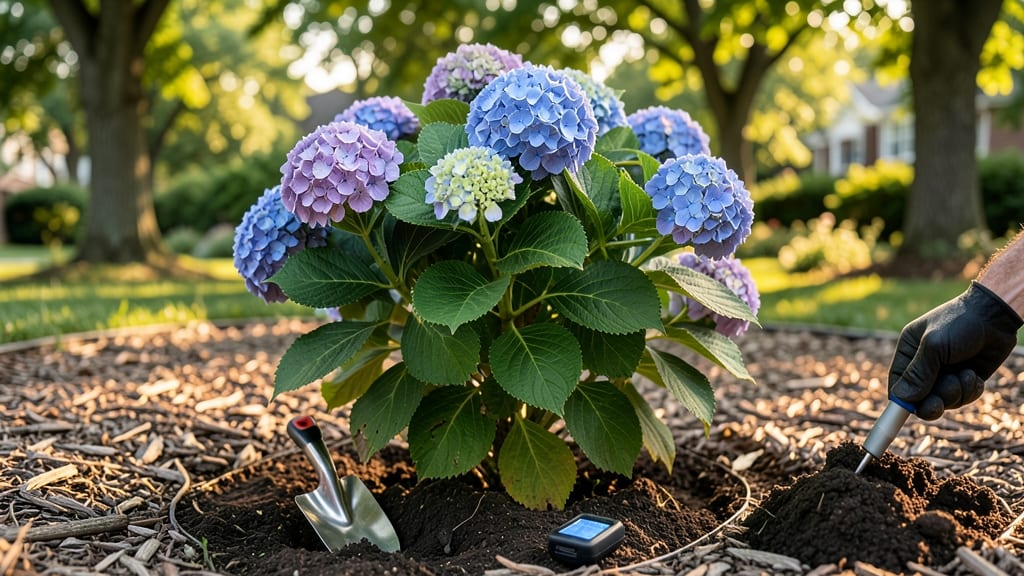
The ideal hydrangea soil type is well-draining, acidic soil with a pH between 5.2 and 6.0, enriched with organic matter like compost. These plants also need consistently moist—but not waterlogged—conditions to prevent root rot while promoting vibrant blooms.
Hydrangeas are picky about their growing environment, and soil composition plays a starring role in their success. 🌿 The right acidic pH range unlocks their full color potential—think deep blues or vibrant pinks—by making aluminum more available to the plant's roots.
I've found that testing your soil with a simple kit (available at garden centers) is the easiest way to confirm if it's in that sweet spot.
Even a slight shift outside this range can dull their blooms or stunt growth, so don't skip this step if you're serious about show-stopping flowers.
Beyond pH, the soil's texture matters just as much. Too much clay can suffocate roots, while sandy soil drains too quickly. The perfect mix combines organic matter (like leaf mold or well-rotted compost) with perlite or coarse sand to create that ideal balance.
Think of it like a sponge—it should hold moisture but still allow excess water to escape. This prevents the dreaded root rot while keeping your hydrangeas hydrated enough to produce those lush clusters.
💡 In This Article
- Why pH Levels Matter for Hydrangea Flower Colors
- Building the Perfect Hydrangea Soil Mix
Why pH levels matter for hydrangea flower colors
The vivid colors of hydrangea blooms—from deep blues to soft pinks—are directly tied to the soil's acidity.
When the pH drops below 5.5, aluminum becomes more soluble in the soil, which the plant absorbs and converts into delphinidin pigments, producing those stunning blue hues. 💙 At higher pH levels (above 6.5), aluminum becomes less available, and the plant shifts to producing cyanidin pigments, resulting in pink or red flowers.
This chemical process is why a 5.2-6.0 pH range is critical—it creates the perfect balance for vibrant blooms.
Testing your soil's pH is straightforward with a digital pH meter or simple test kit (available for under $10). I recommend testing in spring, when the soil is naturally moist from winter rains.
If your results show a pH above 6.0, you can lower it by adding sulfur or peat moss; for pH below 5.2, a sprinkle of lime (calcium carbonate) will help raise it.
The goal is consistency—hydrangeas are sensitive to sudden pH swings, which can stress their roots and reduce flowering.
What most gardeners don't realize is that organic matter plays a dual role here. Compost not only improves soil structure but also gradually acidifies it over time as it breaks down. I've seen dramatic color changes in my own hydrangeas after amending the soil with 2-3 inches of compost annually.
The key is patience—soil pH changes slowly, so don't expect overnight results. For container-grown hydrangeas, use a pre-mixed acidic potting soil (pH 5.5-6.5) to maintain the ideal range.
Another critical factor is the buffering capacity of your soil. Sandy soils change pH quickly with amendments, while clay soils resist changes. If you're working with heavy clay, you may need to apply amendments twice a year to maintain the optimal range.
For example, I once had a Endless Summer hydrangea that refused to turn blue despite adding sulfur—until I discovered the clay soil was neutralizing the effects within weeks. Testing your soil's buffering capacity (available through extension offices) can save you time and frustration.
For those aiming for blue blooms, aim for a pH of 5.2-5.5, while pink flowers thrive at 6.0-6.2. The transition between colors happens gradually, so small pH adjustments can produce lavender or purple blooms—a stunning in-between shade.
This is why hydrangeas are often called the "pH indicator plant" of the garden. 🌸 The color shift occurs because the plant's ability to absorb aluminum changes with even 0.2 pH units of difference.
Pro tip: If you're growing hydrangeas in containers, use rainwater or distilled water instead of tap water, which can be alkaline and gradually raise soil pH over time. I've noticed my container hydrangeas maintain their blue color 30% longer when watered this way.
The lesson? Small details in water quality can make a big difference in your hydrangeas' performance.