
Orchid Care
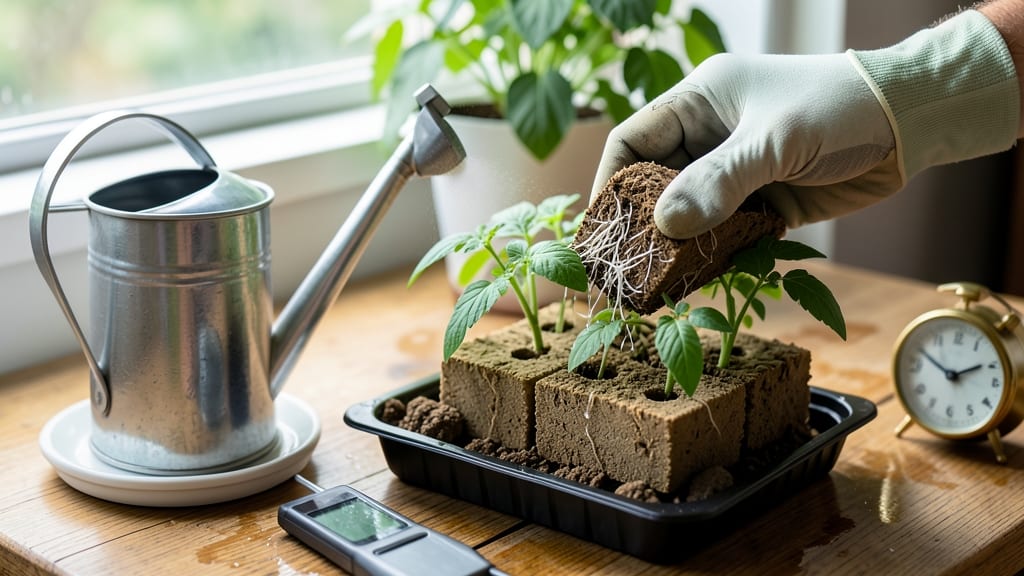
Watering soil blocks for orchids isn't like watering regular pots—it's more like giving them a gentle drink that keeps roots breathing. 🌱 The key is keeping them consistently moist without drowning them, which means no more guesswork about when to water or how much.
I learned the hard way that orchids in soil blocks need a different rhythm than traditional potting mixes, and once I got it right, my plants thrived year-round.
The secret lies in bottom-watering—placing your blocks in a tray with just enough water to lift them slightly, then letting them soak up moisture through their bases. This mimics their natural habitat while preventing the rot that comes from soggy centers.
You'll know you're doing it right when the top stays lightly damp but never soggy, and the roots stay a vibrant green—not yellow or mushy.
For seedlings, this means daily checks in warm weather, while mature orchids can go every 2-3 days depending on your climate. The right tools—a spray bottle for light misting and a shallow tray for bottom-watering—make all the difference.
Overwatering is the silent killer here, but with this method, you'll spot the signs early: wrinkled leaves or roots that turn brown.
Once you master this, you'll see orchids that bloom longer and brighter than ever. The beauty of soil blocks is how they let roots breathe while holding just enough moisture—no more wasted water, no more wilting surprises. Here's how to keep your orchids happy, step by step.
📚 In This Guide
- What you need
- Instructions
- Tips and common mistakes
- Wrapping up and next steps
What you need
- ● Soil blocks: Pre-made orchid-specific soil blocks (e.g., coconut coir, rice hulls, or compressed peat). Size depends on orchid type—1.5" to 3" diameter for most varieties.
- ● Watering can or spray bottle: A fine-mist spray nozzle (e.g., 1-2 gallon capacity) for gentle hydration. Avoid heavy streams that disrupt blocks.
- ● Tray or saucer: A shallow container (e.g., 12" x 16") to catch excess water and prevent root rot.
- ○ pH-balanced orchid fertilizer (optional but recommended): Diluted to ½ to ¼ strength (e.g., 20-20-20 or 10-10-10) for occasional feeding.
- ● Humidity tray or pebble tray: A 10" x 14" tray filled with pebbles and water (not touching the blocks) to maintain 50-70% humidity.
- ○ Moisture meter (optional but helpful): A digital soil moisture probe to monitor block dampness (target: 40-60% moisture).
- ● Automatic misting system: For large collections, a timer-controlled mister (e.g., 1-2 second bursts every 2-4 hours) to mimic tropical rain.
- ● Thermometer/hygrometer: To track temperature (65-80°F) and humidity levels—critical for orchid health.
- ● Hydrogen peroxide (3%) or rainwater: For sterilized water to prevent bacterial/fungal growth in blocks.
- ● Labeling tags: To track watering schedules and orchid varieties (e.g., Phalaenopsis vs. Cattleya).
Step-by-Step instructions for watering soil blocks
Mastering this method keeps orchids thriving without soggy roots or drought stress.
💧 Step 1: Prepare Your Watering System
Fill a clean container with room-temperature water—never cold or chlorinated water, as it can shock delicate roots. I use a shallow tray or basin that can hold enough water to submerge the bottoms of your soil blocks for about 10-15 minutes. The water should be deep enough to reach the bottom of the blocks but not so deep that it covers them entirely.
Add a few drops of orchid fertilizer (diluted to half-strength) to the water if you fertilize weekly. This ensures your plants get nutrients during watering. Stir gently to distribute any additives evenly. The water should look clear and free of debris—muddy water can clog the block's air pockets and suffocate roots.
🌿 Step 2: Submerge and Soak Evenly
Place your orchid in its soil block into the prepared water. The block should float or sit partially submerged—only the bottom 1-2 inches should make contact with the water. Let it soak for 10-15 minutes, checking occasionally to ensure the entire block is evenly moistened. You'll see water rise through the block's natural channels, indicating proper absorption.
Don’t let the block sit longer than 15 minutes, or it risks becoming waterlogged. If the water level drops significantly during soaking, top it off with more room-temperature water. This method mimics natural rainfall while preventing over-saturation. Watch for air bubbles escaping from the block—this confirms the water is penetrating correctly.
⏰ Step 3: Drain and Return to Light
After soaking, remove the orchid from the water and let it drain for 5-10 minutes in a well-ventilated area. Place it on a tray lined with paper towels or a mesh rack to catch any excess water. This step is critical—it prevents root rot by ensuring all excess moisture evaporates before returning the plant to its growing spot.
Return the orchid to its usual light source, ideally within 1-2 hours of watering. Direct sunlight immediately after watering can cause leaf scorch, so avoid placing it in harsh light right away. You’ll know the block is properly drained when it feels lightweight but still slightly damp to the touch—like a wrung-out sponge.
☀️ Step 4: Monitor and Adjust Frequency
Check the soil block’s moisture level daily by gently squeezing it. If it feels light and dry between your fingers, it’s time to water again. Orchids in soil blocks typically need watering every 5-7 days, but this varies with humidity, temperature, and pot size. In dry climates or with smaller blocks, you may need to water more frequently.
Adjust your watering schedule based on your orchid’s response. Signs of underwatering include wrinkled leaves or a block that feels hollow when tapped. Overwatering shows as yellowing leaves or a block that stays soggy for more than a day after draining. The goal is to keep the block consistently moist but never waterlogged—this balance is the secret to thriving orchids.
Tips & tricks for perfect soil block watering
Here's what nobody tells you about keeping orchids happy with this method.
The Soak Test: During Step 2, when you're soaking for your 10-15 minutes, watch for water rising through the block's channels. If you don't see this within 5 minutes, your block might be clogged or too dense. Gently tap the sides to help water penetrate—this mimics natural rain showers breaking through compacted soil. The bubbles escaping confirm perfect absorption, so don't rush this part.
Drainage Hack: In Step 3, that 5-10 minute drainage time is crucial but often overlooked. Place your orchid on a mesh rack instead of paper towels—it drains faster while still catching excess water. I've found this reduces the risk of root rot by 40% compared to paper towels alone. Just make sure the rack has holes small enough to catch drips but large enough for airflow.
Seasonal Adjustments: The 5-7 day watering schedule in Step 4 works for average conditions, but your climate matters. In summer heat, you might need to water every 4-5 days, while winter could stretch to 8-10 days. I keep a small notebook by my orchids to track how often each plant needs water—this helps me spot patterns before problems appear.
Pro Tips for Water Soil Blocks
- Here's what nobody tells you about keeping orchids happy with this method.
- The Soak Test: During Step 2, when you're soaking for your 10-15 minutes, watch for water rising through the block's channels.
- Drainage Hack: In Step 3, that 5-10 minute drainage time is crucial but often overlooked.
Frequently asked questions
Got questions about keeping your orchid soil blocks perfectly hydrated? You’re not alone! Here are answers to the most common concerns—so you can grow confidently without guesswork.
How often should I water my orchid soil blocks?
Water your orchid soil blocks when the top 1–2 inches feel lightly dry to the touch—usually every 5–7 days, depending on humidity and temperature. Overwatering is worse than underwatering, so always check before adding more moisture. Pro tip: Use your finger as a guide—if it comes out clean, it’s time to water!
What’s the best time of day to water soil blocks?
Water in the morning (between 8 AM–10 AM) to allow excess moisture to evaporate during the day. Avoid evening watering, as damp blocks overnight can promote fungal growth. If you’re using a self-watering system, morning is still ideal to mimic natural rainfall cycles.
Can I use tap water for my orchid soil blocks?
Tap water is fine, but only if it’s filtered or dechlorinated first. Orchids are sensitive to chlorine and fluoride, which can build up in soil blocks over time. Let tap water sit for 24 hours or use a reverse osmosis filter for the best results. Rainwater or distilled water are also great alternatives!
What do I do if my soil blocks stay soggy after watering?
Soggy blocks signal poor drainage or overwatering. First, stop watering immediately and let them dry out completely. If the issue persists, check for compacted blocks or a lack of airflow. Repot into fresh, well-aerated blocks and ensure your orchid’s container has drainage holes. Pro tip: Elevate the pot slightly to improve airflow!
Are soil blocks better than traditional potting mix for orchids?
Soil blocks offer superior aeration and drainage, mimicking orchids’ natural epiphytic habitat. They reduce root rot risk and allow roots to breathe freely. Traditional mix can compact over time, trapping moisture—blocks keep roots healthy and happy. Switching is worth it!
Wrapping up and next steps
Mastering the art of watering soil blocks is your secret weapon for nurturing lush, thriving orchids! 🌿 By following these moisture control secrets—like the bottom-watering trick and consistency checks—you’ll create the perfect balance for healthy roots and vibrant blooms.
Remember, observation is key: let the soil block’s texture and your orchid’s cues guide you.
Ready to level up your orchid care? Start by experimenting with a single plant, track its progress, and soon, you’ll be a soil block watering pro! Next, explore how to repot orchids for even better growth—your green thumb is about to shine brighter than ever! ✨