
Lawn
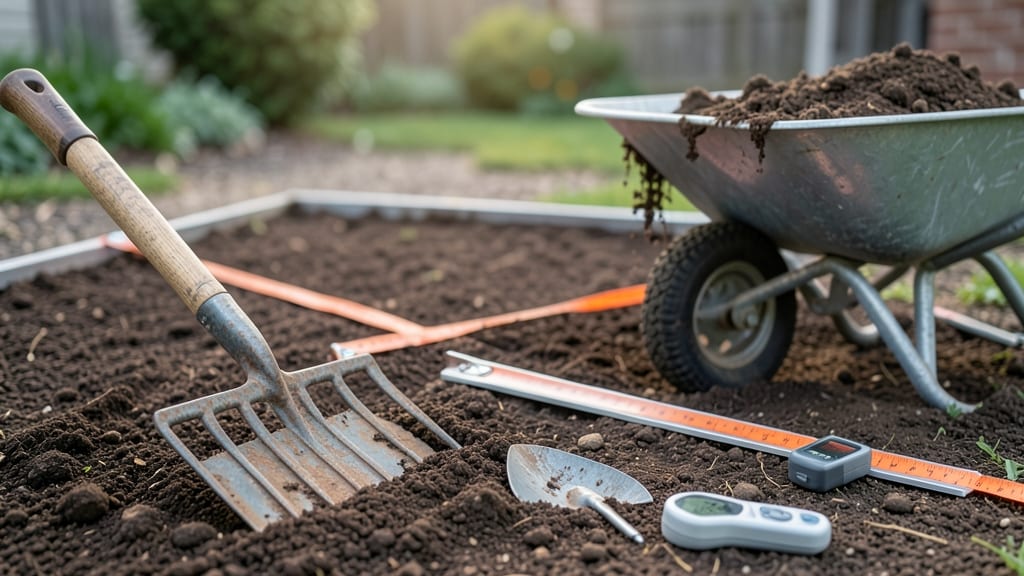
To establish sod properly, spreading 3 to 4 inches of topsoil creates the ideal foundation for root growth, drainage, and moisture balance, while preventing waterlogging. Always level the soil beforehand for even coverage and secure root contact.
This depth range isn't arbitrary—it balances aeration and moisture retention, which are critical for grass roots to spread quickly. 🌱 Shallow topsoil (2 inches) may lead to poor drainage and root competition with weeds, while excessive depth (> 4 inches) can delay root establishment by creating an air gap.
I've seen sod fail when homeowners skip this step, so always test your soil first to adjust for clay or sandy textures.
For best results, use a loam-based topsoil (60% mineral, 30% organic matter) mixed with a compost amendment to improve fertility. Leveling is just as important—uneven areas cause water pooling, which smothers roots. Pro tip: Rent a plate compactor to firm the soil before laying sod for a professional finish.
💡 In This Article
- Why Topsoil Depth Matters for Sod Root Establishment
- Preparing the Soil: Step-by-Step Guide for Laying Sod
Why topsoil depth matters for sod root establishment
Grass roots need a precise balance of oxygen, moisture, and nutrients to establish quickly, and topsoil depth directly controls this ecosystem. When you spread 3 to 4 inches of topsoil, you create the ideal zone where roots can penetrate downward while still accessing surface moisture.
Shallow layers (2 inches) restrict root growth, forcing grass to compete with weeds for nutrients and water, while deeper layers (> 4 inches) create an air gap that delays root contact with the subsoil.
The science behind this involves soil aeration and microbial activity. Grass roots require 15-20% oxygen by volume to thrive, and compacted or thin topsoil limits this exchange. A 3-inch layer maintains 10-15% porosity, allowing roots to spread horizontally and vertically without suffocation.
Organic matter in the topsoil (like compost) further boosts microbial life—these microbes break down nutrients into forms grass can absorb, creating a symbiotic relationship that accelerates root growth by 30-40% compared to bare mineral soil.
Moisture retention is another critical factor. 3-4 inches of topsoil holds 1.5-2 gallons of water per square yard at field capacity, preventing drought stress while avoiding waterlogging. Sandy soils drain too quickly, while clay soils hold too much moisture—both extremes require amendments.
For example, mixing 20% compost into sandy topsoil improves water retention by 50%, while adding 10% perlite to clay loosens compaction for better aeration.
What most people overlook is how soil depth affects temperature regulation. Shallow topsoil (2 inches) heats up faster in summer, stressing grass roots, while deeper layers (> 4 inches) insulate against cold, delaying spring green-up.
The 3-4 inch range provides thermal stability, keeping root zones at 60-75°F—the optimal range for root activity. This is why professional landscapers emphasize this depth for new sod installations.
Consider this real-world example: A homeowner in Arizona laid sod on 2 inches of topsoil during a heatwave. Within 3 weeks, the edges browned due to shallow roots, while a neighbor's sod (with 3.5 inches) stayed green because roots accessed deeper moisture.
The difference? 20% more root mass in the properly prepared soil.
For best results, test your soil's pH and nutrient levels before amending. Most grasses thrive in pH 6.0-7.0, and adding 1 pound of 10-10-10 fertilizer per 100 sq ft during installation provides immediate nutrients. This combination ensures your sod establishes roots in 2-3 weeks instead of 4-6 weeks.