
Planting
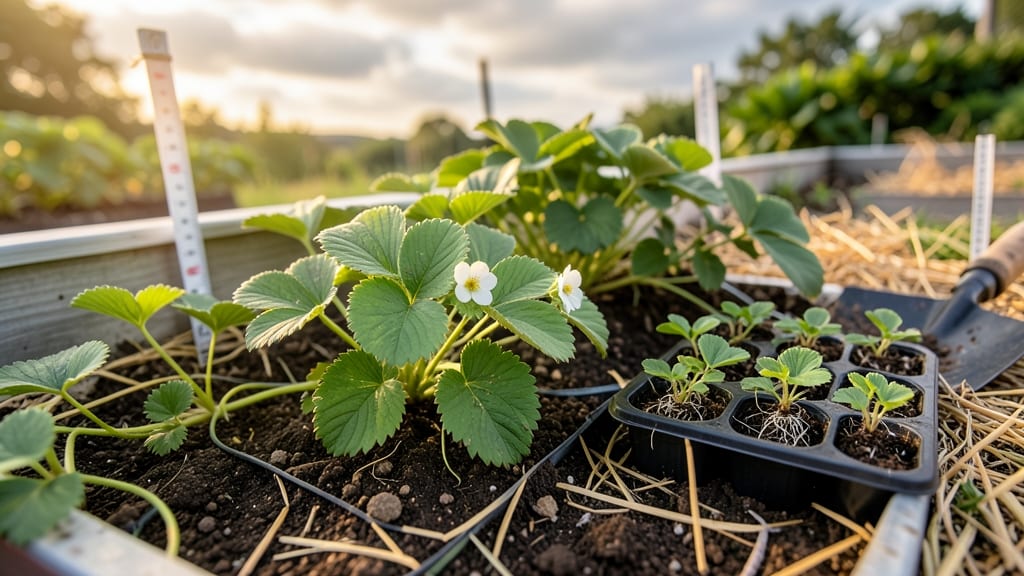
Strawberries need soil that’s at least 6 inches deep for roots to spread and absorb nutrients properly — too shallow, and you’ll end up with weak plants and tiny berries.
Picture this: you’ve spent weeks nurturing your 🍓 plants, only to harvest a few lackluster berries. The issue might not be what you’re doing above the soil, but what’s happening below it.
Strawberries thrive when their roots have room to expand, and the depth of your soil plays a bigger role than most gardeners realize.
Proper soil depth isn’t just about planting depth—it’s about creating a root-friendly zone where moisture, nutrients, and oxygen can circulate freely. Too shallow, and roots struggle to anchor the plant or access water during dry spells.
Too deep, and you risk drowning the crown, which can rot and kill your plants.
In this guide, I’ll show you exactly how deep your soil should be, how to test and adjust it for the best results, and the simple amendments that make all the difference. By the end, you’ll know the one key rule that separates a decent harvest from a jaw-dropping one.
Ideal soil depth for strawberry roots: what science recommends
Strawberries may seem delicate, but their root systems are surprisingly resilient—when given the right conditions. Most strawberry varieties develop roots that spread 6 to 12 inches deep into the soil, but this depth isn't just about space.
It directly impacts nutrient absorption, water retention, and even fruit quality. Understanding these needs can transform your harvest from sparse to spectacular.
The crown (where leaves meet roots) must sit at soil level, never buried or exposed. Buried crowns rot, while exposed crowns dry out—both leading to poor yields.
For June-bearing varieties, deeper roots help store energy for next year's fruit production, while everbearing types benefit from consistent moisture access during multiple harvest cycles.
Science shows that strawberry roots thrive in loose, well-aerated soil with organic matter. Compacted soil restricts root growth, forcing plants to compete for nutrients in a shallow layer. This often results in smaller berries and weaker plants.
The ideal soil profile balances mineral-rich topsoil (top 4 inches) with looser subsoil (remaining 8 inches) for drainage and stability.
Here’s how soil depth affects strawberries at different growth stages:
- Establishment (first 4 weeks): Roots need 4–6 inches of loose soil to spread without resistance.
- Flowering (weeks 6–8): Deeper roots (8–10 inches) access stored nutrients for fruit development.
- Fruiting (weeks 10–12): Full 10–12 inches of soil ensures consistent moisture and nutrient supply.
Common mistakes gardeners make include planting in shallow containers (under 6 inches) or heavy clay soil that doesn’t drain. Both scenarios lead to root-bound plants or waterlogged roots, causing diseases like gray mold. Even raised beds must be at least 12 inches deep to accommodate mature root systems.
To test your soil depth, use a soil probe or trowel to dig a hole near where you’ll plant. If the hole collapses or you hit hardpan (compacted subsoil) before reaching 10 inches, amend the soil with compost or sand to improve structure.
For clay-heavy soils, mix in peat moss or coconut coir to create air pockets.
Another critical factor is mulching. A 2–3 inch layer of straw or wood chips helps retain moisture in the root zone while preventing soil compaction from rain. Avoid thick mulch layers, which can suffocate roots by blocking oxygen.
For container-grown strawberries, ensure pots have drainage holes and use a soil mix designed for containers to prevent waterlogging.
If you’ve planted strawberries in the past and struggled with poor yields, revisit your soil depth. Many gardeners assume deeper is always better, but strawberries also need good aeration.
Over-amending with heavy compost can create a dense, anaerobic environment that roots avoid. Aim for a 50/50 mix of organic matter and mineral soil to strike the right balance.
For organic gardeners, incorporate worm castings or aged manure into the top 6 inches of soil before planting. These amendments
How to test and adjust your soil depth for maximum strawberry growth
Strawberries need 6–12 inches of loose, well-draining soil to grow strong roots and produce abundant fruit. If your soil is compacted or shallow, roots struggle to access nutrients and water, leading to weak plants and poor yields.
Testing and adjusting your soil depth before planting can transform your strawberry harvest from disappointing to downright delicious.
Start by checking your current soil depth with a simple soil probe or trowel. Insert the tool into the ground near where you plan to plant. If it hits hardpan (compacted soil) or rocks before reaching 6 inches deep, you’ll need to amend the soil.
This step ensures your strawberries have the space they need to thrive and produce fruit for years.
Step-by-Step Guide to Testing and Adjusting Soil Depth
-
Step 1: Test Current Soil Depth
Use a soil probe or trowel to measure depth. Push it into the ground until resistance is met. Ideal depth for strawberries is 6–12 inches. If it’s shallower, note the depth and plan amendments. -
Step 2: Loosen Compacted Soil
Dig a hole 12 inches deep and break up any compacted layers with a garden fork. This creates space for roots to grow downward and access nutrients. -
Step 3: Amend the Soil
Mix in 2–3 inches of compost or aged manure into the loosened soil. For sandy soil, add peat moss or coconut coir to improve moisture retention. For clay soil, incorporate perlite or coarse sand to enhance drainage. -
Step 4: Consider Raised Beds
If your soil is naturally shallow, a raised bed filled with 12 inches of amended soil is a game-changer. This gives strawberries the perfect environment to grow deep roots and produce fruit year after year. -
Step 5: Mulch for Long-Term Success
Apply 2–3 inches of straw or wood chips around plants to retain moisture, suppress weeds, and encourage roots to grow deeper into the soil over time.
If your soil is naturally shallow or rocky, consider planting strawberries in containers or raised beds. These options give you full control over soil depth and drainage, ensuring your plants have the ideal conditions to thrive.
Containers should be at least 12 inches deep and filled with a mix of potting soil and compost.
After amending your soil, plant strawberries with their crowns at soil level. This ensures roots grow downward into the deeper, looser soil while the crown remains above ground to prevent rot. Water deeply after planting to encourage roots to explore the newly amended soil.
With the right soil depth, your strawberries will develop a strong root system, leading to healthier plants and bigger, sweeter fruit. Regularly check soil depth and amend as needed to maintain optimal growing conditions for years of bountiful harvests. 🌱