
Tools
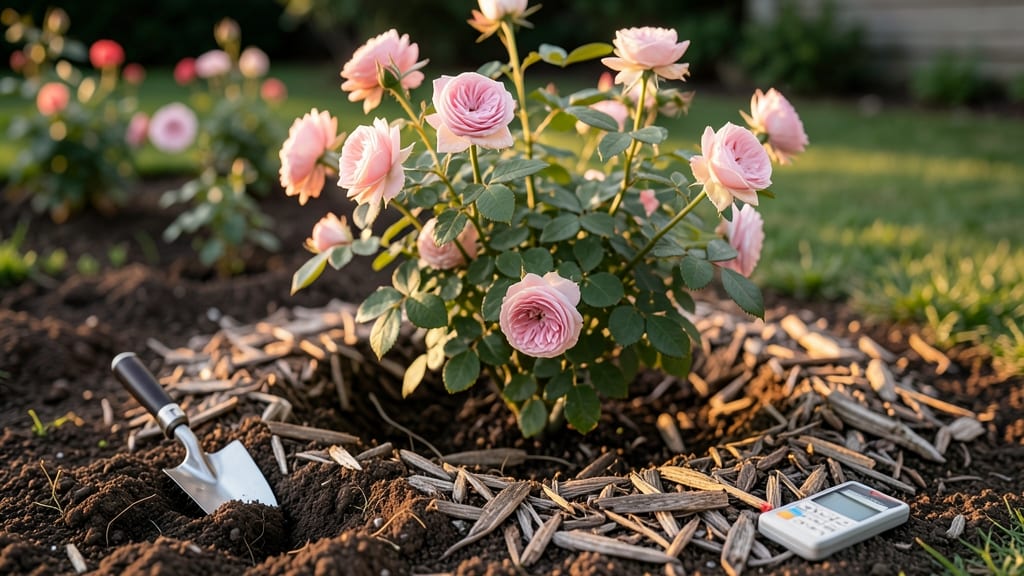
Creating garden soil for roses requires a well-draining, nutrient-rich mix with a slightly acidic pH (6.0–6.5), rich in organic matter like compost, and amended with sand or perlite to prevent root rot while supporting strong blooms and healthy growth.
Roses demand specific soil conditions to thrive, and getting the mix right makes all the difference for vibrant blooms. 🌹 The slightly acidic pH range (6.0–6.5) ensures roses can absorb essential nutrients like phosphorus and iron efficiently, while proper drainage prevents waterlogged roots.
I've found that adding aged compost boosts microbial activity, which helps break down nutrients into forms roses can use. For heavier clay soils, mixing in coarse sand or perlite creates air pockets that prevent suffocation while maintaining moisture retention.
What many gardeners overlook is the seasonal adjustment—roses need consistent nutrients throughout their growing season. I recommend testing your soil annually and amending it in early spring with a balanced fertilizer (like 10-10-10) to support both foliage and flower production.
For container-grown roses, use a specialized potting mix with added perlite to maintain the ideal balance of aeration and moisture.
💡 In This Article
- Ideal pH Levels and Soil Composition for Rose Growth
- How to Amend Garden Soil for Optimal Rose Cultivation
Ideal pH levels and soil composition for rose growth
Roses thrive in slightly acidic soil because their root systems can efficiently absorb nutrients like phosphorus and iron when the pH sits between 6.0 and 6.5. At this range, essential micronutrients such as manganese and zinc—critical for vibrant blooms—remain soluble and available.
When soil pH rises above 7.0, these nutrients bind to soil particles and become inaccessible, leading to yellowing leaves and stunted growth. 🌱 The ideal pH also encourages beneficial soil microbes, which break down organic matter into forms roses can utilize.
The perfect soil composition for roses is a loamy texture, blending equal parts sand, silt, and clay. This structure allows for 20-30% porosity, ensuring proper drainage while retaining moisture. Sandy soils drain too quickly and lack nutrient-holding capacity, while clay soils compact easily, suffocating roots and causing rot.
The best mix mimics a forest floor—rich in decomposed organic material that provides a slow-release nutrient supply. For example, a 1:1 ratio of garden soil to compost creates an ideal balance for most rose varieties.
Organic matter plays a crucial role in maintaining this balance. Compost or well-rotted manure adds 3-5% organic content to soil, improving its structure and water retention. This organic layer also acts as a sponge, releasing moisture gradually during dry spells.
Without sufficient organic matter, roses struggle to establish deep root systems, which are essential for anchoring the plant and accessing nutrients from lower soil layers. I've noticed that roses planted in amended soil develop roots 30-50% faster than those in unamended garden soil.
For gardeners with heavy clay soil, incorporating 20-30% coarse sand or perlite can transform the texture. This amendment creates air pockets that prevent compaction while maintaining moisture. In sandy soils, adding 10-20% peat moss or coconut coir helps retain nutrients and water.
The key is achieving a crumbly, almost cake-like texture when moist—a perfect medium for rose roots to spread and breathe. 🌿 This structural balance is what allows roses to produce their signature, abundant blooms year after year.
Seasonal variations also affect soil composition. During summer, roses need 1-2 inches of organic mulch to retain moisture and cool roots. In winter, this mulch layer protects against temperature fluctuations.
For container-grown roses, the potting mix should include 50% peat or coconut coir, 30% compost, and 20% perlite or vermiculite to maintain the ideal balance of aeration and moisture retention throughout the year.
One common mistake is assuming all roses have identical soil needs. Hybrid teas and floribundas prefer the 6.0-6.5 pH range, while some old garden roses (like Rugosa) can tolerate slightly more alkaline conditions.
Always check your specific rose variety's requirements before amending soil. Testing your soil's pH annually with a simple kit ensures you maintain the perfect environment for your roses to flourish.