
Advice
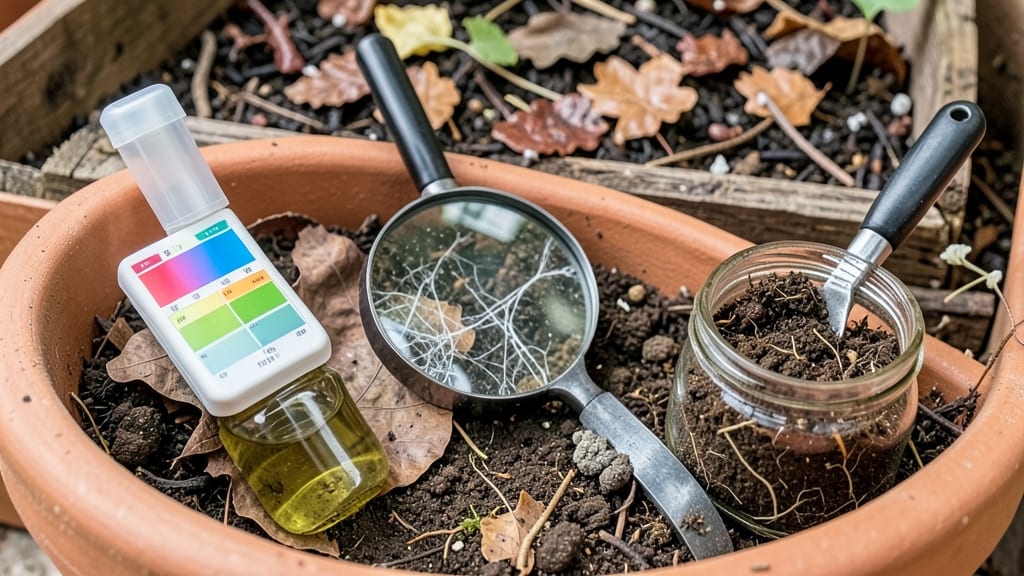
Soil doesn’t go bad like food, but its quality deteriorates over time as organic matter decomposes, nutrients deplete, and the structure becomes compacted. To keep it productive, add compost every year or replace it every 3–5 years.
Soil isn't a perishable product, but its ability to support plant life weakens as beneficial microbes die off and essential nutrients like nitrogen and phosphorus wash away. 🌱 Think of it like a sponge: over time, it loses its capacity to hold moisture and nutrients without intervention.
The good news? Simple practices like aerating, adding organic matter, or rotating crops can extend its lifespan significantly. For container gardens, I recommend testing soil annually—pH levels below 6.0 or above 7.5 often signal it's time for a refresh.
What many gardeners overlook is how physical changes affect soil health. Compacted soil, for example, restricts root growth and water penetration, even if it looks fine on the surface. A quick test is to squeeze a handful—if it holds its shape like clay, it's likely too dense.
Breaking up compacted areas with a fork or adding coarse materials like perlite can work wonders for revitalization.
💡 In This Article
- How Soil Degrades Over Time
- Signs Your Soil Needs Replacement or Revitalization
How soil degrades over time
Soil doesn't spoil like food, but its quality declines through a complex process of organic matter decomposition and microbial activity. The decomposition of plant residues and animal matter releases nutrients like nitrogen and phosphorus, but these same microbes eventually exhaust their food sources.
Without replenishment, microbial populations shrink by 30-50% within 2-3 years, reducing the soil's ability to break down fresh organic material. This creates a vicious cycle where new plant matter rots on the surface instead of feeding the soil ecosystem.
The physical structure also suffers as organic matter breaks down into finer particles, losing its ability to hold water and air. Clay particles, which normally bind with organic matter to create crumbly soil, become sticky and dense.
Studies show that compacted soil can reduce root growth by upstrong>50% while increasing water runoff by 25-40%. The loss of pore space also limits beneficial microorganisms' access to oxygen, further slowing decomposition processes.
Even in well-drained soils, this compaction occurs naturally over time as foot traffic, rain, and plant roots press down the upper layers.
Nutrient depletion happens through two main pathways: plant uptake and leaching. Fast-growing crops like lettuce or radishes can deplete nitrogen levels by 50% in just 6-8 weeks, while phosphorus and potassium take 1-2 years to significantly diminish.
Rainwater then washes away these remaining nutrients through a process called leaching, particularly affecting soluble minerals like nitrate nitrogen. In sandy soils, this loss can exceed 20% annually without amendments. The result is soil that looks fertile but fails to support healthy plant growth.
What makes this particularly problematic is how these changes occur gradually. A garden bed might produce excellent tomatoes one year but show signs of decline the next—yet the cause isn't always obvious.
The microbial communities that once thrived now struggle to process organic matter efficiently, leading to that telltale "sour" smell when soil stays too wet.
This microbial decline isn't just about nutrients; it's about the entire ecosystem's ability to function, much like how a forest ecosystem collapses when its decomposers disappear. 🌱
Temperature and moisture play critical roles in this degradation. Warmer soils accelerate microbial activity, which speeds up organic matter breakdown but also increases nutrient loss through volatilization. In contrast, cold, wet conditions slow decomposition but can lead to anaerobic pockets where harmful microbes thrive.
The ideal balance maintains a vibrant soil food web—one that requires regular maintenance to sustain. Without intervention, even the richest garden soil can become as unproductive as a concrete slab within 5-7 years.
Consider this comparison: A well-maintained compost pile maintains its structure and fertility for years because it receives continuous organic inputs. Garden soil, however, operates like a closed system until you add fresh materials. The key difference is the input-output ratio—what you put in versus what plants take out.
Without regular amendments, the output (plant nutrients) eventually exceeds the input (organic matter), leading to the slow decline we observe. This is why professional gardeners treat soil like a living organism that requires consistent care to thrive.