
Light Requirements
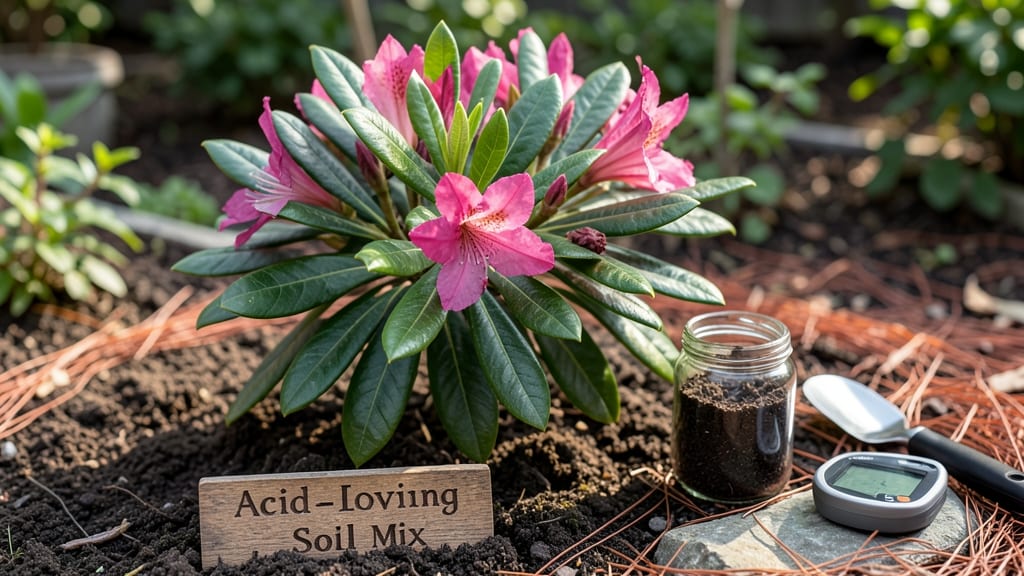
Azalea soil requirements demand highly acidic, well-draining mixes with a pH between 4.5 and 5.5, enriched with organic matter like peat moss or pine bark for optimal growth and vibrant blooms. Avoid alkaline soils or heavy clay to prevent root rot and nutrient deficiencies.
Azaleas thrive in soil that mimics their natural acidic forest floor habitat, where the pH is naturally low and organic debris enriches the substrate. 🌿 The right soil mix doesn't just provide nutrients—it creates an environment where roots can access iron and other micronutrients that become locked away in alkaline conditions.
Many gardeners overlook the importance of consistent moisture levels, but azaleas need soil that drains quickly yet retains enough water to prevent stress during dry spells.
For container-grown azaleas, I recommend mixing equal parts peat moss or coconut coir with pine bark fines and a small amount of compost. This blend stays loose enough to prevent compaction while providing the slow-release nutrients azaleas crave.
In garden beds, amending existing soil with sulfur or aluminum sulfate can gradually lower pH over time, but testing your soil first is critical—some soils may need multiple applications to reach the ideal range.
💡 In This Article
- Why Acidic Soil Is Critical for Azaleas
- DIY Azalea Soil Mix: Ingredients and Proportions
Why acidic soil is critical for azaleas
Azaleas evolved in acidic forest environments where the soil naturally stays between pH 4.5 and 5.5. This acidity isn't just a preference—it's a biological necessity. At these low pH levels, iron and other essential micronutrients like manganese and zinc become soluble and available for root uptake.
When soil pH rises above 6.0, these nutrients precipitate out of solution, forming insoluble compounds that azalea roots simply can't access. This is why even well-fertilized alkaline soil leads to yellowing leaves (chlorosis) and poor growth.
The magic happens at the root level through organic acids. Azaleas exude organic acids like citric and oxalic acid that help maintain their rhizosphere at the ideal pH. These acids also chelate iron, forming water-soluble complexes that move directly into the roots.
Without this acidic environment, azaleas struggle to absorb enough iron even when it's present in the soil—think of it like trying to drink through a clogged straw. The result? Stunted growth and pale, weak foliage that can't support the plant's energy demands for blooming.
What most gardeners don't realize is how quickly soil pH can shift. Rainwater naturally leaches away some acids, but garden amendments like lime (calcium carbonate) or wood ash can raise pH dramatically. Even composted manure, which is often alkaline, can push soil pH into unfavorable ranges.
That's why azalea enthusiasts often use elemental sulfur or aluminum sulfate to maintain acidity—these amendments work by producing sulfuric acid when they react with soil moisture, gradually lowering pH over weeks rather than days.
Consider this real-world example: In the Pacific Northwest, where natural soils are often acidic, azaleas thrive with minimal intervention. But in the Southeast, where limestone bedrock creates naturally alkaline conditions, gardeners must amend soil aggressively.
I've seen azaleas in Georgia's clay soils go from struggling to thriving within a season after adding 2-3 pounds of sulfur per 100 square feet and mixing in 3 inches of pine bark mulch annually. The mulch doesn't just suppress weeds—it slowly acidifies the soil as it decomposes.
Here's what happens when you get it right: Roots develop a dense, fibrous network that efficiently captures moisture and nutrients. The plant's metabolic processes run smoothly, resulting in those signature vibrant blooms.
When you see an azalea with deep green leaves and abundant flowers, you're looking at a plant that's getting exactly what it needs—acidic soil that unlocks its full genetic potential. 🌸
The visual difference between healthy and struggling azaleas is striking. Healthy plants have glossy, dark green leaves with rich purple, pink, or white blooms that stand out against the foliage. Stressed plants develop yellowing between leaf veins (interveinal chlorosis) and produce sparse, weak flowers.
This isn't just about aesthetics—it's about the plant's ability to photosynthesize efficiently and allocate resources to growth rather than survival mode.