
How To
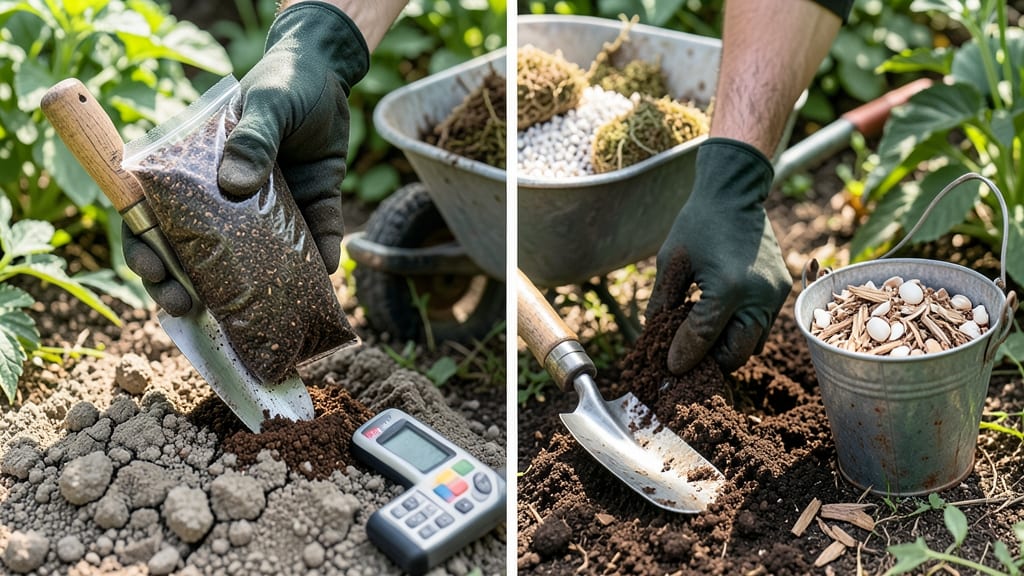
Soil amendment is the practice of enriching soil by incorporating materials like compost, peat moss, or sand to enhance its texture, fertility, and ability to hold nutrients—leading to stronger plants and higher yields.
Soil amendment works by physically altering soil composition—whether loosening compacted clay with sand or boosting organic matter through compost.
These changes improve drainage, aeration, and microbial activity, which help roots access water and nutrients more efficiently. 🌱 For example, adding compost introduces beneficial microbes that break down organic matter, while perlite increases airflow in heavy soils.
The right amendment depends on your soil type: sandy soil needs organic matter for moisture retention, while clay benefits from gritty materials like vermiculite.
Most gardeners start with a mix of organic amendments like compost or aged manure, which not only feed plants but also improve long-term soil health. Inorganic options like lime adjust pH, while sulfur lowers it—critical for acid-loving plants like blueberries.
The key is balancing materials based on your specific soil test results and plant needs.
💡 In This Article
- How Soil Amendments Work: Science Behind Soil Structure and Nutrient Retention
- Best Organic and Inorganic Soil Amendments for Different Garden Needs
How soil amendments work: science behind soil structure and nutrient retention
Soil amendments fundamentally transform soil at the microscopic level by altering its porosity and water-holding capacity. Organic materials like compost break down into humus, a spongy substance that increases soil's ability to retain moisture while still allowing excess water to drain.
This is critical because clay soil can become waterlogged, while sandy soil drains too quickly—both extremes stress plant roots. The ideal soil has a 50% solid-to-50% pore space ratio, where amendments help strike this balance by adding air pockets for roots to breathe.
The chemistry gets even more fascinating when you consider cation exchange capacity (CEC), a measure of how well soil holds essential nutrients like nitrogen, potassium, and calcium.
Organic amendments like peat moss or coconut coir increase CEC by providing more surface area for nutrients to cling to, making them available to plants over time. For instance, compost can boost CEC by 20-30%, while inorganic amendments like gypsum (calcium sulfate) improve structure without adding organic matter.
The pH also shifts—lime raises pH for acidic soils, while elemental sulfur lowers it for alkaline conditions, directly impacting nutrient solubility.
Microbial activity is another game-changer. Healthy soil teems with bacteria, fungi, and earthworms that decompose organic matter, releasing nutrients in forms plants can absorb. Compost introduces these beneficial microbes, while amendments like biochar create long-term habitats for them.
For example, a single teaspoon of compost can contain billions of microbes, accelerating nutrient cycling. This biological boost is why amended soil often shows 30-50% more microbial biomass than unamended soil, leading to faster decomposition and reduced fertilizer runoff.
Physical texture matters just as much as chemistry. Sandy soil benefits from organic matter to bind particles, while clay soil needs gritty amendments like perlite or coarse sand to prevent compaction.
The goal is to create a loamy texture—a mix of sand, silt, and clay—that holds water and nutrients while allowing roots to expand easily. For instance, adding 2-3 inches of compost to clay soil can improve drainage by 40% in just one season, reducing root rot risks.
Consider the long-term effects of amendments: organic materials like compost improve soil structure over years, while inorganic ones (like lime or sulfur) provide immediate pH adjustments. The choice depends on your soil's current state—test it first!
A simple pH test kit reveals whether your soil is acidic, neutral, or alkaline, guiding your amendment selection. For example, blueberries thrive in pH 4.5-5.2, so sulfur or peat moss might be needed, while tomatoes prefer pH 6.0-7.0, benefiting from lime.
What most gardeners overlook is the synergy between amendments. Mixing compost (for nutrients), perlite (for aeration), and worm castings (for microbes) creates a powerhouse soil blend. This layered approach mimics natural ecosystems, where diverse materials work together to support plant health.
The result? Stronger roots, higher yields, and a garden that thrives with minimal effort. 🌱