
Companion Plants
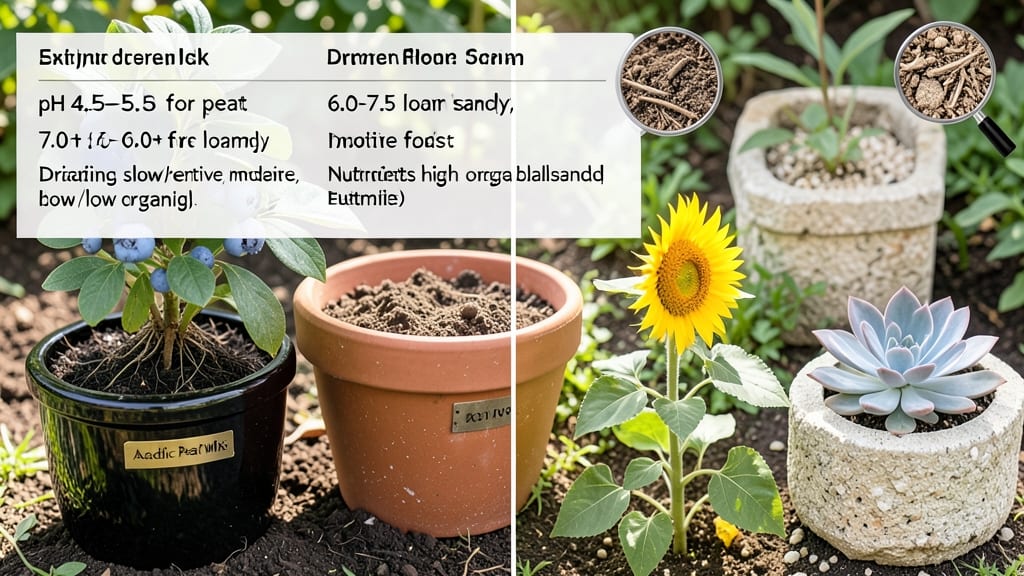
Choosing the right plants for soil types creates the best conditions for growth: drought-tolerant species like rosemary perform best in sandy soil, while moisture-loving plants such as ferns thrive in clay-rich environments. Nutrient-dense loamy soil supports nearly every vegetable and flowering plant. Always test your soil's pH and composition before planting to maximize success.
Understanding your soil's makeup is like knowing your garden's personality—it dictates what plants will flourish or struggle. 🌱 Sandy soil drains quickly, making it ideal for succulents and herbs that hate soggy roots, while clay holds moisture longer, perfect for water-loving perennials.
Loamy soil, the gardener's gold standard, balances everything beautifully with its perfect mix of nutrients and drainage. I've found that amending heavy clay with compost or sand can transform it into a plant-friendly foundation, while adding organic matter to sandy soil helps retain moisture for root systems.
Beyond texture, soil pH plays a starring role—most vegetables prefer slightly acidic to neutral soil (6.0-7.0), while blueberries demand the acidity of 4.5-5.5. A simple soil test kit reveals these secrets, saving you from trial-and-error planting that can leave your garden looking like a botanical experiment gone wrong.
The right match isn't just about survival; it's about unlocking each plant's full potential for vibrant blooms and bountiful harvests.
💡 In This Article
- How Soil Composition Affects Plant Growth
- Top Plant Picks for Sandy, Clay, and Loamy Gardens
How soil composition affects plant growth
Soil isn't just dirt—it's a complex ecosystem where particle size determines everything from drainage to nutrient availability. Sandy soil, made of large particles, drains water like a sieve, leaving roots thirsty but well-oxygenated.
This explains why drought-resistant plants like rosemary and thyme flourish here—their roots can quickly access moisture while avoiding waterlogged stress. 🌵 Meanwhile, clay soil's tiny particles pack tightly, creating a water-retentive sponge that suffocates roots if not amended properly.
The magic happens in the middle with loamy soil, where equal parts sand, silt, and clay create a perfect balance. This ideal texture holds moisture like a sponge but drains excess water, while its high organic matter content acts like a nutrient reservoir.
For example, tomatoes in loamy soil develop deeper roots and produce 20-30% more fruit than in sandy or clay-heavy soils because nutrients stay accessible during dry spells. The pH factor compounds this—most vegetables need 6.0-7.0 to absorb nutrients efficiently, while acid-loving plants like azaleas thrive at 4.5-5.5.
Root health hinges on these interactions. In sandy soil, roots spread wide but shallow to chase scarce nutrients, while clay-bound roots grow deep but struggle to breathe. The solution? Amendments like compost loosen clay and organic matter in sand, creating a 10-15% improvement in water retention and microbial activity.
This microbial life—bacteria and fungi—breaks down organic matter into plant-available nutrients, a process that accelerates in loamy soil's ideal conditions. 🔬
Drainage differences also affect water absorption. Sandy soil's large pores let water rush through in minutes, while clay's tiny pores hold water for days or weeks. This explains why succulents wilt in clay but thrive in sand—their roots can't handle prolonged saturation.
The key is matching plant root systems to these conditions: deep-rooted perennials like peonies need clay's moisture, while shallow-rooted herbs prefer sand's quick drainage.
Nutrient retention follows the same pattern. Clay's negative charges cling to positively charged nutrients like potassium and calcium, making them available longer, while sand's neutral particles let nutrients leach away quickly. This is why fertilizing sandy soil requires more frequent applications—every rainstorm flushes away nutrients.
The science here is electrostatic: clay's surface area (up to 1,000 square meters per gram) creates a massive nutrient storage system, while sand's minimal surface area offers little retention. 🌍
Don't overlook the role of organic matter—it's the glue that improves all soil types. Adding 2-3 inches of compost annually can transform even the worst clay into a productive garden bed by improving aeration and microbial activity.
The result? Plants grow 30-50% faster in amended soil because roots access both water and nutrients more efficiently. This is why professional gardeners obsess over soil health—it's the foundation of every thriving garden.