
Picking
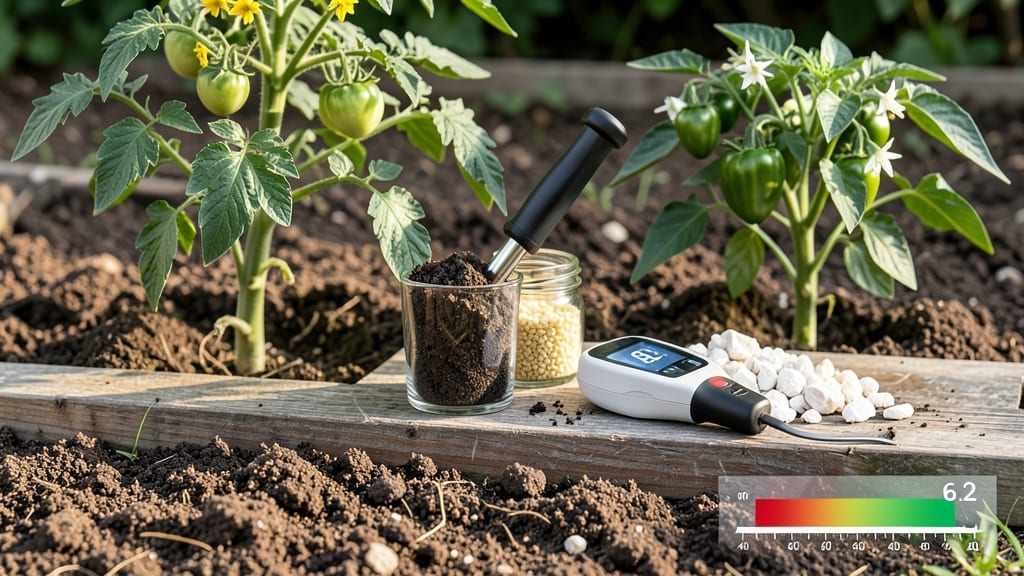
Soil pH for tomatoes and peppers should ideally range between 6.0 and 6.8, with tomatoes thriving slightly closer to 6.0-6.5 and peppers preferring 6.3-6.8. Acidic or alkaline soil disrupts nutrient uptake, stunting growth and yield. Test soil annually and amend with lime or sulfur as needed for optimal results.
Getting the soil pH right makes all the difference for these two crops. 🌱 Tomatoes and peppers both need slightly acidic conditions, but they're not identical—tomatoes handle a bit more acidity while peppers prefer a more neutral balance.
The key is testing your soil every year, since rain, compost, and amendments can shift pH over time. I've found that most gardeners overlook the subtle differences between these ranges, which can lead to problems like blossom-end rot in tomatoes or stunted pepper growth.
Why does pH matter so much? It directly affects which nutrients your plants can absorb. For example, iron becomes unavailable in alkaline soil, causing yellowing leaves, while calcium deficiency in acidic soil leads to blossom-end rot.
The good news is that adjusting pH is straightforward once you understand your soil's current state and what each crop needs most.
💡 In This Article
- How Soil pH Affects Tomato and Pepper Nutrient Uptake
- Step-by-Step Soil pH Adjustment Guide for Gardens
How soil pH affects tomato and pepper nutrient uptake
Soil pH directly controls which nutrients become available to your plants' roots. At the ideal 6.0-6.8 range, both tomatoes and peppers can access essential micronutrients like iron, manganese, and zinc.
But here's what happens when pH strays: In alkaline soil (pH 7.0+), iron becomes locked away as insoluble oxides, causing interveinal chlorosis (yellowing between leaf veins) in peppers. Tomatoes, already needing slightly more acidity, show calcium deficiency symptoms like blossom-end rot when soil pH exceeds 6.8.
The root zone chemistry gets even more interesting. Plant roots actively exude organic acids to acidify their immediate environment, creating a pH gradient of 5.5-6.5 right at the root surface—even if bulk soil measures higher.
This natural acidification helps dissolve phosphorus, but if your bulk soil is already too acidic (5.5 or below), aluminum and manganese become toxic, burning roots and stunting growth in both crops. Peppers, being more sensitive, show this stress first with crisp, curled leaves.
Let's compare the physiological responses: Tomatoes grown at pH 6.0 develop stronger cell walls, making them more resistant to cracking, while peppers at pH 6.8 produce thicker fruit walls that resist sunscald.
The difference comes down to calcium availability—tomatoes need more soluble calcium for their rapid fruit development, while peppers benefit from slightly higher magnesium uptake at neutral pH. This is why peppers often show magnesium deficiency (purple stems) when soil pH drops below 6.3.
What most gardeners miss is how pH affects microbial activity. Beneficial mycorrhizal fungi, which help roots absorb nutrients, thrive in the 6.0-7.0 range. Below 5.5, these fungi become inactive, while above 7.5, harmful pathogens like Pythium multiply.
This microbial shift explains why peppers often develop damping-off disease in alkaline soils—even when nutrients appear sufficient on paper. 🌱
Consider this real-world example: In a pH 7.2 soil (common in many garden centers), a tomato plant might show iron deficiency symptoms (yellow leaves) while a nearby pepper plant appears healthy—because peppers can tolerate slightly higher pH better.
The pepper's root exudates compensate more effectively, while tomatoes struggle to mobilize enough iron. This is why professional growers often use chelated iron supplements for tomatoes in alkaline regions.
Here's the science behind the numbers: At pH 6.0, 90% of soil phosphorus becomes plant-available, compared to just 10% at pH 7.0. For magnesium (critical for pepper fruit development), availability drops by 50% when moving from pH 6.8 to 7.5.
These aren't just academic figures—they directly translate to yield differences of 20-30% in commercial operations when pH is optimized versus neglected.