
How To
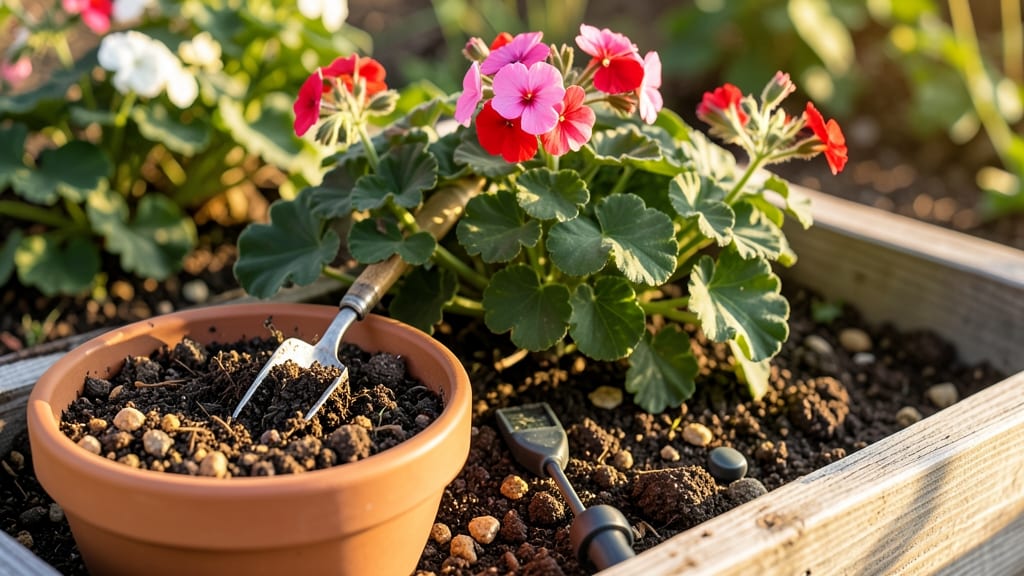
Soil for geraniums requires a well-draining sandy loam mix with a pH between 6.0–7.0 to prevent root rot and wilting, while avoiding compacted clay or waterlogged conditions. Combine equal parts garden soil, coarse sand, and perlite for ideal aeration and moisture control.
Geraniums hate soggy roots, so the right soil mix is all about balance—think "Swiss cheese" for water flow, not a sponge. 🌱 The sandy loam blend I use (50% garden soil, 25% coarse sand, 25% perlite) mimics their natural Mediterranean habitat, where summer droughts force deep root systems.
For heavy clay soil, I add 20% perlite or vermiculite to break up compaction, and a handful of compost for microbial life that keeps roots healthy. Pro tip: Test your soil's pH before planting—geraniums turn yellow when stressed by alkaline conditions (above 7.0), and lime won't fix it.
Container gardening? Double-check drainage holes—geraniums won't forgive waterlogged pots. I swear by terracotta for its natural breathability, but even plastic containers work if you add a 2-inch gravel layer at the bottom.
For in-ground planting, amending the soil with gypsum (if clay-heavy) or peat moss (for sandy soil) bridges the gap between your yard's natural composition and what geraniums crave. The key is mimicking nature's loose, crumbly texture that lets roots breathe while holding just enough moisture.
💡 In This Article
- Why Sandy Loam Soil Boosts Geranium Growth
- DIY Geranium Soil Mix Recipes for Containers and Gardens
Why sandy loam soil boosts geranium growth
Geranium roots need oxygen as much as water, and sandy loam soil delivers both perfectly. The ideal blend—about 40% sand, 40% silt, and 20% clay—creates tiny air pockets that prevent suffocation while allowing excess moisture to drain.
This texture mimics their native Mediterranean habitats, where summer droughts force roots to grow deep in search of water.
Without proper aeration, roots suffocate, leading to wilting even when soil appears moist. 🌱 The sand particles (0.05–2mm) act like tiny drainage channels, while the silt and clay hold essential nutrients and moisture without becoming waterlogged.
pH balance is equally critical because geraniums struggle to absorb nutrients when soil is too acidic (below 6.0) or alkaline (above 7.0). At pH 6.0–7.0, phosphorus and iron—key for vibrant blooms—become available. Too acidic? The plant can't uptake calcium, causing weak stems.
Too alkaline? Iron becomes locked out, turning leaves yellow between veins. Test your soil with a simple kit—amend with sulfur for high pH or lime for low pH, but do it gradually to avoid shocking roots.
Microbial activity thrives in this balanced environment, breaking down organic matter into nutrients geraniums crave. The sandy component prevents compaction, while the loam fraction holds beneficial fungi and bacteria that suppress diseases like powdery mildew.
For example, mycorrhizal fungi form symbiotic relationships with geranium roots, boosting nutrient uptake by up to 30%—but only in well-aerated soil. Without this ecosystem, geraniums become stressed, producing fewer blooms and weaker stems.
Texture matters just as much as composition. A good geranium mix should crumble easily between fingers when dry but still hold shape when moist—a test called "soil tilth." Heavy clay soil (particles <0.002mm) holds water like a sponge, creating anaerobic zones where roots rot.
Sandy soil (particles 0.05–2mm) drains too quickly, leaching nutrients. The sweet spot? A blend where water drains in 15–30 minutes after watering, leaving roots hydrated but never soggy.
This balance is why perlite or vermiculite (added at 20–30% by volume) works so well—they create even more air pockets without altering nutrient levels.
One common mistake is assuming "dry" means "good" for geraniums. While they tolerate drought once established, their roots need consistent moisture during active growth (spring–fall). The sandy loam mix I use retains 15–25% moisture by volume—enough to keep roots hydrated but not saturated.
Think of it like a well-drained sponge: it holds water but doesn't drown. For containers, this means watering every 2–3 days in summer, while in-ground plants may only need weekly watering once established. 💧
For visual learners, imagine geranium roots as tiny straws: they need both water and air to "breathe." Clay soil clogs these straws, while pure sand offers no support. The loam fraction acts as the glue, binding particles into stable crumbs that hold nutrients while allowing oxygen flow.
This is why professional growers often blend 50% peat moss or coco coir (for organic matter) with 30% sand and 20% perlite—it’s the Goldilocks zone for geranium roots.