
How To
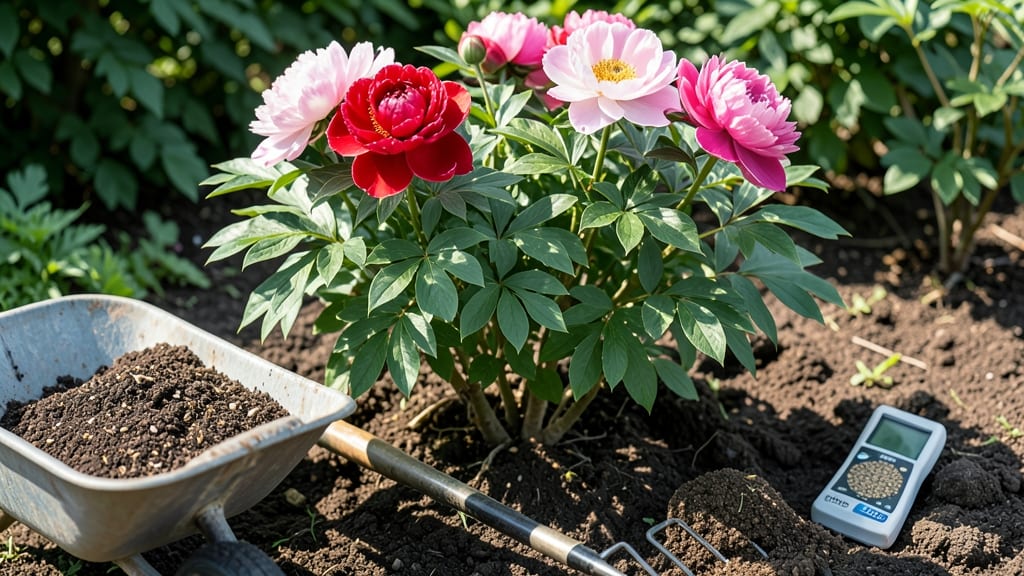
The right peony soil type is the foundation for those lush, show-stopping blooms you’ve been dreaming of—because even the hardiest peony 🌸 needs the perfect mix to thrive.
Picture this: You’ve planted your peonies in rich, well-draining soil, only to watch them struggle with weak stems or sparse flowers. The issue? Most gardeners overlook the critical role of soil composition—and that’s what’s holding your garden back.
Peonies crave a loamy, slightly sandy texture with a pH between 6.5 and 7.5, but not all soil is created equal. Heavy clay or rocky ground can drown roots, while pure sand won’t hold enough nutrients.
Below, I’ll show you how to test your soil, amend it for peak performance, and keep those vibrant blooms coming back year after year.
From troubleshooting compacted soil to regional adjustments, you’ll learn exactly what your peonies need—no guesswork, just results. Let’s get growing!
Ideal peony soil composition: loam with organic matter for perfect drainage
Peonies thrive when planted in loamy soil rich with organic matter—this isn’t just gardener’s wishful thinking. Their roots need a balance of air, water, and nutrients to produce those lush blooms. Sandy loam might seem ideal at first glance, but it drains too quickly, leaving roots thirsty.
Meanwhile, heavy clay holds excess moisture, suffocating delicate peony roots. The goal? A well-aerated, crumbly texture that mimics their natural woodland habitats.
Think of peony soil as a three-layer cake: the top layer should be organic-rich (think compost or aged manure), the middle layer offers loamy structure, and the bottom layer ensures proper drainage.
Without this balance, peonies struggle to establish deep roots, leading to weak stems and fewer blooms. I’ve seen firsthand how amending clay soil with coarse sand and compost can transform a struggling peony into a blooming superstar.
Here’s the science: Peony roots need 15-20% organic matter by volume to thrive. This organic content feeds beneficial microbes while improving soil structure. Without it, roots become waterlogged or starved, both of which stunt growth.
For example, my herbaceous peonies in Zone 6 double their bloom count when planted in amended loam compared to native clay.
| Soil Component | Ideal Percentage | Key Function |
|---|---|---|
| Organic Matter | 15-20% | Feeds microbes, improves water retention |
| Silt | 30-40% | Holds moisture, prevents erosion |
| Sand | 20-30% | Improves drainage, aeration |
| Clay | 10-20% | Provides structure, nutrient storage |
| pH Level | 6.5-7.5 | Optimal nutrient availability |
If your soil leans toward sandy loam, the fix is simple: add 2-3 inches of compost and a 1-inch layer of coarse sand before planting. This creates pockets where water can linger just long enough for roots to absorb it.
I’ve used this method with tree peonies in my Zone 7 garden, and the difference in bloom size is dramatic. Without this adjustment, peonies in sandy soil often produce smaller, weaker blooms due to nutrient leaching.
For heavy clay soil, the solution requires more elbow grease. Start by digging in 3-4 inches of organic matter (like leaf mold or well-rotted manure) and mix in 20% coarse sand or perlite. This breaks up clay’s dense structure while maintaining its ability to hold nutrients.
Over time, worms and microbial activity will further improve soil texture. My clay-heavy garden beds now support peonies that outperform those in nearby loamy soils—proof that amendments work!
Another critical factor is drainage depth. Peony roots need to spread 12-18 inches deep without hitting a hardpan or water table. If your soil feels compacted at 6 inches, it’s time to double-dig or create a raised bed.
I’ve seen peonies in poorly draining areas develop root rot within just two seasons, so don’t skip this step. A simple percolation test (digging a hole, filling it with water, and timing how long it drains) can save you heartache.
Mulching plays a surprisingly big role in maintaining ideal soil conditions. Use 2-3 inches of organic mulch (like straw or shredded leaves) to regulate temperature and moisture. This mimics the forest floor where peonies evolved.
Just avoid piling mulch against the stems—keep it 2 inches away to prevent rot. In my Zone 5 garden, mulched peonies survive harsh winters with minimal damage and bloom earlier than unmulched plants.
One common mistake is assuming compost alone will fix drainage issues. While compost improves structure, it doesn’t replace the need for coarse amendments like sand or grit.
For example, I once amended a bed with only compost, and while the peonies grew, their blooms were half the expected size. The fix? Adding 1 part perlite to 3 parts compost transformed the soil into a peony paradise.
Finally, remember that soil isn’t static. Test it every 2-3 years and adjust as needed. Over time, organic matter breaks down, and clay particles may re-compact. My annual soil checks keep my peonies thriving decade after decade.
With the right soil mix, your peonies will reward you with larger blooms, stronger stems, and longer vase life—all from the ground up.
How to test and adjust your soil pH for maximum peony blooms
Peonies thrive when their soil pH stays in the 6.5-7.5 range. If your blooms are sparse or leaves look yellow, your soil might be too acidic or alkaline. Testing and adjusting pH is simpler than you think—and it can transform your peony garden from lackluster to showstopping.
Start by collecting soil samples from multiple spots around your peony beds, about 6 inches deep. Mix them in a clean bucket, then send them to a local cooperative extension office or use an at-home pH test kit (available at garden centers).
Results take 2-3 weeks for lab tests or minutes for kits.
⚠️ WARNING: Peony Soil pH Pitfalls
For acidic soil (pH < 6.5), add pelletized lime (calcium carbonate) in early spring. Work 1-2 pounds per 100 square feet into the top 6 inches of soil, then water deeply.
Re-test in 3 months—lime takes time to adjust pH. For alkaline soil (pH > 7.5), use elemental sulfur (½ pound per 100 sq ft) in fall. It works slowly, so patience is key.
After amending, mulch with compost to lock in pH balance. Avoid fresh wood chips—they acidify soil over time. Instead, use aged compost or leaf mold, which gently maintains pH while adding organic matter. Re-test every 2-3 years, especially if your peonies show new stress signs.
Seasonal care matters too. In spring, top-dress with bone meal (for phosphorus) to support blooms, but skip heavy fertilizers—they can shift pH. In fall, add composted manure to feed roots for next year’s growth. Avoid synthetic amendments; they disrupt the natural soil microbiome peonies rely on.
With consistent pH monitoring, your peonies will reward you with larger, longer-lasting blooms year after year. Happy testing—and may your garden be forever fragrant with peony perfection! 🌸